A kneecap that found its place
Mochi came in with a grade 3 luxating patella. With weekly physiotherapy and targeted strengthening — no surgery — his patella improved to grade 2, and his owners learned exercises to keep him steady at home.
Singapore's first — and one of its largest and most comprehensive — animal rehabilitation clinics.
For nearly a decade, we've been quietly giving dogs and cats their mobility — and their lives — back. This is that story, in data.

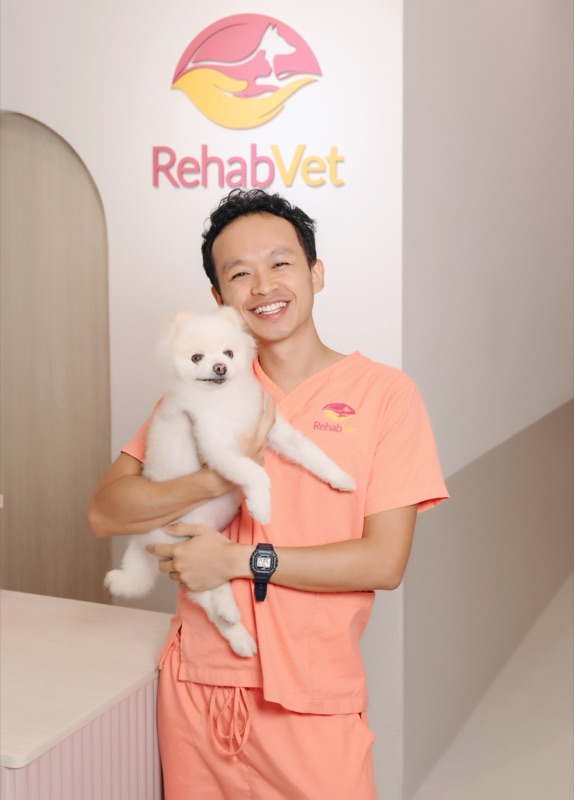
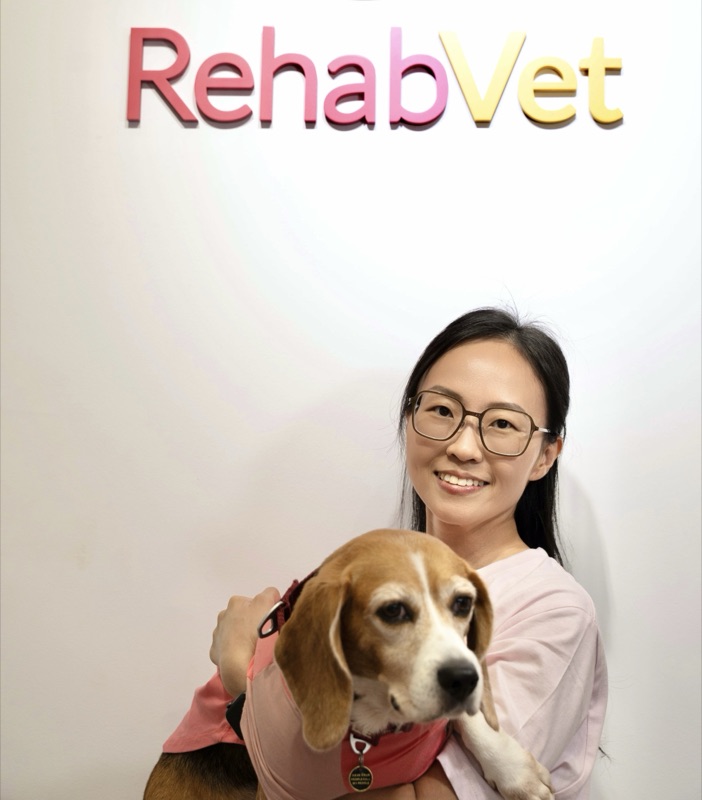
Founder & Rehabilitation Veterinarian
BVSc (Sydney) · CCRT (U.S.) · CVA
When we opened as Singapore's first dedicated animal rehabilitation centre, the idea that a dog could have a physiotherapist — or that an elderly cat could regain her footing with structured therapy — was still unfamiliar to most pet owners here.
A decade later, rehabilitation has become a recognised, often life-changing part of veterinary care. This report shares what that decade has looked like — not in our words alone, but in the data from tens of thousands of treatment sessions and the voices of the families who walked the journey with us.
What you'll find here is honest. We've pulled the numbers straight from our own clinical records, and where the data has limits we say so. Every pet in these pages came to us because someone loved them enough to ask, “is there anything else we can do?” That question is where rehabilitation begins — thank you for asking it.
We care for dogs and cats of every size and age — but our patients tell a clear story. The average pet we treat is 11.3 years old, exactly when arthritis, disc problems and weak hind legs change a pet's world.
Dogs and cats of every size and age, cared for across Singapore since 2018.
Pets come to us with a wide range of conditions — many referred by their primary vets, many after surgery, and many simply because they've started to slow down. Spinal disease (IVDD) is the single largest group we treat.
Distinct pets per condition; pets often have more than one.
There is no single “miracle” treatment in rehabilitation. The pets who do best almost always receive a combined plan, tailored after a proper assessment and adjusted as they progress.
Warm saltwater pool & underwater treadmill — exercise without bearing full weight.
Manual therapy, therapeutic exercise and home programmes.
Traditional Chinese veterinary medicine for pain relief and comfort.
Gentle, drug-sparing relief for inflammation and chronic pain.
Supplemental oxygen for selected neurological and post-surgical cases.
Strength and weight programmes to keep pets moving for longer.
Treatment sessions delivered, by therapy
Sessions by modality (2023–2026 booking data). Hydrotherapy and rehabilitation lead; hyperbaric oxygen is one option among many.
78% of our pets receive two or more therapies together. Hydrotherapy and rehabilitation lead the way — hyperbaric oxygen is one option among many, used where it genuinely helps.
Rehabilitation is a commitment, and how long it takes depends a great deal on what we're treating. Looking at every pet with a diagnosis on file, here's the average number of sessions for each of the conditions we see most — long-term cases who keep coming back for maintenance included.
These differences are real: they hold up even after accounting for a pet's age and how recently they started with us. Chronic and complex cases — arthritis, cruciate, neurological — tend to be the longest roads, often years of ongoing care; a kneecap or a hip is usually shorter.
Average sessions among pets with each diagnosis on file (≥1 visit). These describe past care, not a promise — every pet is different, and your plan is set after a proper assessment.
Every pet's path is different. Many come once for an assessment; most who begin a course of care settle into a steady rhythm of roughly ten to thirty sessions; and a devoted few keep coming for years. It isn't a tidy bell curve — it leans right, because long-term pets stretch the tail and lift the average to 15.5 visits, above the typical 9.
Number of pets by their total recorded visits (2,251 pets, all-time). Grouped by visit count; right-skewed by pets in long-term care (longest: 385 visits).
When we began, animal rehabilitation was a new idea in Singapore. Today it's part of how families care for their pets — around 300 new pets begin their journey with us every year.
Cumulative distinct pets treated. 2026 is a partial year.
Our home is in Serangoon, in the north-east — but our families come from everywhere. Mapping the postal codes of 1,672 pet parents, we found patients from all five regions and every one of Singapore's 28 postal districts.
Pets' first names used with consent or anonymised. Condensed from clinical records and owner feedback.
Mochi came in with a grade 3 luxating patella. With weekly physiotherapy and targeted strengthening — no surgery — his patella improved to grade 2, and his owners learned exercises to keep him steady at home.
Dio arrived suddenly unable to use his hind legs after a disc injury. With a combined plan — rehab, hydrotherapy, TCVM Tui Na and supportive HBOT — he went from flat and unable to stand to walking, and back to 30-minute walks.
15-year-old Dino's arthritis made walking hard. Warm-water therapy and pain-relief treatments eased his stiffness and kept him swimming and mobile well into old age.
Diagnosed with hip dysplasia as a pup, this patient began rehab early. Now ten, the condition has not deteriorated — proof of how early, consistent care changes the long arc of joint disease.
A twelve-year-old Labrador arrived with the most severe grade of IVDD. With an intensive plan combining hyperbaric oxygen, hydrotherapy and rehabilitation, this senior beat a guarded prognosis and regained comfortable movement.
Niko, almost seventeen, came to us stiff and sore. Gentle pain-relief therapy and the calm, unhurried handling nervous cats need eased her aching joints and kept one of our most senior patients comfortable at home.
229 five-star Google reviews and counting, from the families we serve — owners who, again and again, thank our team by name.
Google reviews · a decade of 5-star love
“RehabVet has been instrumental in helping my Yogi boi walk again after he suffered from a slipped disc!”
“My dog has been coming to RehabVet for hip dysplasia from the age of 2. Now she is 10 and her condition has not deteriorated.”
“My 16-year-old border collie Oreo went from being unable to stand without support to being able to get up on his own.”
“Mochi enjoys his physio sessions. His luxating patella grade reduced from 3 to 2 with regular weekly sessions.”
“My nearly 17-year-old cat Niko is under treatment for arthritis. The team is so gentle, patient and genuinely caring.”
“Our 12-year-old Labrador was diagnosed with IVDD Grade 5 and treated with a mix of hyperbaric oxygen therapy and rehab.”
“The team helped strengthen Charlie's leg muscles, which aided his recovery and coping after left hip surgery.”
“Truly thankful for what RehabVet has done for many of our shelter dogs — including spinal injury and surgery recovery.”
“Butter loves his swim here. Both Butter and Maple love the staff — the hydro team is wonderful with them.”
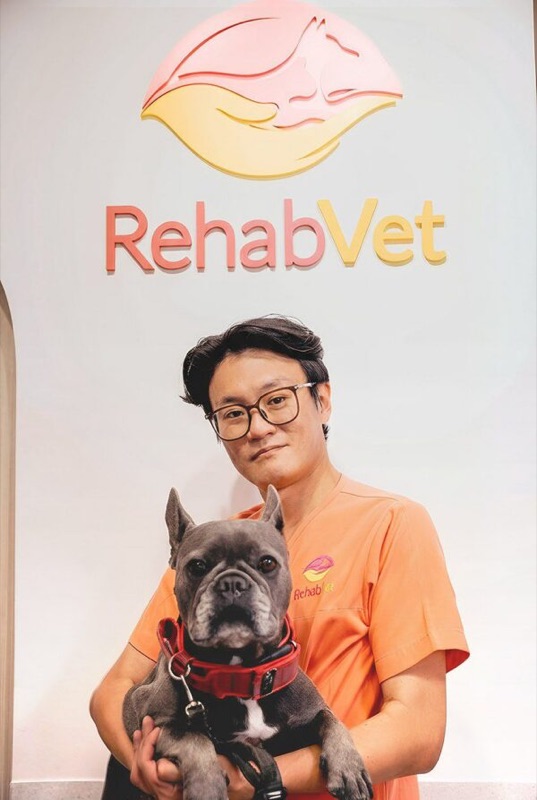
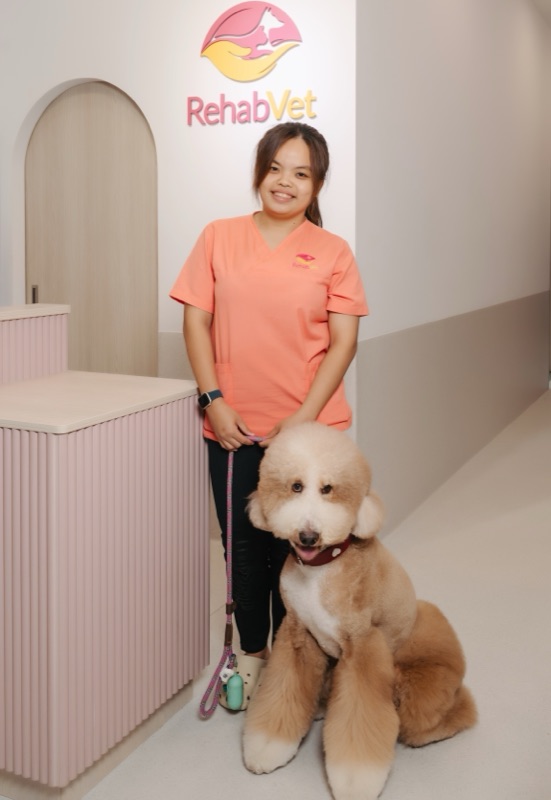
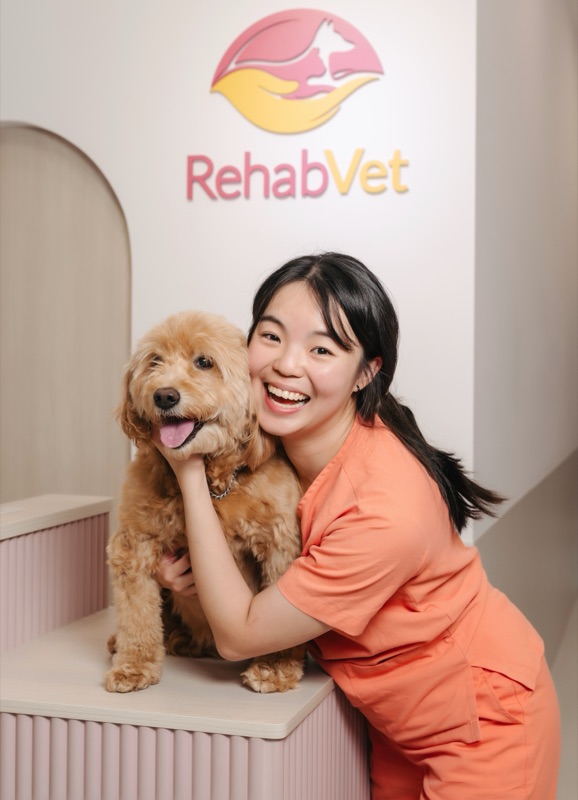
Behind every recovery is a small, dedicated team of veterinary and rehabilitation therapists who know our patients by name.

Founder & Rehabilitation Veterinarian

Vet Technician & Rehab Therapist

Rehab Therapist · Hydrotherapist

Rehab Therapist · Hydrotherapist

Rehabilitation Therapist

Client Relations & Marketing
Every figure in this report is drawn from RehabVet's own clinical records and public reviews — aggregate, de-identified, and free of any financial data. We don't claim a single “success rate”, because honest rehabilitation is about quality of life, not a tidy number. What we can show you is real: the pets we've helped, the conditions we treat, and the families who keep coming back.