
Lead Veterinarian
Dr. Sara Lam
Lead Veterinarian
BVSc (Sydney), CCRT, CVA
Veterinary oversight for every rehabilitation plan — ensuring safe, clinically appropriate care for your pet.
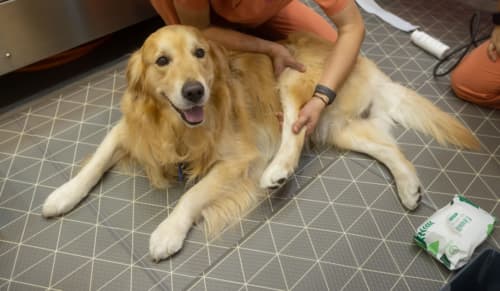
The most valuable modality in canine rehabilitation — rebuilding movement from the ground up
Dog rehabilitation exercises are vet-prescribed physical activities designed to restore strength, flexibility, balance, coordination, endurance, and body awareness (proprioception) after surgery, injury, or neurological conditions. They are the foundation of every physical therapy programme at RehabVet — because no amount of laser, ultrasound, or manual therapy can replace the benefits of targeted, progressive exercise. For booking a full programme, see dog physiotherapy; cats usually follow adapted land-based plans via cat physiotherapy.
Unlike regular walks or play, rehabilitation exercises target specific deficits identified during your dog’s assessment. Weak quadriceps after TPLO surgery? Sit-to-stand transitions. Lost proprioception after IVDD? Balance board training and paw placement drills. Stiff arthritic joints? Controlled range-of-motion exercises and underwater treadmill walking. Every exercise has a specific purpose and is progressed systematically based on your dog’s response.
At RehabVet, all exercise programmes are designed by our veterinary team led by Dr. Sara Lam BVSc, delivered by qualified rehabilitation therapists, and tracked with objective measurements — muscle circumference, joint angles, gait scores, and functional mobility assessments. And because many exercises can be safely performed at home between clinic sessions, rehabilitation extends to every day of your dog’s recovery.

Purpose-built facility, qualified therapists, comprehensive home programmes
Full rehabilitation exercise facility
Professional-grade cavaletti rail sets, wobble boards, balance discs, foam pads, balance rolls, ramps, stairs, textured surfaces, resistance bands, and an underwater treadmill — everything needed for comprehensive dog rehabilitation exercises.
Individualised exercise prescriptions
No generic exercise sheets. Every programme targets your dog's specific deficits — identified through objective assessment — and is progressed systematically based on regular reassessment data.
Qualified rehabilitation specialists
All programmes designed under veterinary supervision (Dr. Sara Lam BVSc) and delivered by therapists with internationally recognised rehabilitation qualifications. Proper technique and progression are critical for safety.
Comprehensive home exercise programmes
Every owner receives demonstrated, explained, and documented home exercises tailored to their dog's programme. Home exercises are a core component — rehabilitation should happen every day, not just at the clinic.
Integrated with other modalities
Exercises work best combined with manual therapy, hydrotherapy, laser therapy, and other modalities. At RehabVet, exercises are part of a comprehensive physical therapy programme — not an isolated treatment.
Objective progress tracking
We measure muscle circumference, joint range of motion, proprioceptive placing tests, gait quality, and functional mobility at regular intervals. You see your dog's improvement in concrete numbers.
Six core exercise categories — combined into personalised programmes for your dog
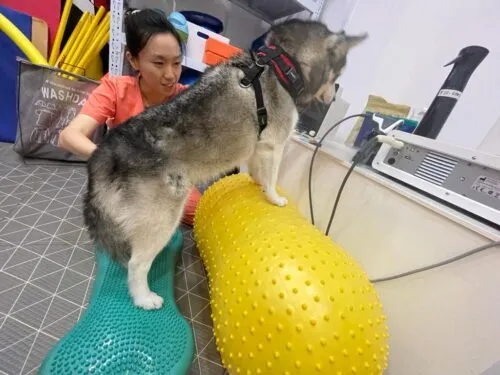
Proprioception & Balance Training
Proprioception — your dog's awareness of where their body is in space — is often impaired after surgery, injury, or neurological conditions. We use wobble boards, inflatable balance discs, and foam pads to challenge balance receptors and retrain the nervous system. These proprioception exercises for dogs progress from mildly unstable surfaces to complex balance challenges as your dog improves.
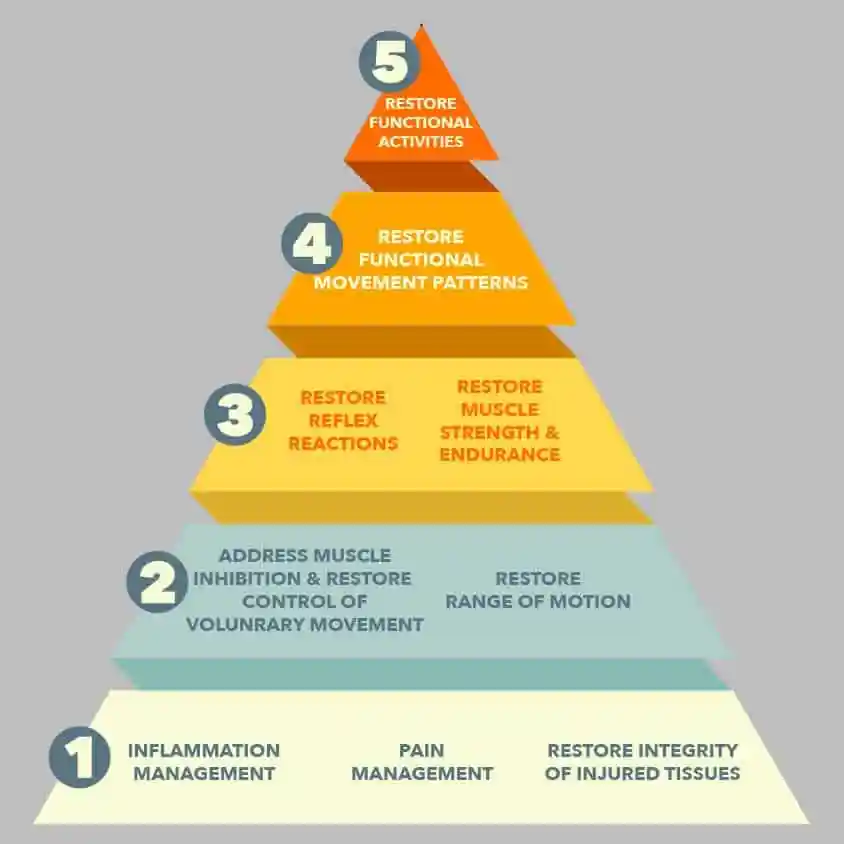
Cavaletti Rail Walking
Walking or trotting over evenly spaced ground poles forces your dog to consciously lift each limb higher than normal, improving limb awareness, stride length, joint flexion, and coordination. One of the most effective canine rehabilitation exercises available — particularly for dogs recovering from orthopaedic surgery or with neurological conditions affecting gait.
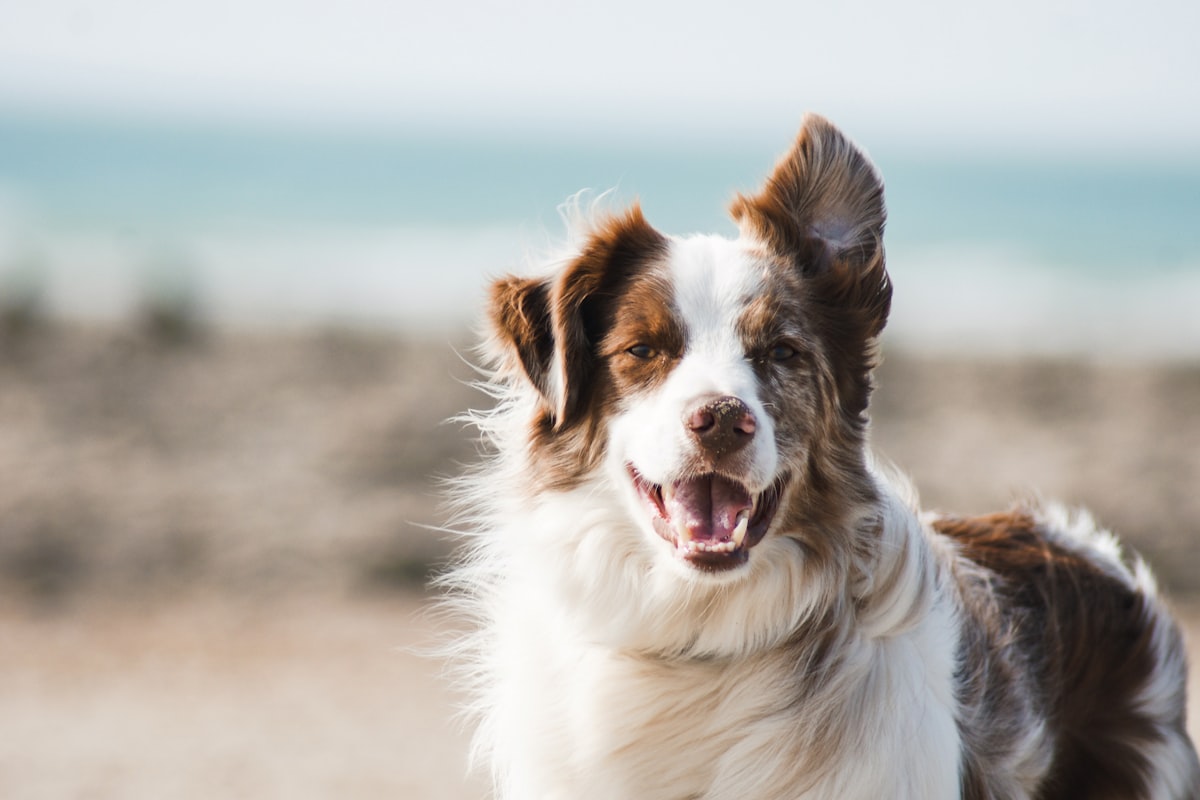
Dog Strengthening Exercises
Targeted strengthening exercises rebuild muscle mass lost after surgery, injury, or periods of restricted activity. Sit-to-stand transitions build quadriceps and hamstrings. Wheelbarrowing and cookie stretches strengthen forelimbs and core. Each exercise targets specific muscle groups identified as weak during your dog's assessment — this is precise rehabilitation, not generic activity.
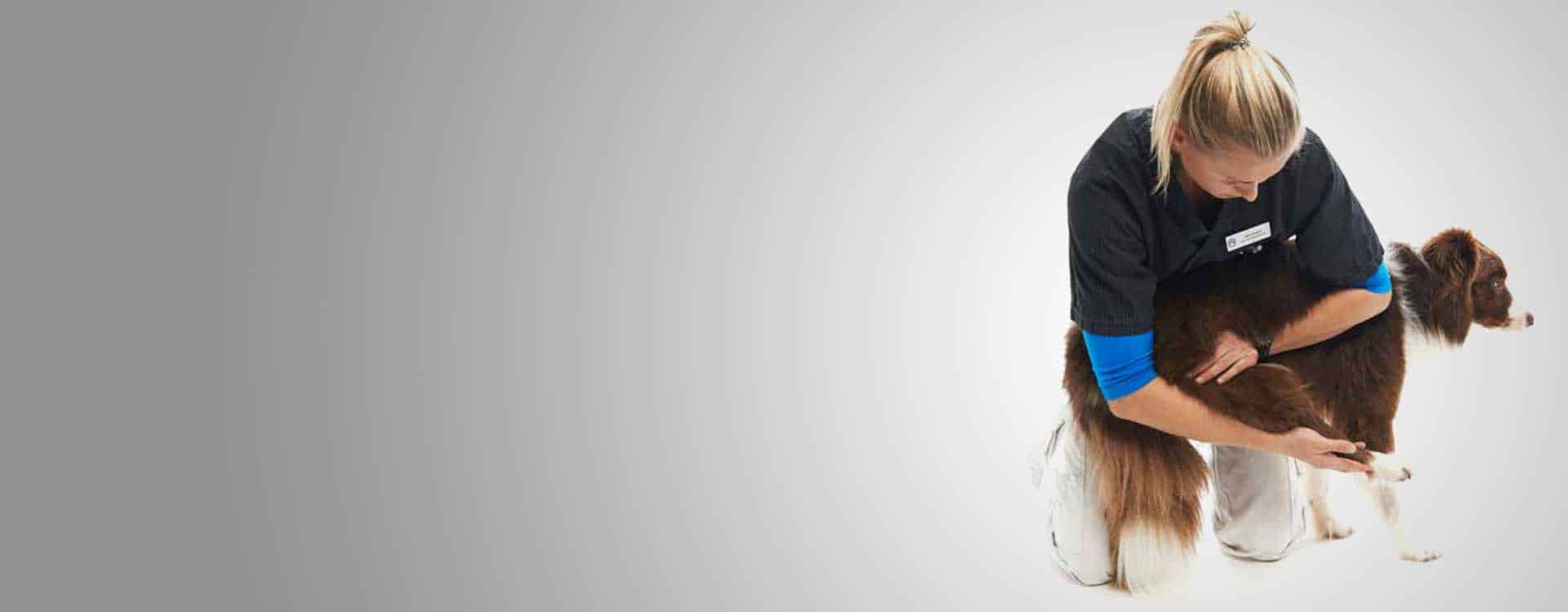
Weight Shifting & Weight Bearing Exercises
Gentle manual weight shifting — rocking your dog side to side, forward and back — activates proprioceptors throughout the body. For dogs favouring a limb or with weak back legs, targeted weight-bearing exercises encourage gradual return to normal four-limb weight distribution. Essential physio exercises for dogs with back leg weakness after IVDD, hip surgery, or cruciate repair.
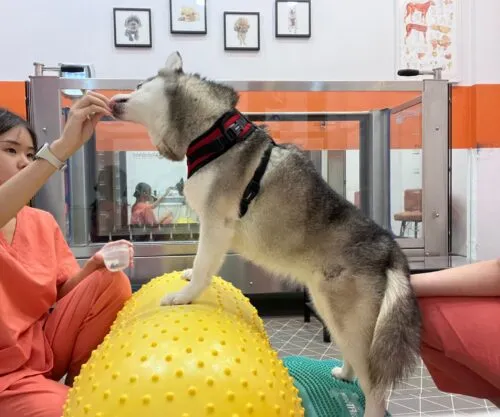
Controlled Walking & Surface Changes
Structured walking over varied surfaces — grass, gravel, sand, rubber mats, textured tiles — provides continuous proprioceptive input through the paw pads. Walking on gentle inclines, circles, serpentines, and figure-eights challenges balance and coordination in functional, real-world patterns. A foundational canine fitness exercise that improves overall mobility.
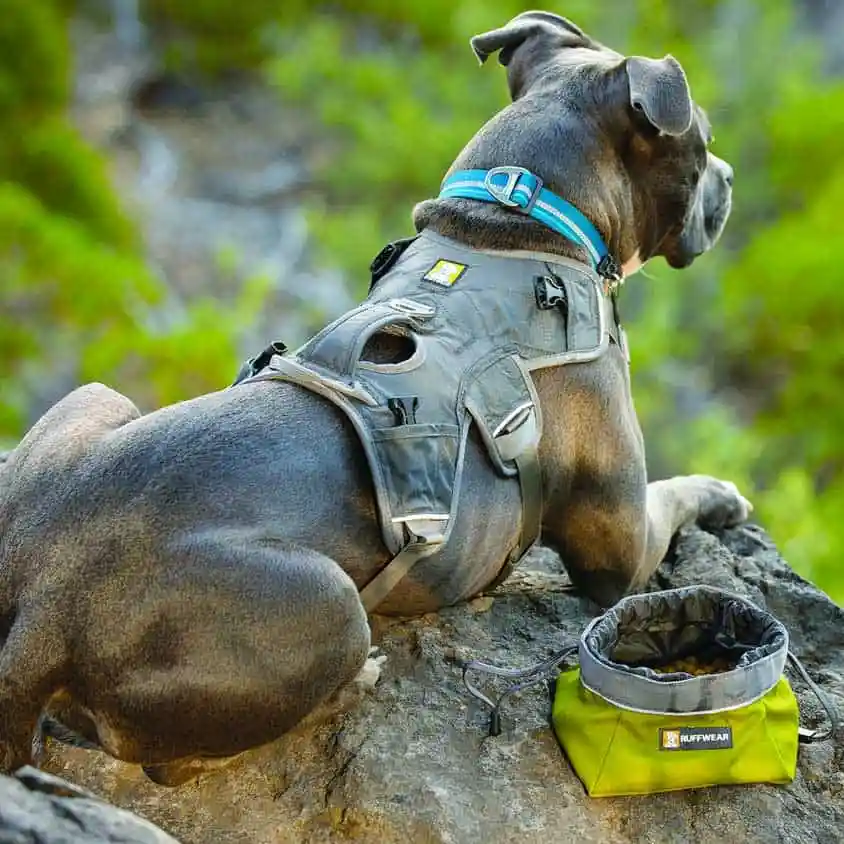
Neurological Re-education Exercises
For dogs with IVDD, degenerative myelopathy, FCE, or post-surgical nerve damage, assisted standing with gradually decreasing support retrains motor pathways. Combined with paw placement exercises — manually positioning the paw and having the dog hold it — this rebuilds the brain-body connection. Critical dog IVDD exercises that maximise neurological recovery.
Every condition requires a different exercise approach. Here’s how we tailor programmes for the most common conditions we treat.
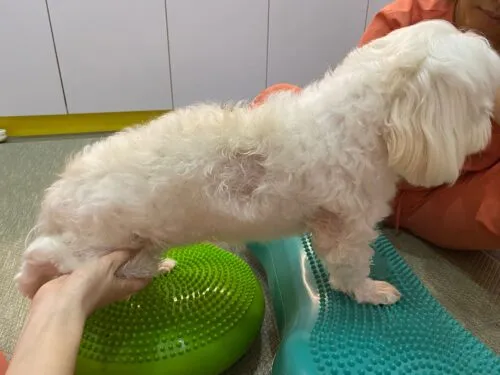
Physiotherapy Exercises for Dogs with Arthritis
Arthritis is the most common reason dogs are referred for rehabilitation exercises. Our programmes combine gentle range-of-motion exercises, controlled strengthening (sit-to-stand, weight shifting), low-impact walking patterns, and underwater treadmill sessions. The goal is building protective muscle mass around affected joints while maintaining flexibility — without stressing damaged cartilage. Most arthritic dogs show significant improvement within 3–4 weeks of starting structured physiotherapy exercises.
Physiotherapy Exercises for Dogs with IVDD
IVDD patients often lose proprioception in their hind limbs — they may knuckle, drag their paws, or lose awareness of limb position. Our IVDD exercise programmes include paw placement drills, assisted standing, weight shifting, textured surface walking, and neuromuscular re-education. Combined with hydrotherapy, laser therapy, and NMES, these physiotherapy exercises help IVDD dogs regain significant function. Especially important for Dachshunds, French Bulldogs, Corgis, and Shih Tzus.
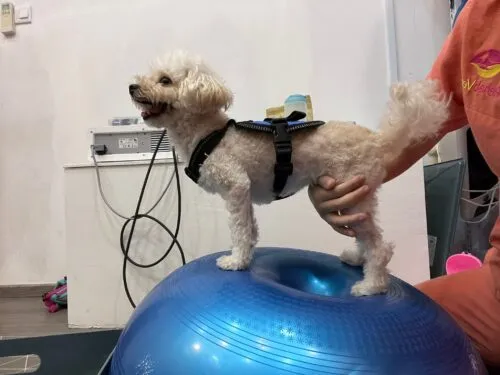
Physiotherapy Exercises for Dogs with Hip Dysplasia
Hip dysplasia causes lifelong pain and progressive degeneration. Our hip dysplasia exercise programmes focus on strengthening the gluteal and hamstring muscles that support the hip joint, improving range of motion, and correcting compensatory movement patterns. Controlled weight-bearing exercises, underwater treadmill sessions, and targeted stretching significantly improve comfort and function — often delaying or avoiding surgical intervention.
Dog Exercises After TPLO / ACL Surgery
Post-surgical rehabilitation is the single most important factor in TPLO and cruciate surgery outcomes. Research shows dogs receiving structured rehabilitation exercises recover 30–50% faster. Our programmes begin within days of surgery with gentle passive range-of-motion exercises, progressing to weight-bearing exercises, sit-to-stand transitions, cavaletti rails, and controlled walking. The final phase focuses on return to full activity with sport-specific or lifestyle-specific exercises.
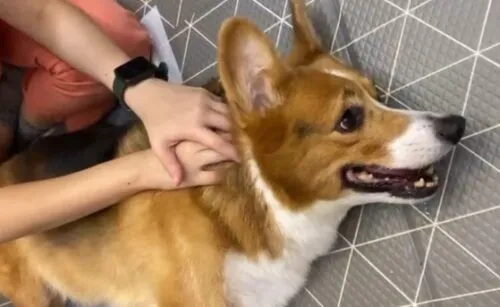
Dog Exercises After Fracture Repair
After fracture stabilisation, rehabilitation exercises restore range of motion, rebuild muscle mass, and retrain normal gait patterns. We progress from non-weight-bearing exercises (passive range of motion) through partial weight-bearing (assisted standing, gentle balance work) to full weight-bearing exercises (strengthening, cavaletti, surface walking). Timing is coordinated with your surgeon based on radiographic healing.
Exercises for Dogs with Degenerative Myelopathy
While DM cannot be cured, regular therapeutic exercises slow functional decline, maintain muscle mass, and preserve mobility for as long as possible. Our DM exercise programmes emphasise proprioception training, assisted walking, balance challenges, and hydrotherapy — keeping dogs mobile and comfortable through the progression of disease.
Senior Dog Exercises for Mobility
Age-related muscle loss (sarcopenia), joint stiffness, and declining proprioception all contribute to reduced mobility in senior dogs. Regular rehabilitation exercises maintain strength, flexibility, and balance — preventing the downward spiral of inactivity that accelerates decline. Our senior dog exercise programmes are gentle, progressive, and adapted to each dog's abilities and comfort level.
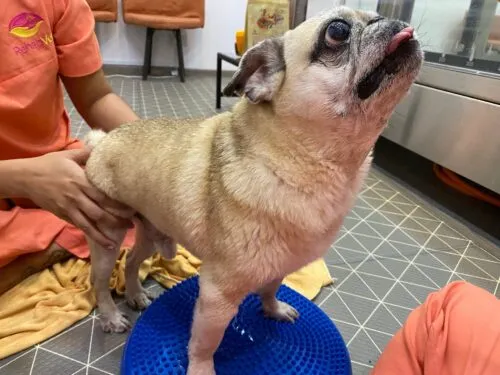
Dog Rehabilitation Exercises at Home
Home exercises are a critical component of every rehabilitation programme at RehabVet. Between clinic sessions, we provide specific exercises — carefully demonstrated, explained, and documented — for you to practise at home daily. Typical home exercises include sit-to-stand transitions, controlled leash walking, gentle stretching, weight shifting, and balance challenges. We recommend specific equipment (wobble cushions, balance discs) and show you exactly how to use them safely.
Evidence-based outcomes for surgery recovery, arthritis, neurological conditions, and mobility
1. Faster recovery after surgery
Dogs receiving structured rehabilitation exercises after orthopaedic surgery recover 30–50% faster, develop better muscle mass, and achieve greater joint range of motion than those on rest alone. Early, supervised exercise is the single most impactful factor in post-surgical outcomes.
2. Restored proprioception and body awareness
Proprioception exercises retrain the neural pathways that tell your dog where their limbs are in space. Without specific retraining after surgery, injury, or neurological conditions, dogs may knuckle, stumble, or move asymmetrically indefinitely — even after the underlying condition has healed.
3. Targeted muscle strengthening
Different exercises target specific muscle groups. Sit-to-stand transitions build quadriceps and hamstrings. Core strengthening exercises improve trunk stability. This precision allows us to address specific weaknesses — not just general fitness.
4. Natural pain management through movement
Controlled exercise releases endorphins, improves joint lubrication (synovial fluid production increases with movement), and reduces muscle tension and spasm. Regular therapeutic exercise often allows dogs to reduce their dependence on pain medications.
5. Improved joint range of motion
Gentle active and passive range-of-motion exercises prevent joints from stiffening during recovery. Active exercises are particularly valuable because they maintain muscle engagement alongside joint mobility — building the strength needed to support improved range of motion.
6. Better balance and fall prevention
Balance training directly improves stability by training the nervous system to detect and correct shifts in body position. Critical for senior dogs prone to slipping, dogs with vestibular disease, and neurological patients who have lost normal balance reflexes.
7. Enhanced neurological recovery
For dogs with IVDD, FCE, or degenerative myelopathy, rehabilitation exercises promote neuroplasticity — the brain's ability to form new neural connections. Repeated, targeted exercises help retrain motor pathways and maximise recovery of voluntary movement.
8. Weight management through safe exercise
Therapeutic exercises provide structured, calorie-burning activity that is safe even for dogs with movement restrictions. Combined with underwater treadmill sessions, exercise programmes help overweight dogs lose weight while protecting compromised joints.
9. Measurable, objective progress
We track muscle circumference, joint range of motion, proprioceptive placing tests, gait quality scores, and functional mobility at regular intervals. You see your dog's improvement in concrete numbers — not just subjective impressions.
10. Practical home exercise programmes
Many rehabilitation exercises can be safely continued at home with proper instruction. Home exercises extend the benefit of clinic sessions to every day, significantly improving outcomes and making rehabilitation practical and sustainable long-term.
A structured approach from assessment to home programme
Comprehensive assessment
Gait observation, posture analysis, muscle circumference measurements, joint range of motion, proprioceptive placing tests, and pain evaluation. We identify your dog's specific deficits and design a targeted programme.
Warm-up and preparation
Gentle manual therapy, passive stretching, and controlled walking prepare your dog's muscles and joints for exercise. This reduces injury risk and improves exercise quality.
Targeted exercise programme (20–40 min)
A combination of exercises selected for your dog: balance board work, cavaletti rails, sit-to-stand transitions, weight shifting, controlled walking patterns, and proprioceptive drills. Intensity and difficulty adjusted in real time.
Cool-down and complementary modalities
Gentle stretching, massage, and — if appropriate — laser therapy or hydrotherapy to complement the exercise session. Maximises recovery and reduces post-exercise soreness.
Home exercise prescription
Your therapist demonstrates and explains specific home exercises, provides written instructions, and recommends any equipment needed. Home exercises extend rehabilitation benefits to every day.
Transparent pricing — exercises are part of comprehensive therapy sessions
Consultation (60 min)
Off-peak / peak.
$249 / $299
Rehabilitation session, all modalities included (60 min)
Under 15 kg / over 15 kg. There is no separate charge for this modality.
$310 / $350
5-session rehabilitation package
Package total, under 15 kg / over 15 kg.
$1,049.50 / $1,249.50
10-session rehabilitation package
Package total, under 15 kg / over 15 kg.
$2,099 / $2,499
Therapeutic exercises are integrated into comprehensive physical therapy sessions — not billed separately. Many pet insurance policies in Singapore now cover rehabilitation therapy. We provide itemised invoices for insurance claims.
Prefer to chat on WhatsApp?
Message us for a personalised quote — we’re happy to help.
Qualified rehabilitation specialists — not general practice vets. Led by Dr. Sara Lam BVSc.
Lead Veterinarian
BVSc (Sydney), CCRT, CVA
Veterinary oversight for every rehabilitation plan — ensuring safe, clinically appropriate care for your pet.
Senior Therapist
Therapist
Hydrotherapist
Hydrotherapist
Client Relations, Marketing & Business Development Manager
Everything dog owners ask about physiotherapy exercises, proprioception training, and home programmes
Rehabilitation exercises are most effective when combined with these modalities
Dog Hydrotherapy
Underwater treadmill therapy
Physical Therapy
Comprehensive rehabilitation
Dog Physiotherapy
Manual therapy & exercises
Ultrasound Therapy
Deep tissue healing
Animal Rehabilitation
Full recovery programmes
Dog Acupuncture
Pain management & healing
My family and I would like to thank RehabVet team for the care, dedication, and professionalism shown to our beloved Border Collie, Patches. During his rehabilitation journey, the therapists and staff were always patient, compassionate, and willing to answer our questions. It was evident that they genuinely cared about his well-being and worked hard to help him maintain the best quality of life possible.
Clean environment and knowledgeable people who loves pets. Highly recommended.
Great place for rehab and therapist
The only place that Aiko loves so wholeheartedly, greeting all staffs cheerfully the moment she enters and resting on their thighs after hydrotherapy so peacefully. The trust and demure of your dog tells it all. No bias or pre-conceived perceptions. We were surprised that the first five hydrotherapy sessions have helped to strengthen her hips and improve her level of energy. Sean is just the consummate professional!
This clinic combines effective treatment, compassionate handling, and up-to-date evidence-based rehabilitation tools. My dog has experienced very visible improvement after just a few sessions with them. Very effective. Many pet owners I spoke to at the clinic also gives it a thumbs up. They have a team of well trained and very caring professionals. I have not seen any dogs that are not comfortable with them over here. 👍🏻
We visited Rehabvet as Bruno was having some mobility issues with his hind legs. We had an excellent experience. They structured a massage / exercise / hydro schedule that worked wonders. Bruno is feeling much better now.
This is the best rehab clinic for my dog.
We've been bringing Kuma to RehabVet for physiotherapy and the experience has been outstanding. The team truly cares for every fur patient, and you can feel the warmth and dedication the moment you walk in. A special thank you to Hazel, Kuma's therapist, who is incredibly patient, attentive, and knowledgeable. She not only conducts the sessions with great care but also provides practical advice for us to continue strengthening Kuma's muscles at home and the results really show. Thank you as well to Dr. Sara, Xan, and the entire RehabVet team for the love and professionalism you show to every pet. If your furkid needs rehabilitation or physiotherapy, RehabVet is truly a place you can trust.
Had a very positive experience at the rehab vet. The entire team was professional, gentle, and reassuring throughout the session. Dr Sara was especially wonderful — knowledgeable, patient, and took the time to explain everything clearly without rushing. You can tell she genuinely cares about the animals and their recovery. The facility has also just been renovated and is very clean, modern, and calm, making it a comfortable and conducive environment for both pets and owners. Highly recommended.
We're truly grateful to Dr. Sara, the entire RehabVet team, and especially Xan, who has been exceptionally detailed and patient. The whole team has shown such genuine care throughout Milo's recovery journey. Milo was diagnosed with IVDD Grade 3 in late June 2025. Although he hasn't fully recovered yet, we've seen significant improvement over the past 3.5 months with pain relief treatments, hyperbaric oxygen therapy, acupuncture, and regular exercise sessions. We believe that slowly but surely, Milo will make a full recovery. Never give up!
Haru has been going to rehabvet since Nov 2025 to manage his mobility caused by luxating patellar and hip dysplasia. Thus far, we witnessed huge improvements thru several methods of rehabilitation such as ultrasound/laser therapy, land exercises and hydrotherapy! Aside from the treatments, what made us continue with them is the hospitality of the staff! They are always so welcoming and you could feel the warmth everytime you step into the clinic! Also, they treat your furkid with love and respect. Highly recommended.
I can't recommend RehabVet highly enough! My Happy, a pomeranian with patella luxation grade 3 on her left hind leg and hip dysplasia, has made incredible progress since starting physiotherapy here. The team is so knowledgeable, patient, and genuinely caring. All the therapists were fantastic and tailored the sessions perfectly to Happy's needs. The facilities are clean and well-equipped, and my dog always seemed comfortable and even enjoyed their sessions. If your furry friend needs some extra support, look no further than RehabVet!
We've been taking our dog to Rehab Vet Singapore for about 6–7 years, mainly for EMF therapy, water treadmill sessions, and joint and muscle supplements. After her hip surgery, she needed a comprehensive recovery plan, and the team here has provided just that and more. Their treatments have helped her regain strength and mobility, and the long-term maintenance has been invaluable in keeping her active and comfortable. The staff is knowledgeable, caring, and always focused on her needs. We truly appreciate the dedication they've shown over the years – highly recommend!
Went to RehabVet for a second opinion on a serious limp my husky had developed. They were exceptionally knowledgeable, gave practical advice and were very generous with their time. We moved forward with treatment and the non invasive options they gave have made him much more comfortable and the future is promising. From the first time I reached out via whatsapp they gave clear helpful advice, follow up on treatment, pictures, liaised with pet transportation and more. A really amazing full service experience. Thank you very much.
As a fur mummy, finding people who genuinely care for and love our babies is so important. I've found exactly that here, especially with Judette, Xan, Noelle, and Joyce. My babies, Barley (17yo cat) and Lexi (9yo dog), come in for pain management and rehab sessions, and I'm always completely comfortable with how they're treated. The team is incredibly patient, gentle, and kind, and it shows in the way they handle my pets. So grateful to have found a rehab centre I truly trust. Highly recommended.
My Shih Tzu, August, has osteoarthritis and he was unable to walk. We took him to RehabVet Clinic after reading good reviews about it on Google. Since November 2023, he has been having therapy here and has shown improvement in his mobility under the tender loving care from Dr Sara Lam and the staff members, with special mention and appreciation to Angeline, Joyce, Hui Tze and Shaun. My Puppy King will continue his treatment here as we have trust in this lovely team. Thank you!
Bubble has been with Rehab Vet for years as he grows older and manages his luxating patella. I am truly grateful to Doc Sara, Xan, Sean, Joyce, and the entire rehab team for always taking such wonderful care of Bubble and watching over him during every session. Bubble came from a condition whereby he couldn't even walk, he was paralysed. But really thankful to rehab vet that made the impossible, became possible. Thank you Doc Sara & all Rehab Team
Great team! Brought my dog Bunny in for a consultation because her luxating patella was getting worse. Bunny is an anxious dog so I expected her to be a handful during the consult but she was very calm in the therapists' presence! Shout out to Xan and Noelle for helping her feel at ease in a foreign place. I love the clinic's interior as well, the warm lights and pastel colours are very welcoming for both me and Bunny :)
Rehabvet was recommended to us by our vet because our dog dislocated her hip when she was a puppy. We've been going to Rehabvet for several years now and their standard of care has been consistently high throughout. Special shoutout to Sean for always trying his best to make her visits as comfortable as possible 👍 (She gets easily anxious)!!
Having been to several vets and rehabs with my senior Shih Tzu, my experience at RehabVet has been the best. My only regret was not bringing him here sooner when his issues first came up! My very anxious 15 year old kiddo was diagnosed with IVDD and is unable to move all his limbs voluntarily at all times. After the initial testing and diagnosis by Dr. Sara, he has had a few trips to the Hyperbaric O2 Therapy, Laser Therapy, and Electrical Stimulation with massages. Now, I can tell that he is in less pain and is also more comfortable and less anxious. I would highly recommend RehabVet to anyone thinking about it!
I can't thank Xan and his team at RehabVet enough for the incredible care they've given my dog. After a sudden incident where my dog started dragging both hind legs, the vet diagnosed him with IVDD stage 2. I decided to try physio at RehabVet, and it was the best decision I could have made. Within just 2-3 sessions, my dog's hind legs showed significant improvement—they were no longer wobbly. Now, after 7-8 sessions, he's regained his mobility and is even jumping around at home again. Xan's patience and dedication made all the difference. I highly recommend RehabVet to anyone in need of compassionate, effective care for their pet.
Always a pleasant experience here at RehabVet- clean area, calm ambience and super patient therapists. Staff are very willing to share tips on home care massages and explain in detail how our pups muscles work, gait observation and strength training for them!
Sean is an incredibly caring and skilled rehab therapist. He's gentle, patient, and truly treats every dog like his own. We saw clear improvement in our dog's mobility, and sessions are always handled with professionalism and compassion. Highly recommend!
Have a wonderful experience with the team at Rehab Vet. The staff are warm, friendly, and always patient in answering our enquiries. Their care and professionalism make every visit reassuring.
My senior dog has been with rehabvet since Sept 2025 after her leg surgery. We're happy to see improvement! Everyone is helpful and friendly here. Thanks rehabvet team!
Newly renovated place, more conducive for therapy sessions. Therapists are experienced in handling older dogs. Have been sending my 18 year old dog for therapy for more than a year.
The therapists are patient and helped improved my dog's arthritis condition. They taught us how to massage his joints and told us to use heat therapy.
My dog has been coming to rehabs for hips dysplasia at a young age of 2 years old & now is 10 years old & condition did not detoriate - glad we started early.
Mochi enjoys his physio sessions with Rehabvet. His LP grade reduced from 3 to 2 with regular weekly sessions. The therapists are friendly and always make sure the sessions intensity are suitable for him.
We've sent both our dogs to RehabVet for some years now. Thanks to the staff for always being so welcoming and caring. Butter loves his swim here.