EXCELLENT Based on 213 reviews Posted on Peter LeeTrustindex verifies that the original source of the review is Google. Back to Rehab Vet for the second time - Dr Sara and team have helped my dog regain the ability to walk even after 2 episodes of stroke before. I have full confidence they can help my kitten with his recovery after injuring his lower back 🙏Posted on Jan ChuaTrustindex verifies that the original source of the review is Google. Have a wonderful experience with the team at Rehab Vet. The staff are warm, friendly, and always patient in answering our enquiries. Their care and professionalism make every visit reassuring.Posted on jy ngTrustindex verifies that the original source of the review is Google. My senior dog has been with rehabvet since Sept 2025 after her leg surgery. We’re happy to see improvement! Everyone is helpful and friendly here. Thanks rehabvet team!Posted on Gladys WoonTrustindex verifies that the original source of the review is Google. Newly renovated place, more conducive for therapy sessions. Therapists are experienced in handling older dogs. Have been sending my 18 year old dog for therapy for more than a year ago.Posted on Jaime KTrustindex verifies that the original source of the review is Google. Friendly team who works well with my nervous Singapore specialPosted on Chooi Ling LeeTrustindex verifies that the original source of the review is Google. Highly recommend!Posted on J LTrustindex verifies that the original source of the review is Google. RehabVet’s dedicated team of therapists are always loving and patient towards bao. With regular sessions, bao is no longer limping or in pain! Special thank you to Sean, who conducts her hydrotherapy sessions. IG: @adventuresofbaoandpiggyPosted on evonne ngTrustindex verifies that the original source of the review is Google. I’ve been bringing my dog Cocoa here for a few years and have had a very good experience. The team is caring, attentive, and always keeps us updated after each session. Cocoa is very comfortable with them, and we’ve seen steady improvement over time. They also share photos and give helpful advice on how to support her at home. Really appreciate the dedication and care. Highly recommend!Posted on Jann lohTrustindex verifies that the original source of the review is Google. recommend this pet rehab centre! The team is very patient and knowledgeable. My pet showed great improvement after just a few sessions. They truly care and take time to explain everything clearly. Thank you for the amazing care!Verified by TrustindexTrustindex verified badge is the Universal Symbol of Trust. Only the greatest companies can get the verified badge who has a review score above 4.5, based on customer reviews over the past 12 months. Read more
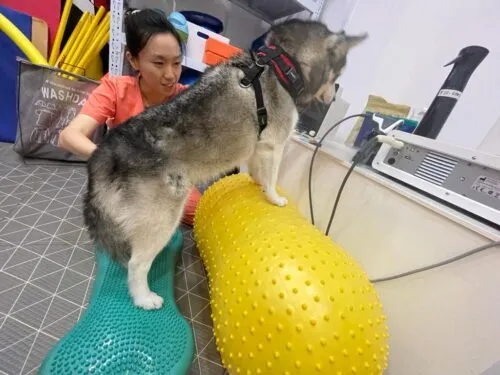
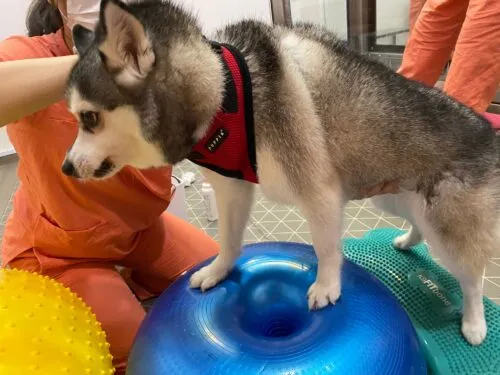
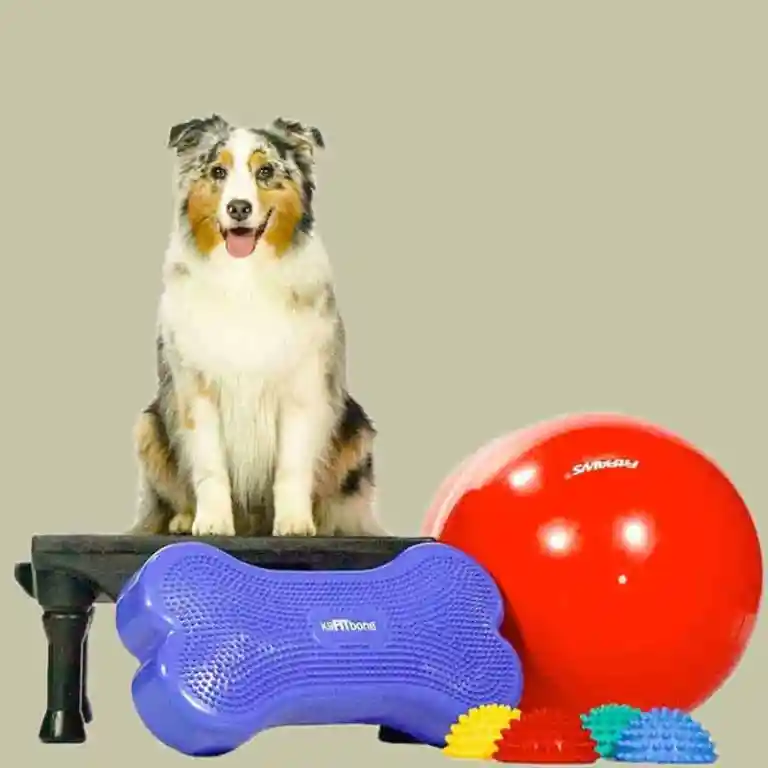
Professional-grade cavaletti rail sets, wobble boards, balance discs, foam pads, balance rolls, ramps, stairs, textured surfaces, resistance bands, and an underwater treadmill — everything needed for comprehensive dog rehabilitation exercises.
No generic exercise sheets. Every programme targets your dog's specific deficits — identified through objective assessment — and is progressed systematically based on regular reassessment data.
All programmes designed under veterinary supervision (Dr. Sara Lam BVSc) and delivered by therapists with internationally recognised rehabilitation qualifications. Proper technique and progression are critical for safety.
Every owner receives demonstrated, explained, and documented home exercises tailored to their dog's programme. Home exercises are a core component — rehabilitation should happen every day, not just at the clinic.
Exercises work best combined with manual therapy, hydrotherapy, laser therapy, and other modalities. At RehabVet, exercises are part of a comprehensive physical therapy programme — not an isolated treatment.
We measure muscle circumference, joint range of motion, proprioceptive placing tests, gait quality, and functional mobility at regular intervals. You see your dog's improvement in concrete numbers.
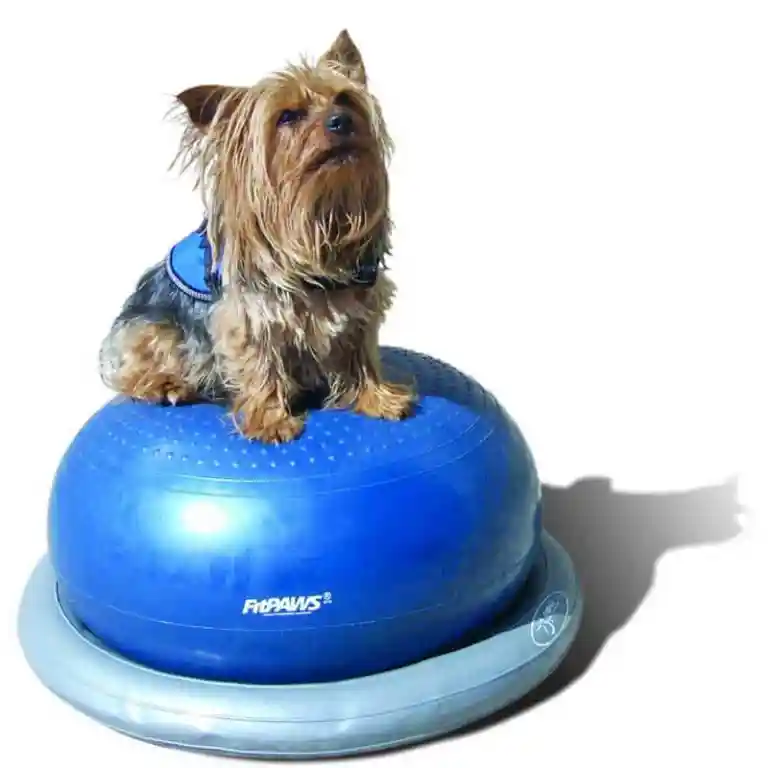
Proprioception — your dog's awareness of where their body is in space — is often impaired after surgery, injury, or neurological conditions. We use wobble boards, inflatable balance discs, and foam pads to challenge balance receptors and retrain the nervous system. These proprioception exercises for dogs progress from mildly unstable surfaces to complex balance challenges as your dog improves.
Walking or trotting over evenly spaced ground poles forces your dog to consciously lift each limb higher than normal, improving limb awareness, stride length, joint flexion, and coordination. One of the most effective canine rehabilitation exercises available — particularly for dogs recovering from orthopaedic surgery or with neurological conditions affecting gait.
Targeted strengthening exercises rebuild muscle mass lost after surgery, injury, or periods of restricted activity. Sit-to-stand transitions build quadriceps and hamstrings. Wheelbarrowing and cookie stretches strengthen forelimbs and core. Each exercise targets specific muscle groups identified as weak during your dog's assessment — this is precise rehabilitation, not generic activity.
Gentle manual weight shifting — rocking your dog side to side, forward and back — activates proprioceptors throughout the body. For dogs favouring a limb or with weak back legs, targeted weight-bearing exercises encourage gradual return to normal four-limb weight distribution. Essential physio exercises for dogs with back leg weakness after IVDD, hip surgery, or cruciate repair.
Structured walking over varied surfaces — grass, gravel, sand, rubber mats, textured tiles — provides continuous proprioceptive input through the paw pads. Walking on gentle inclines, circles, serpentines, and figure-eights challenges balance and coordination in functional, real-world patterns. A foundational canine fitness exercise that improves overall mobility.
For dogs with IVDD, degenerative myelopathy, FCE, or post-surgical nerve damage, assisted standing with gradually decreasing support retrains motor pathways. Combined with paw placement exercises — manually positioning the paw and having the dog hold it — this rebuilds the brain-body connection. Critical dog IVDD exercises that maximise neurological recovery.
Arthritis is the most common reason dogs are referred for rehabilitation exercises. Our programmes combine gentle range-of-motion exercises, controlled strengthening (sit-to-stand, weight shifting), low-impact walking patterns, and underwater treadmill sessions. The goal is building protective muscle mass around affected joints while maintaining flexibility — without stressing damaged cartilage. Most arthritic dogs show significant improvement within 3–4 weeks of starting structured physiotherapy exercises.
IVDD patients often lose proprioception in their hind limbs — they may knuckle, drag their paws, or lose awareness of limb position. Our IVDD exercise programmes include paw placement drills, assisted standing, weight shifting, textured surface walking, and neuromuscular re-education. Combined with hydrotherapy, laser therapy, and NMES, these physiotherapy exercises help IVDD dogs regain significant function. Especially important for Dachshunds, French Bulldogs, Corgis, and Shih Tzus.
Hip dysplasia causes lifelong pain and progressive degeneration. Our hip dysplasia exercise programmes focus on strengthening the gluteal and hamstring muscles that support the hip joint, improving range of motion, and correcting compensatory movement patterns. Controlled weight-bearing exercises, underwater treadmill sessions, and targeted stretching significantly improve comfort and function — often delaying or avoiding surgical intervention.
Post-surgical rehabilitation is the single most important factor in TPLO and cruciate surgery outcomes. Research shows dogs receiving structured rehabilitation exercises recover 30–50% faster. Our programmes begin within days of surgery with gentle passive range-of-motion exercises, progressing to weight-bearing exercises, sit-to-stand transitions, cavaletti rails, and controlled walking. The final phase focuses on return to full activity with sport-specific or lifestyle-specific exercises.
After fracture stabilisation, rehabilitation exercises restore range of motion, rebuild muscle mass, and retrain normal gait patterns. We progress from non-weight-bearing exercises (passive range of motion) through partial weight-bearing (assisted standing, gentle balance work) to full weight-bearing exercises (strengthening, cavaletti, surface walking). Timing is coordinated with your surgeon based on radiographic healing.
While DM cannot be cured, regular therapeutic exercises slow functional decline, maintain muscle mass, and preserve mobility for as long as possible. Our DM exercise programmes emphasise proprioception training, assisted walking, balance challenges, and hydrotherapy — keeping dogs mobile and comfortable through the progression of disease.
Age-related muscle loss (sarcopenia), joint stiffness, and declining proprioception all contribute to reduced mobility in senior dogs. Regular rehabilitation exercises maintain strength, flexibility, and balance — preventing the downward spiral of inactivity that accelerates decline. Our senior dog exercise programmes are gentle, progressive, and adapted to each dog's abilities and comfort level.
Home exercises are a critical component of every rehabilitation programme at RehabVet. Between clinic sessions, we provide specific exercises — carefully demonstrated, explained, and documented — for you to practise at home daily. Typical home exercises include sit-to-stand transitions, controlled leash walking, gentle stretching, weight shifting, and balance challenges. We recommend specific equipment (wobble cushions, balance discs) and show you exactly how to use them safely.
Dogs receiving structured rehabilitation exercises after orthopaedic surgery recover 30–50% faster, develop better muscle mass, and achieve greater joint range of motion than those on rest alone. Early, supervised exercise is the single most impactful factor in post-surgical outcomes.
Proprioception exercises retrain the neural pathways that tell your dog where their limbs are in space. Without specific retraining after surgery, injury, or neurological conditions, dogs may knuckle, stumble, or move asymmetrically indefinitely — even after the underlying condition has healed.
Different exercises target specific muscle groups. Sit-to-stand transitions build quadriceps and hamstrings. Core strengthening exercises improve trunk stability. This precision allows us to address specific weaknesses — not just general fitness.
Controlled exercise releases endorphins, improves joint lubrication (synovial fluid production increases with movement), and reduces muscle tension and spasm. Regular therapeutic exercise often allows dogs to reduce their dependence on pain medications.
Gentle active and passive range-of-motion exercises prevent joints from stiffening during recovery. Active exercises are particularly valuable because they maintain muscle engagement alongside joint mobility — building the strength needed to support improved range of motion.
Balance training directly improves stability by training the nervous system to detect and correct shifts in body position. Critical for senior dogs prone to slipping, dogs with vestibular disease, and neurological patients who have lost normal balance reflexes.
For dogs with IVDD, FCE, or degenerative myelopathy, rehabilitation exercises promote neuroplasticity — the brain's ability to form new neural connections. Repeated, targeted exercises help retrain motor pathways and maximise recovery of voluntary movement.
Therapeutic exercises provide structured, calorie-burning activity that is safe even for dogs with movement restrictions. Combined with underwater treadmill sessions, exercise programmes help overweight dogs lose weight while protecting compromised joints.
We track muscle circumference, joint range of motion, proprioceptive placing tests, gait quality scores, and functional mobility at regular intervals. You see your dog's improvement in concrete numbers — not just subjective impressions.
Many rehabilitation exercises can be safely continued at home with proper instruction. Home exercises extend the benefit of clinic sessions to every day, significantly improving outcomes and making rehabilitation practical and sustainable long-term.
Gait observation, posture analysis, muscle circumference measurements, joint range of motion, proprioceptive placing tests, and pain evaluation. We identify your dog's specific deficits and design a targeted programme.
Gentle manual therapy, passive stretching, and controlled walking prepare your dog's muscles and joints for exercise. This reduces injury risk and improves exercise quality.
A combination of exercises selected for your dog: balance board work, cavaletti rails, sit-to-stand transitions, weight shifting, controlled walking patterns, and proprioceptive drills. Intensity and difficulty adjusted in real time.
Gentle stretching, massage, and — if appropriate — laser therapy or hydrotherapy to complement the exercise session. Maximises recovery and reduces post-exercise soreness.
Your therapist demonstrates and explains specific home exercises, provides written instructions, and recommends any equipment needed. Home exercises extend rehabilitation benefits to every day.
Qualified rehabilitation specialists — not general practice vets. Led by Dr. Sara Lam BVSc.
EXCELLENT Based on 213 reviews Posted on Peter LeeTrustindex verifies that the original source of the review is Google. Back to Rehab Vet for the second time - Dr Sara and team have helped my dog regain the ability to walk even after 2 episodes of stroke before. I have full confidence they can help my kitten with his recovery after injuring his lower back 🙏Posted on Jan ChuaTrustindex verifies that the original source of the review is Google. Have a wonderful experience with the team at Rehab Vet. The staff are warm, friendly, and always patient in answering our enquiries. Their care and professionalism make every visit reassuring.Posted on jy ngTrustindex verifies that the original source of the review is Google. My senior dog has been with rehabvet since Sept 2025 after her leg surgery. We’re happy to see improvement! Everyone is helpful and friendly here. Thanks rehabvet team!Posted on Gladys WoonTrustindex verifies that the original source of the review is Google. Newly renovated place, more conducive for therapy sessions. Therapists are experienced in handling older dogs. Have been sending my 18 year old dog for therapy for more than a year ago.Posted on Jaime KTrustindex verifies that the original source of the review is Google. Friendly team who works well with my nervous Singapore specialPosted on Chooi Ling LeeTrustindex verifies that the original source of the review is Google. Highly recommend!Posted on J LTrustindex verifies that the original source of the review is Google. RehabVet’s dedicated team of therapists are always loving and patient towards bao. With regular sessions, bao is no longer limping or in pain! Special thank you to Sean, who conducts her hydrotherapy sessions. IG: @adventuresofbaoandpiggyPosted on evonne ngTrustindex verifies that the original source of the review is Google. I’ve been bringing my dog Cocoa here for a few years and have had a very good experience. The team is caring, attentive, and always keeps us updated after each session. Cocoa is very comfortable with them, and we’ve seen steady improvement over time. They also share photos and give helpful advice on how to support her at home. Really appreciate the dedication and care. Highly recommend!Posted on Jann lohTrustindex verifies that the original source of the review is Google. recommend this pet rehab centre! The team is very patient and knowledgeable. My pet showed great improvement after just a few sessions. They truly care and take time to explain everything clearly. Thank you for the amazing care!Verified by TrustindexTrustindex verified badge is the Universal Symbol of Trust. Only the greatest companies can get the verified badge who has a review score above 4.5, based on customer reviews over the past 12 months. Read more
Underwater treadmill therapy
Comprehensive rehabilitation
Manual therapy & exercises
Deep tissue healing
Full recovery programmes
Pain management & healing