
EXCELLENTTrustindex verifies that the original source of the review is Google. I’ve been bringing my dog Cocoa here for a few years and have had a very good experience. The team is caring, attentive, and always keeps us updated after each session. Cocoa is very comfortable with them, and we’ve seen steady improvement over time. They also share photos and give helpful advice on how to support her at home. Really appreciate the dedication and care. Highly recommend!Posted onTrustindex verifies that the original source of the review is Google. recommend this pet rehab centre! The team is very patient and knowledgeable. My pet showed great improvement after just a few sessions. They truly care and take time to explain everything clearly. Thank you for the amazing care!Posted onTrustindex verifies that the original source of the review is Google. Great vets and therapist who care for the clients and petsPosted onTrustindex verifies that the original source of the review is Google. The therapists are patient and helped improved my dog's arthritis condition. They taught us how to massage his joints and told us to use heat therapy. I am deeply grateful and thankful for the sess with them.Posted onTrustindex verifies that the original source of the review is Google. Very friendly and knowledgeable doctors and staffs! Junior loves going to Rehabvet for his assessment and humans also bring home some customized home exercise for the pup!Posted onTrustindex verifies that the original source of the review is Google. My dog has been coming to rehabs for hips dysplasia at a young age of 2 years old & now is 10 years old & condition did not detoriate - glad early treatments help. Thank You Team.Posted onTrustindex verifies that the original source of the review is Google. The therapists at Rehab Vet are patient, knowledgeable, and truly caring. They take the time to understand each dog and tailor the rehab accordingly, which I really appreciate. Highly recommend!Posted onTrustindex verifies that the original source of the review is Google. Dr Sara is extremely experienced and patient with dog, my dog is timid and will not stay still, but Dr Sara was very very calming and patient. They give lots of realistic tips and trick that we can bring home to continue maintaining or help improve our furbaby’s situation. They have the most friendly and caring people there, no judgement, no stress, no pressure. The newly renovated place is also gorgeous and soothing for both pawrents and doggos.Posted onTrustindex verifies that the original source of the review is Google. Great team! Brought my dog Bunny in for a consultation because her luxating patella was getting worse. Bunny is an anxious dog so I expected her to be a handful during the consult but she was very calm in the therapists’ presence! Shout out to Xan and Noelle for helping her feel at ease in a foreign place. I love the clinic’s interior as well, the warm lights and pastel colours are very welcoming for both me and Bunny 🙂Verified by TrustindexTrustindex verified badge is the Universal Symbol of Trust. Only the greatest companies can get the verified badge who has a review score above 4.5, based on customer reviews over the past 12 months. Read more
Established as Singapore's first full-service veterinary rehabilitation clinic. Every therapist, piece of equipment, and room exists for one purpose: rehabilitation.
Our programmes combine manual therapy, therapeutic exercises, Class 4 laser, electrotherapy, ultrasound, and shockwave therapy — a complete clinical physiotherapy approach, not a simple rubdown.
All sessions are supervised by qualified veterinary professionals. Our therapists hold internationally recognised rehabilitation qualifications, working under Dr. Sara Lam BVSc.
We measure muscle circumference, joint range of motion, gait quality, and functional mobility scores at regular reassessments — so recovery progress is visible and verifiable.
Every dog receives dedicated individual attention. Every session is tailored to your dog's condition, abilities, and recovery goals — no group classes, no shortcuts.
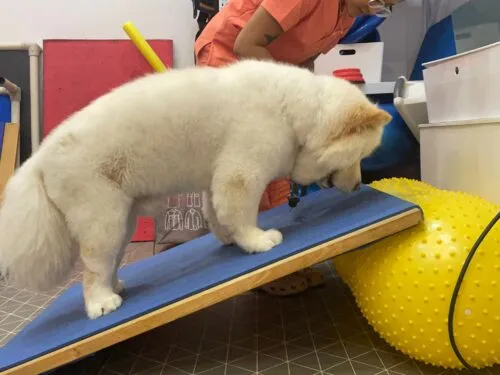
Dog physiotherapy — also known as canine physiotherapy or veterinary physical therapy — is a specialised branch of veterinary rehabilitation that uses evidence-based physical techniques to restore movement, reduce pain, and improve function. At RehabVet, our physiotherapy programmes draw on six core modalities:
Just as human physiotherapy helps people recover from operations and manage musculoskeletal conditions, canine physiotherapy applies the same scientific principles — adapted specifically for our four-legged patients. The effectiveness of veterinary physiotherapy is well-supported by clinical research, with studies demonstrating faster recovery, better muscle development, and improved functional outcomes.
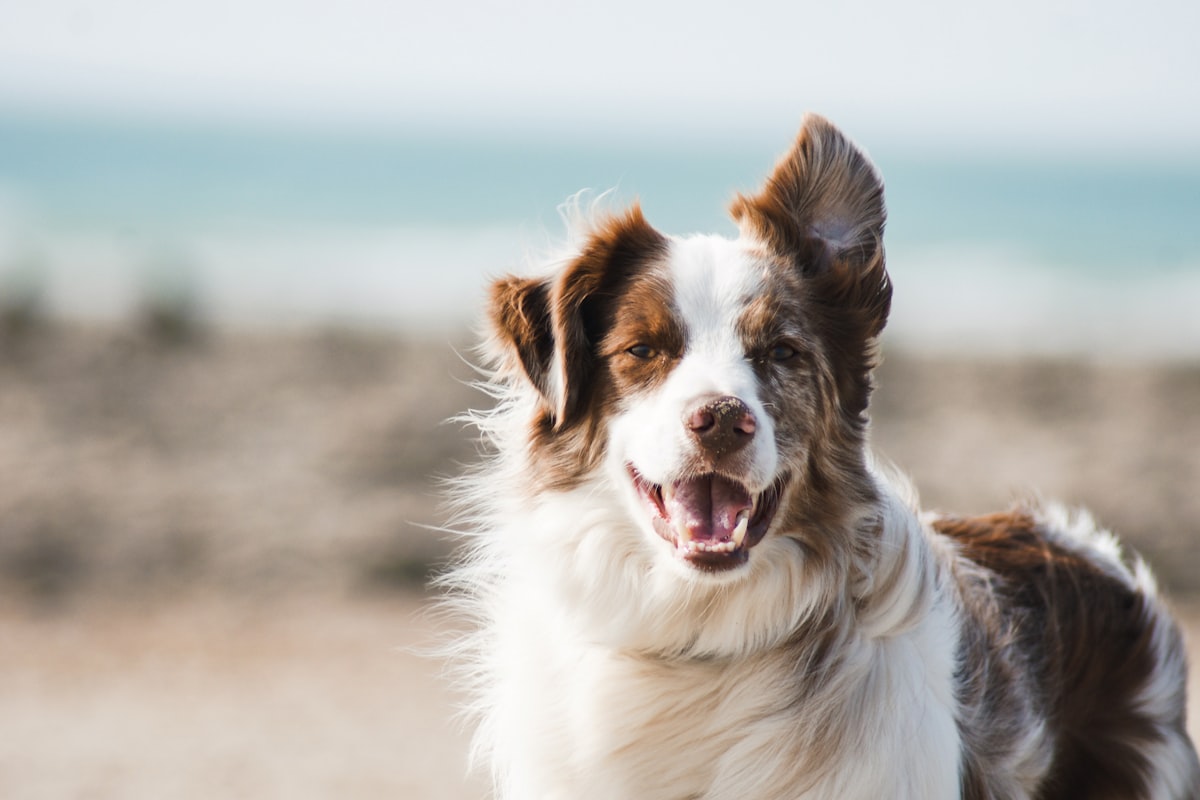
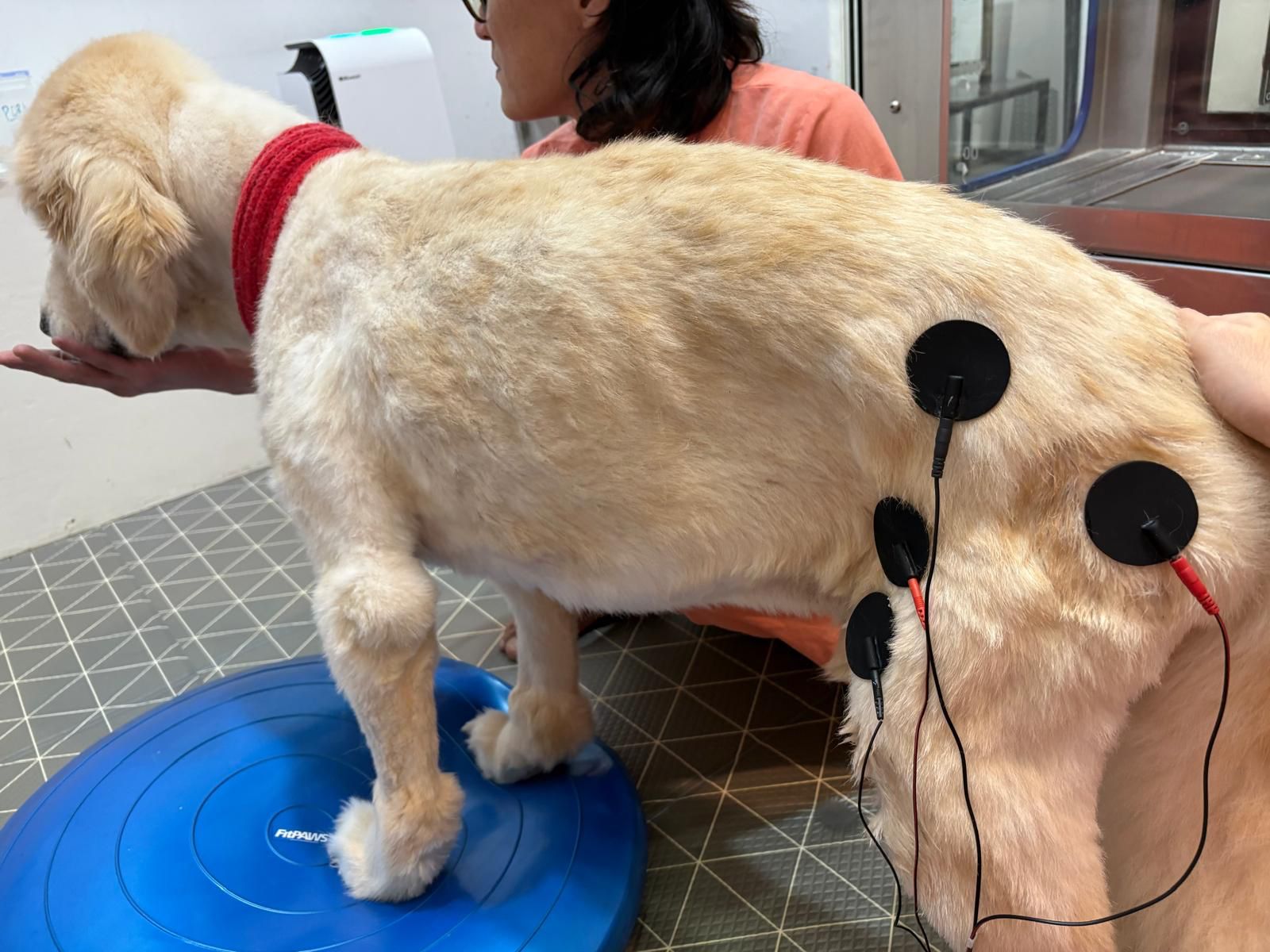
Your dog is assessed for gait, posture, joint range of motion, muscle mass, and pain levels. A personalised treatment programme is created with clear goals.
Gentle manual techniques — massage, joint mobilisation, stretching — prepare your dog's body for active treatment and provide immediate pain relief.
Targeted therapeutic exercises, balance work, and instrument-assisted therapies (laser, electrotherapy, ultrasound) selected for your dog's specific condition.
Gentle stretching and relaxation techniques. Your dog should leave the session comfortable and calm.
Session notes recorded, progress measurements taken at regular reassessments, and home exercise recommendations provided to continue improvement between visits.
WhatsApp us at +65 8798 7554 to discuss your dog’s needs and schedule an assessment.
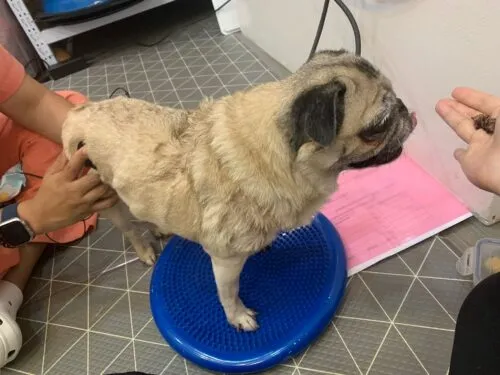
Dogs receiving structured physiotherapy after orthopaedic surgery — TPLO, TTA, fracture repair, or spinal procedures — recover faster, develop better muscle mass, and achieve greater joint range of motion compared to rest alone. Our physiotherapists begin rehabilitation as soon as it is clinically safe.
Physiotherapy techniques such as manual therapy, Class 4 laser, TENS, and therapeutic ultrasound provide effective pain relief through natural mechanisms — endorphin release, reduced inflammation, and improved circulation — often reducing or eliminating the need for long-term pain medication.
Joint mobilisation, targeted stretching, and progressive exercise programmes restore flexibility and movement to stiff, post-surgical, or arthritic joints. Clinical measurements at RehabVet show joint range of motion improvements of 15–25% within 4–6 sessions for many patients.
Muscle atrophy is one of the most common consequences of injury, surgery, or prolonged rest. Physiotherapy uses progressive resistance exercises, balance work, and targeted strengthening to rebuild lost muscle — critical for joint stability and long-term function.
For dogs with IVDD, degenerative myelopathy, fibrocartilaginous embolism, or vestibular disease, physiotherapy helps retrain neural pathways through proprioceptive exercises, assisted standing, and controlled weight-bearing — improving motor function over time.
When a dog favours one limb, the opposite limb and spine bear extra load — leading to secondary injuries. Physiotherapy addresses the original problem while correcting compensatory movement patterns before they cause additional damage.
Osteoarthritis affects up to 80% of dogs over 8 years old. Regular physiotherapy maintains joint mobility, builds protective muscle mass, reduces pain, and slows disease progression — helping arthritic dogs stay active and comfortable for longer.
Proprioception — the body's awareness of its position in space — is often impaired after surgery or neurological disease. Balance exercises, wobble boards, and controlled surface work retrain these pathways, reducing the risk of falls and re-injury.
Overweight dogs face significantly higher risks of joint disease, diabetes, and reduced life expectancy. Physiotherapy provides structured, supervised exercise programmes that burn calories safely — even for dogs who cannot tolerate conventional exercise due to pain or mobility limitations.
Every physiotherapy programme at RehabVet includes regular reassessments — muscle circumference measurements, gait analysis, and functional mobility scoring — so you can see your dog's improvement in concrete, verifiable terms.
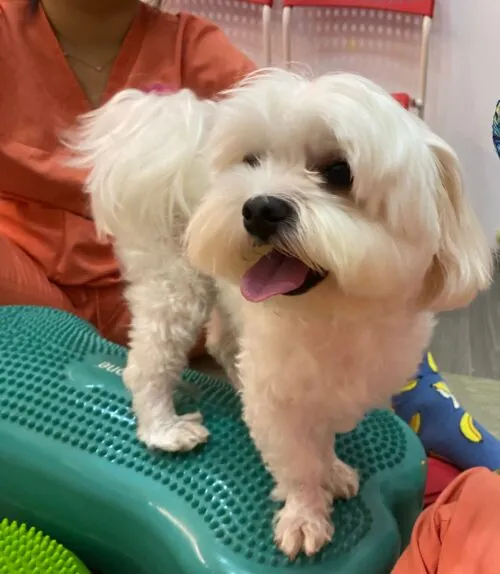
Dogs recovering from TPLO, TTA, femoral head ostectomy (FHO), fracture repair, or spinal surgery benefit enormously from early physiotherapy. We coordinate with your primary vet to begin sessions as soon as it is safe — typically 3–7 days post-surgery for gentle manual therapy, progressing to active exercises as healing allows.
Arthritis is the single most common reason dogs are referred for physiotherapy in Singapore. Our programme combines manual therapy for pain relief with progressive strengthening exercises that build the muscle needed to support and protect affected joints — slowing disease progression and improving quality of life.
IVDD patients — particularly Dachshunds, French Bulldogs, and Corgis — often present with hind limb weakness, ataxia, or paralysis. Physiotherapy combines neuromuscular re-education, proprioceptive exercises, and laser therapy to promote nerve recovery and restore function.
Dysplastic joints cause lifelong pain and progressive degeneration. Physiotherapy strengthens the muscles surrounding affected joints, improves joint stability, and reduces pain — often delaying or avoiding the need for surgical intervention.
Degenerative myelopathy, fibrocartilaginous embolism (FCE), vestibular disease, and other neurological conditions respond well to structured physiotherapy. Balance exercises, assisted standing, and controlled movement help retrain neural pathways and maximise remaining function.
Both pre- and post-surgical cruciate cases benefit from physiotherapy. Pre-surgical: to build muscle mass and maintain fitness before the operation. Post-surgical: to restore range of motion, rebuild quadriceps strength, and retrain normal gait patterns as quickly and safely as possible.
Muscle strains, tendon and ligament sprains, and repetitive strain injuries are treated with a combination of manual therapy, therapeutic ultrasound, shockwave therapy, and progressive exercise. The goal is full functional recovery and prevention of re-injury.
Older dogs naturally lose muscle mass, joint flexibility, and balance. Regular physiotherapy sessions help senior dogs maintain mobility, prevent falls, manage age-related pain, and preserve independence — significantly improving quality of life in their golden years.
Bring your dog's medical history, any imaging reports (X-rays, MRI, CT), and a list of current medications. If your dog has had recent surgery, bring the surgical report. No special preparation is needed — just come with your dog well-rested and comfortable.
Your physiotherapist will combine hands-on manual therapy with targeted exercises, adjusting the programme in real time based on your dog's response. Sessions typically last 30–60 minutes. You are welcome to observe and ask questions throughout — we encourage owner involvement.
Some dogs are tired after their first few sessions — this is normal and indicates the muscles have been working. Your therapist will demonstrate home exercises for you to practise between clinic visits, and book your next session. Most dogs show visible improvement within 3–4 sessions.
Effective physiotherapy requires more than a single approach. At RehabVet, we combine multiple evidence-based modalities to create a comprehensive treatment programme tailored to your dog’s condition. Here’s what’s available:
| Modality | What It Does | Best For |
|---|---|---|
| Manual Therapy | Joint mobilisation, soft tissue massage, myofascial release, and targeted stretching performed by hand | Pain relief, joint stiffness, post-surgical recovery, muscle tension |
| Therapeutic Exercises | Balance work, proprioception drills, strengthening exercises, gait retraining using cavaletti, wobble boards, and physio equipment | Muscle building, neurological rehab, balance, post-surgical recovery |
| Class 4 Laser Therapy | Deep tissue photobiomodulation that stimulates cellular repair, reduces inflammation, and promotes healing at the cellular level | Pain management, wound healing, arthritis, tendon injuries |
| Electrotherapy (TENS & NMES) | TENS for pain management via nerve stimulation; NMES for muscle activation and strengthening in weakened or atrophied muscles | Chronic pain, muscle atrophy, neurological conditions |
| Therapeutic Ultrasound | Deep tissue heating using sound waves to increase blood flow, reduce scar tissue, and promote healing in deep structures | Chronic tendon injuries, scar tissue, deep muscle tension |
| Shockwave Therapy (ESWT) | Focused acoustic waves that stimulate tissue repair and regeneration in chronic or non-healing conditions | Tendon/ligament injuries, chronic pain, calcification, non-healing fractures |
EXCELLENTTrustindex verifies that the original source of the review is Google. I’ve been bringing my dog Cocoa here for a few years and have had a very good experience. The team is caring, attentive, and always keeps us updated after each session. Cocoa is very comfortable with them, and we’ve seen steady improvement over time. They also share photos and give helpful advice on how to support her at home. Really appreciate the dedication and care. Highly recommend!Posted onTrustindex verifies that the original source of the review is Google. recommend this pet rehab centre! The team is very patient and knowledgeable. My pet showed great improvement after just a few sessions. They truly care and take time to explain everything clearly. Thank you for the amazing care!Posted onTrustindex verifies that the original source of the review is Google. Great vets and therapist who care for the clients and petsPosted onTrustindex verifies that the original source of the review is Google. The therapists are patient and helped improved my dog's arthritis condition. They taught us how to massage his joints and told us to use heat therapy. I am deeply grateful and thankful for the sess with them.Posted onTrustindex verifies that the original source of the review is Google. Very friendly and knowledgeable doctors and staffs! Junior loves going to Rehabvet for his assessment and humans also bring home some customized home exercise for the pup!Posted onTrustindex verifies that the original source of the review is Google. My dog has been coming to rehabs for hips dysplasia at a young age of 2 years old & now is 10 years old & condition did not detoriate - glad early treatments help. Thank You Team.Posted onTrustindex verifies that the original source of the review is Google. The therapists at Rehab Vet are patient, knowledgeable, and truly caring. They take the time to understand each dog and tailor the rehab accordingly, which I really appreciate. Highly recommend!Posted onTrustindex verifies that the original source of the review is Google. Dr Sara is extremely experienced and patient with dog, my dog is timid and will not stay still, but Dr Sara was very very calming and patient. They give lots of realistic tips and trick that we can bring home to continue maintaining or help improve our furbaby’s situation. They have the most friendly and caring people there, no judgement, no stress, no pressure. The newly renovated place is also gorgeous and soothing for both pawrents and doggos.Posted onTrustindex verifies that the original source of the review is Google. Great team! Brought my dog Bunny in for a consultation because her luxating patella was getting worse. Bunny is an anxious dog so I expected her to be a handful during the consult but she was very calm in the therapists’ presence! Shout out to Xan and Noelle for helping her feel at ease in a foreign place. I love the clinic’s interior as well, the warm lights and pastel colours are very welcoming for both me and Bunny 🙂Verified by TrustindexTrustindex verified badge is the Universal Symbol of Trust. Only the greatest companies can get the verified badge who has a review score above 4.5, based on customer reviews over the past 12 months. Read more
Dog physiotherapy uses evidence-based physical techniques — manual therapy, therapeutic exercises, laser therapy, electrotherapy, and more — to restore movement, reduce pain, and improve function. It helps dogs recover from surgery, manage chronic conditions like arthritis, and maintain mobility as they age. At RehabVet, every programme is tailored to your dog’s specific condition and goals.
The frequency depends on your dog’s condition and treatment phase. For post-surgical rehabilitation, we typically recommend 2–3 sessions per week during the initial recovery phase, reducing to once weekly as your dog improves. Dogs with chronic conditions like arthritis often benefit from 1–2 sessions per week initially, transitioning to weekly or fortnightly maintenance sessions. Your physiotherapist will recommend a schedule at your initial assessment.
Treatment duration varies by condition. Post-surgical patients typically complete an active rehabilitation programme over 8–12 weeks, after which they may transition to maintenance sessions. Dogs with chronic progressive conditions like arthritis or degenerative myelopathy often continue with regular sessions indefinitely as a long-term management strategy. We reassess progress regularly and adjust the programme accordingly.
Physiotherapy should not be painful. Our therapists use gentle, progressive techniques and constantly monitor your dog’s comfort throughout the session. Some treatments — particularly deep tissue work or stretching of stiff joints — may cause mild, temporary discomfort, similar to what you might feel during your own physiotherapy. Most dogs relax during sessions, and many actively enjoy them.
Physiotherapy (land-based rehabilitation) uses manual therapy, exercises, laser, electrotherapy, and other modalities to treat your dog on dry land. Hydrotherapy uses the properties of water — buoyancy, resistance, and warmth — for exercise and rehabilitation. At RehabVet, many dogs benefit from both: physiotherapy for targeted manual treatment and strengthening, combined with hydrotherapy for low-impact cardiovascular and endurance work. Your vet will recommend the best combination for your dog.
In some cases, yes. Physiotherapy can successfully manage certain conditions conservatively — including mild cruciate ligament injuries, early-stage arthritis, and some soft tissue injuries — potentially avoiding or delaying the need for surgery. However, this depends on the specific condition, severity, and your dog’s individual response. Our veterinary team will give you an honest assessment of whether conservative management is appropriate.
Our rehabilitation team works under the supervision of Dr. Sara Lam BVSc, our lead veterinarian. Our therapists hold internationally recognised qualifications in animal physiotherapy and rehabilitation, and participate in ongoing professional development. Every session is conducted under veterinary oversight, ensuring your dog receives clinically appropriate, safe treatment.
Absolutely. Physiotherapy is one of the most beneficial interventions for senior dogs. Older dogs commonly suffer from muscle loss (sarcopenia), arthritis, reduced balance, and declining mobility. Physiotherapy helps them maintain strength, manage pain, prevent falls, and preserve quality of life. Programmes are adapted to each senior dog’s abilities and tolerance — gentle, progressive, and always respectful of their limitations.
Yes, physiotherapy is one of the most recommended treatments for canine arthritis. It combines pain-relieving modalities (laser therapy, TENS, manual therapy) with strengthening exercises that build the muscle needed to support and protect arthritic joints. At RehabVet, most arthritis patients show measurable improvements in mobility scores and pain levels within 4–6 sessions.
Your dog’s first visit includes a comprehensive assessment: review of medical history and imaging, observation of gait and posture, palpation of muscles and joints, measurement of joint range of motion, and a functional movement evaluation. This informs a personalised treatment plan with clear goals and milestones.
Yes — home exercises are an important part of most rehabilitation programmes. After your sessions, our therapists will teach you specific exercises to practice at home between clinic visits. These are carefully selected to complement in-clinic treatment and accelerate recovery. We provide clear instructions and, where helpful, video demonstrations.