Canine Hydrotherapy · Singapore's First Vet Rehab Clinic

Hydrotherapy for Dogs

Why Choose RehabVet for Dog Hydrotherapy in Singapore

Singapore’s first dedicated animal rehabilitation clinic

As Singapore’s leading provider of hydrotherapy for dogs, RehabVet combines veterinary expertise with state-of-the-art underwater treadmill technology to deliver measurable rehabilitation outcomes. Dog hydrotherapy is one of the most effective modalities in dog rehabilitation, helping patients recover faster and more completely from surgery, injury, and chronic disease.
At RehabVet, we provide expert hydrotherapy for dogs in Singapore, harnessing the unique therapeutic properties of water — buoyancy, resistance, and warmth — in a purpose-built clinical environment. Every session is supervised by our veterinary team and supported by regular progress measurements, so you always know how your dog is progressing.
Singapore's first dedicated rehabilitation clinic

Established as Singapore's first full-service veterinary rehabilitation clinic. Every therapist, piece of equipment, and room exists for one purpose: rehabilitation.

Underwater treadmill — not just a swimming pool

Our purpose-built underwater treadmill allows precise control of water depth, speed, and resistance — critical for post-surgical cases where uncontrolled movement is dangerous.

Vet-supervised every session

All sessions are supervised by qualified veterinary professionals. Our therapists hold the Level 3 Certificate in Hydrotherapy for Small Animals (UK), working under Dr. Sara Lam.

Data-driven progress tracking

We measure muscle circumference, gait quality, and functional mobility scores at regular reassessments — so recovery progress is visible and verifiable.

One-on-one sessions only

Every dog receives dedicated individual attention. No shared pool sessions. Every session is tailored to your dog's condition, abilities, and recovery goals.

Hydrotherapy Underwater Treadmill 2

What Is Hydrotherapy for Dogs?

Also known as dog water therapy or aquatic rehabilitation
Hydrotherapy for dogs — also known as dog water therapy or canine aquatic rehabilitation — is a clinically proven therapeutic modality that uses the unique properties of water to support physical recovery and rehabilitation. The three key properties that make water therapeutic are:
  • Buoyancy: reduces effective body weight by 60–90%, allowing movement without joint stress
  • Resistance: water provides 12–14× more resistance than air, building muscle effectively at low speeds
  • Warmth: warm water (28–32°C) relaxes muscles, reduces stiffness, and increases circulation
At RehabVet, we operate both an underwater treadmill — which promotes weight-bearing walking and gait retraining — and a saltwater hydrotherapy pool for swimming-based therapy. Our clinical team will assess your dog and recommend the appropriate modality based on their condition.
Dog in under water treadmill running
Dog swimming in hydrotherapy pool for rehabilitation and recovery
Dog at veterinary clinic recovering after surgery with hydrotherapy

How Hydrotherapy Sessions Are Conducted at RehabVet

Each session follows a structured clinical protocol tailored to your dog’s condition and progress:
Initial assessment

Your dog is assessed for suitability, including a review of their history, gait analysis, and current condition. A personalised treatment programme is created.

Session preparation

Your dog is introduced to the water environment calmly, entirely at their own pace. Our team uses a low-stress handling approach — no force, no rush.

The session (20–45 minutes)

Guided exercise on the underwater treadmill or in the pool. The therapist controls depth, speed, and duration in real time, adjusting to your dog's response.

Cool-down and drying

Post-session cool-down, thorough drying, and coat care. Your dog should leave the clinic comfortable and relaxed.

Progress monitoring

Session notes recorded, progress measurements taken at regular reassessments, and home exercise recommendations provided where appropriate.

WhatsApp us at +65 8798 7554 to discuss your dog’s needs and schedule an assessment.

Top 10 Benefits of Hydrotherapy for Dogs

Evidence-based outcomes across surgery recovery, arthritis, and chronic conditions

Canine Underwater Treadmill Therapy How It Works And Its Benefits 1
1. Low-impact exercise that protects joints

Water buoyancy reduces your dog's effective body weight by up to 60–90%, allowing movement and muscle activation without stressing damaged or post-surgical joints. This makes hydrotherapy safe during recovery phases when land exercise would be harmful.

2. Accelerates post-surgical rehabilitation

Dogs recovering from TPLO, TTA, fracture repair, or spinal surgery typically regain full weight-bearing 30–40% faster with hydrotherapy as part of their programme. The water environment enables controlled movement before the patient is ready for land-based exercise.

3. Reduces pain and inflammation

Warm water (28–32°C) promotes vasodilation, reduces joint stiffness, and triggers the release of endorphins. Many dogs show immediate reductions in pain scores after their first session, particularly those with chronic arthritis or degenerative joint disease.

4. Builds and maintains muscle mass

Water provides 12–14 times more resistance than air, making each movement more effective for muscle building. This is critical for dogs with muscle atrophy following injury, surgery, or neurological conditions — and for senior dogs losing muscle due to age.

5. Improves neurological function

For dogs with IVDD, degenerative myelopathy, or other neurological conditions, the sensory feedback from water contact and the supported movement environment helps retrain neural pathways and improve motor function over time.

6. Supports weight management

Hydrotherapy burns significantly more calories than equivalent land exercise due to water resistance, without the joint impact that makes conventional exercise difficult for overweight dogs. Combined with dietary management, it's one of the most effective weight loss tools in veterinary rehabilitation.

7. Improves cardiovascular fitness

The resistance of water provides an effective cardiovascular workout at lower speeds and intensities than land-based exercise. This is especially valuable for dogs who cannot exercise at normal intensity due to orthopaedic or respiratory conditions.

8. Enhances range of motion

The warmth and buoyancy of water allow joints to move through a fuller range of motion with less pain. Clinical measurements at RehabVet show joint range of motion improvements of 15–25% within 4–6 sessions for many arthritis patients.

9. Provides psychological benefit

Many dogs develop a positive association with hydrotherapy sessions, particularly when introduced gradually using our low-stress handling approach. The combination of physical improvement and positive experience supports overall wellbeing during difficult recovery periods.

10. Enables measurable progress tracking

Unlike most exercise modalities, hydrotherapy sessions at RehabVet are accompanied by regular reassessments — muscle circumference measurements, gait analysis, and functional mobility scoring — so you can see your dog's progress in concrete terms.

Benefits of hydrotherapy for dogs infographic

Conditions Treated with Dog Hydrotherapy

At RehabVet, we are Singapore’s leading provider of hydrotherapy for dogs — combining veterinary expertise with state-of-the-art equipment to deliver measurable results.

Our hydrotherapy for dogs in Singapore addresses a wide range of conditions, from post-surgical recovery to age-related mobility issues.

Senior dog receiving hydrotherapy treatment for arthritis pain relief
Arthritis & Joint Disease
Dog at veterinary clinic recovering after surgery with hydrotherapy
Post-Surgical Recovery
Hydrotherapy for Senior Dogs: Gentle Exercise for Ageing Joints - RehabVet Singapore
Senior Dog Wellness
A dog in a pool with a life jacket on, receiving hydrotherapy for weight management.
Weight Management
Post-surgical rehabilitation

Dogs recovering from TPLO, TTA, femoral head ostectomy (FHO), fracture repair, or spinal surgery benefit enormously from early hydrotherapy. We coordinate with your primary vet to begin sessions as soon as it is safe to do so — typically 10–14 days post-surgery once wound closure is confirmed.

Osteoarthritis and degenerative joint disease

Arthritis is the most common reason dogs are referred for hydrotherapy in Singapore. The warm water environment significantly reduces joint pain and stiffness, allowing dogs with severe arthritis to exercise safely and maintain the muscle mass that supports joint health. Read more about arthritis treatment.

Intervertebral disc disease (IVDD)

IVDD patients — particularly Dachshunds, French Bulldogs, and Corgis — often present with hind limb weakness, ataxia, or paralysis. Hydrotherapy provides a supported environment for these dogs to work on strengthening and neural retraining, often alongside laser therapy and physiotherapy.

Hip and elbow dysplasia

Dysplastic joints cause lifelong pain and progressive degeneration. Regular hydrotherapy sessions help dysplastic dogs maintain muscle mass around affected joints, reducing the load on dysplastic surfaces and slowing disease progression significantly.

Neurological conditions

Degenerative myelopathy, fibrocartilaginous embolism (FCE), and other neurological conditions affecting mobility respond well to the sensory stimulation and supported movement hydrotherapy provides. Progress can be slow but is often meaningful and measurable.

Weight management

Obese dogs carry significantly elevated risk of orthopaedic disease, diabetes, and reduced life expectancy. Hydrotherapy enables effective calorie-burning exercise without the joint stress that makes conventional exercise painful or unsafe for overweight dogs.

Senior dog wellness

Older dogs benefit from regular hydrotherapy as a maintenance programme — preserving muscle mass, joint mobility, and cardiovascular fitness as they age. Many of our senior patients come fortnightly or monthly for ongoing wellness sessions, not acute treatment.

Cruciate ligament conditions

Both pre- and post-surgical cruciate cases benefit from hydrotherapy. Pre-surgical: to maintain muscle mass and fitness. Post-surgical: to accelerate recovery and restore normal gait patterns. The underwater treadmill is particularly effective for cruciate cases because it promotes weight-bearing walking, unlike pool swimming.

What to Expect During Your Dog's Hydrotherapy Session

First experience with pet hydrotherapy? Here’s what happens
If this is your first experience with pet hydrotherapy, rest assured that our team will guide you through every step. We understand that bringing your dog to a rehabilitation clinic for the first time can feel daunting — here is exactly what to expect.
Before the session

Bring your dog's medical history, any imaging reports (X-rays, MRI), and a list of current medications. Avoid feeding a large meal within 2 hours before the session. If your dog has open wounds, skin conditions, or has been unwell recently, contact us before attending.

During the session

Your therapist will introduce your dog to the treadmill or pool environment gradually. For first-timers, much of the session may be acclimatisation rather than active exercise — this is normal and important. Sessions typically last 20–45 minutes. You are welcome to observe.

After the session

Your dog will be thoroughly dried before leaving. Some dogs are tired after their first few sessions — this is normal and indicates the muscles are working. Most dogs drink more water after sessions. Your therapist will give you home exercise recommendations and book your next session.

Dog Hydrotherapy Pricing in Singapore

Transparent pricing — no hidden fees
Hydrotherapy session pricing at RehabVet depends on your dog’s condition, size, and treatment plan. All pricing is discussed transparently at your initial assessment.
Initial assessment and first session
$150 – $200
Follow-up hydrotherapy sessions
$120 – $180
Package rates
Available for ongoing treatment plans
Many pet insurance policies in Singapore now cover rehabilitation therapies including hydrotherapy. We recommend checking with your insurer before your first appointment.
For a detailed breakdown of costs and what influences pricing, see our complete guide to the cost of dog hydrotherapy in Singapore.

Underwater Treadmill vs Swimming Pool Hydrotherapy

Why the method matters as much as the water
Not all hydrotherapy is the same. The two main forms — underwater treadmill therapy and pool-based swimming — produce different rehabilitation outcomes. Understanding the difference helps explain why RehabVet invested in a purpose-built underwater treadmill.
Feature Underwater Treadmill (RehabVet) Swimming Pool
Water depth control Yes — adjustable to the centimetre No — fixed depth
Speed control Yes — variable treadmill speed No — depends on the dog
Suitable for non-swimmers Yes No
Weight-bearing exercise Yes — promotes natural gait Limited — swimming is non-weight-bearing
Post-surgical rehab Excellent — controlled, safe movement Risky — hard to control movement
Gait retraining Yes — treadmill encourages normal walking No
Muscle building Targeted — resistance + walking gait General — swimming uses different muscles
Best for Surgery recovery, arthritis, IVDD, neurological rehab General fitness, cardiovascular conditioning
At RehabVet, we use a purpose-built underwater treadmill because it offers precise control over every aspect of your dog’s rehabilitation. Unlike swimming pools, the underwater treadmill allows our therapists to adjust water depth, speed, and resistance in real time — creating a tailored programme that targets your dog’s specific condition. We also offer a saltwater pool for dogs where swimming is clinically appropriate.

Meet Your Hydrotherapy Team

Qualified rehabilitation specialists — not general practice vets. Led by Dr. Sara Lam BVSc.
RehabVet veterinarian in red scrubs smiling at clinic reception
Dr. Sara Lam
Lead Veterinarian
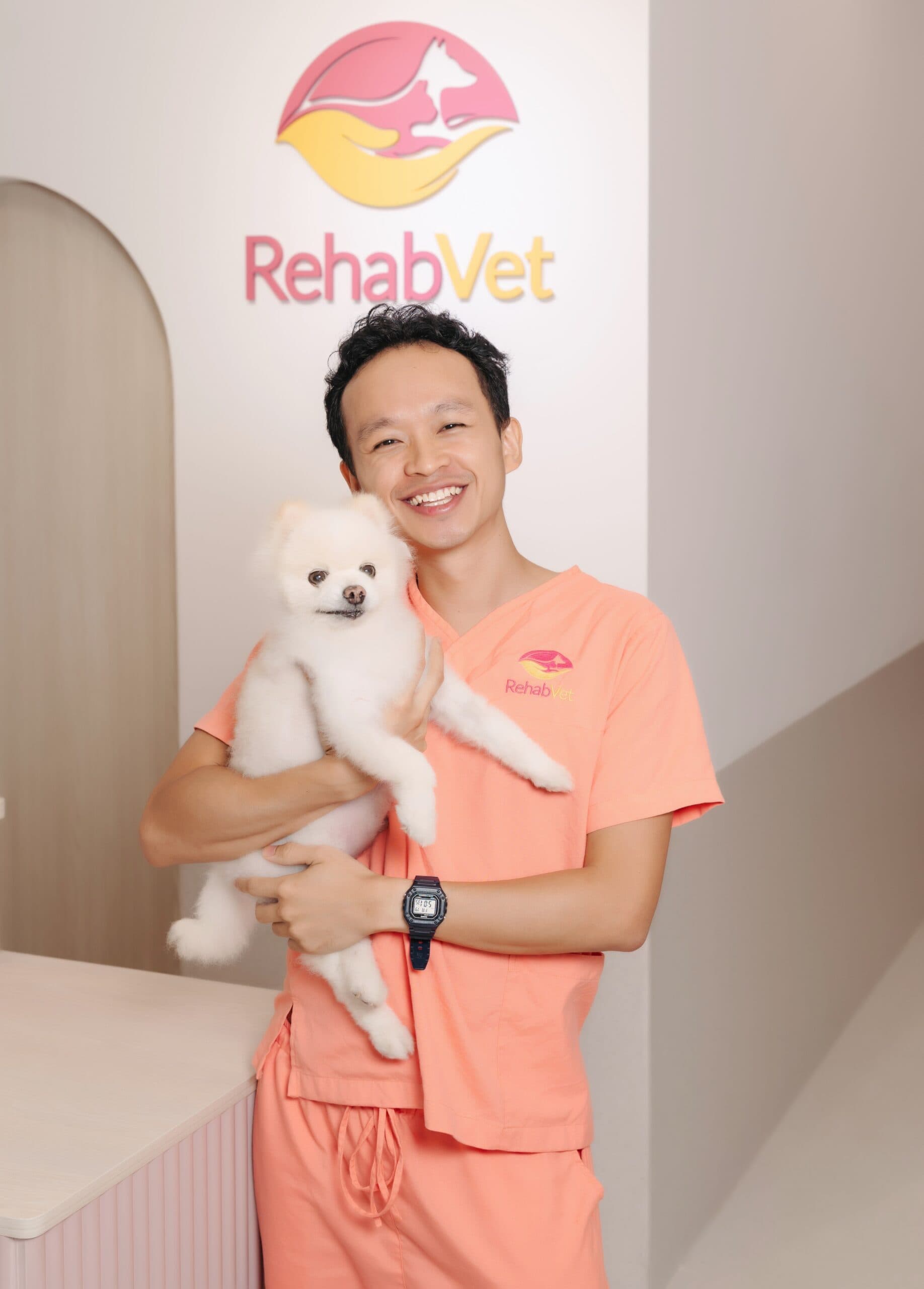
Veterinary therapist holding white Pomeranian at RehabVet clinic
Xan Chuah Yee Chien
Senior Therapist
Veterinary therapist holding white Pomeranian at RehabVet clinic
Noelle Lim
Senior Therapist
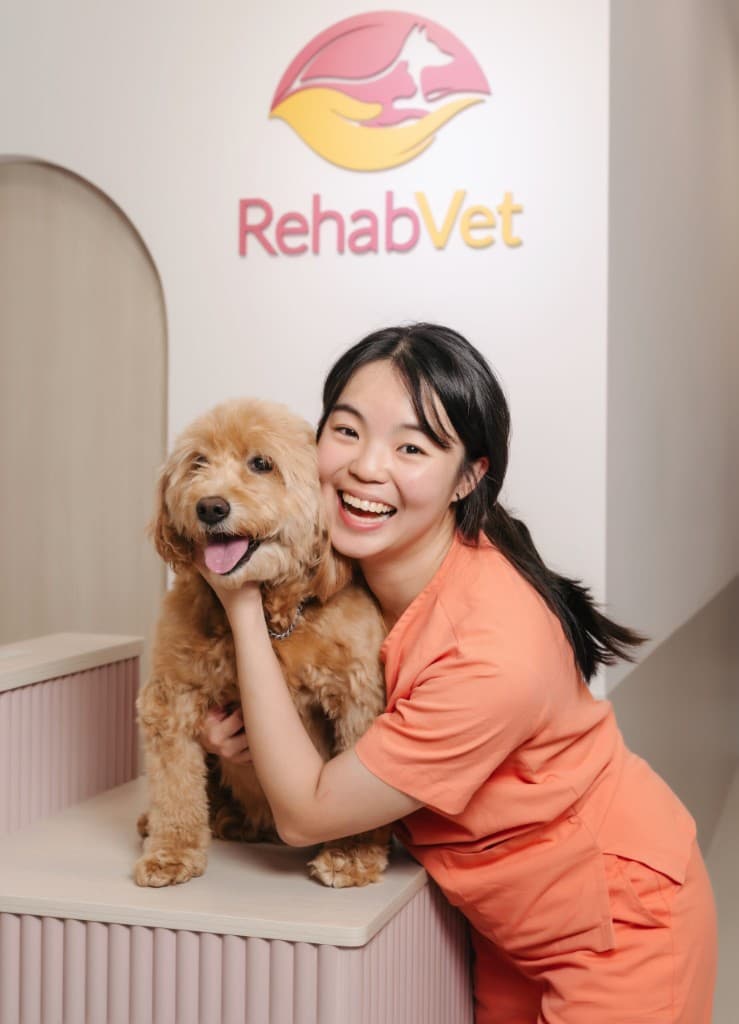
RehabVet veterinary therapist smiling with goldendoodle at clinic
Hazel Lim
Therapist
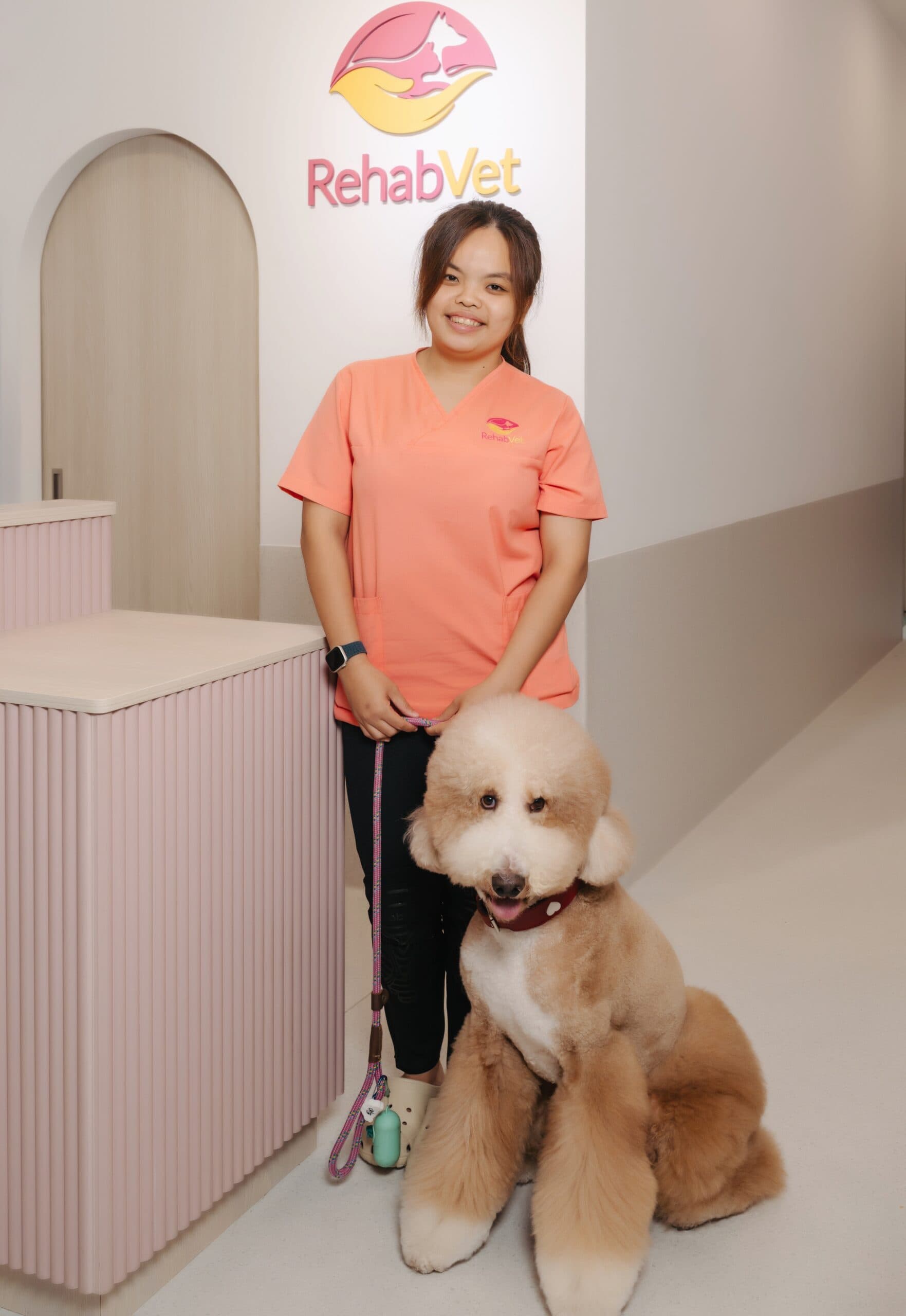
Veterinary staff member standing with standard poodle at RehabVet
Joyce Ho
Hydrotherapist
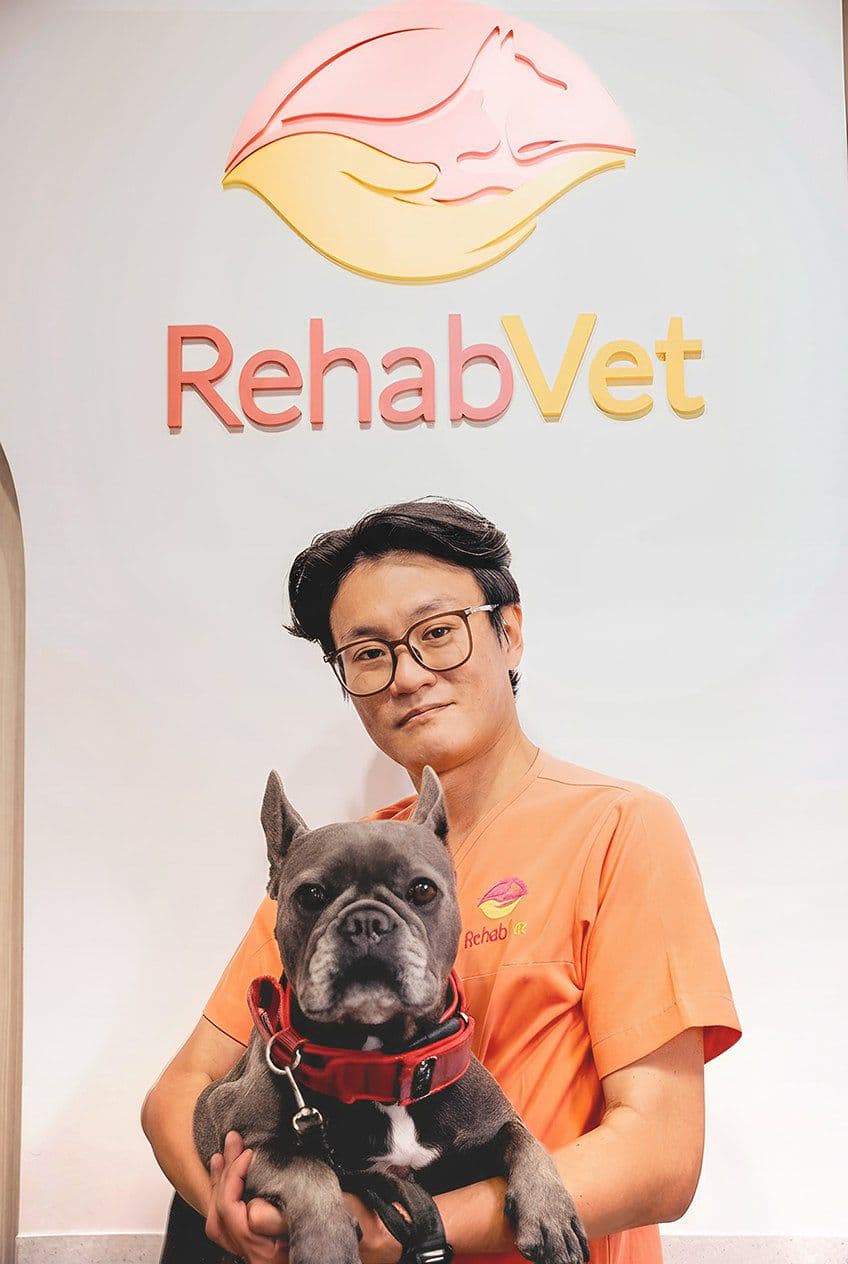
Veterinary staff member holding French bulldog at RehabVet clinic
Sean Tan
Hydrotherapist

Hydrotherapy Success Stories

195 verified Google reviews

Frequently Asked Questions About Hydrotherapy for Dogs

Everything pet owners ask before their first session

Hydrotherapy provides dogs with a low-impact, highly effective form of exercise that aids rehabilitation from injuries, surgeries, and chronic conditions. The buoyancy of water supports your dog’s body weight, allowing movement without stress on painful joints. The warm water relaxes muscles and increases circulation, while the resistance of water builds muscle strength more effectively than land-based exercise. Research in the Journal of Small Animal Practice consistently shows superior outcomes for dogs receiving hydrotherapy as part of their rehabilitation programme compared to land-based rehabilitation alone.

The frequency depends on your dog’s condition and treatment goals. For post-surgical rehabilitation, we typically recommend 2 sessions per week during the initial recovery phase, reducing to once weekly as your dog improves. Dogs with chronic conditions like arthritis often benefit from 1–2 sessions per week initially, transitioning to weekly or fortnightly maintenance sessions. Active dogs using hydrotherapy for fitness may attend once weekly. Your RehabVet therapist will recommend an optimal schedule during the initial consultation.

Treatment duration varies considerably depending on the condition. Post-surgical rehabilitation typically involves 8–12 weeks of hydrotherapy. Chronic conditions like arthritis benefit from ongoing maintenance — many dogs continue with regular sessions indefinitely for optimal quality of life. Neurological conditions may require longer rehabilitation periods of 3–6 months or more. Your therapist will set clear goals and milestones, regularly reassessing to ensure the programme remains effective and adjusting as your dog progresses.

Absolutely, dog hydrotherapy is worth it. The evidence supporting hydrotherapy’s effectiveness is robust and well-documented. Dogs recovering from surgery return to function faster, dogs with arthritis experience significantly improved mobility and reduced pain, and overweight dogs achieve healthy weight loss without joint stress. Beyond the physical benefits, many owners report that their dogs are happier, more energetic, and enjoy a noticeably better quality of life. At RehabVet, we see these transformations daily and consider hydrotherapy one of our most valuable therapeutic tools.

Hydrotherapy is used for: (1) Post-surgical rehabilitation — accelerating recovery from orthopaedic and spinal surgeries; (2) Arthritis management — reducing pain and maintaining joint mobility; (3) Neurological rehabilitation — retraining walking in patients with spinal cord injuries or IVDD; (4) Weight management — safe exercise for overweight dogs; (5) Muscle building — strengthening muscles weakened by injury or disuse; (6) Fitness and conditioning — maintaining health in active and senior dogs; (7) Pain management — natural pain relief through warm water therapy.

Hydrotherapy accelerates healing through several mechanisms: warm water increases blood circulation, delivering more oxygen and nutrients to injured tissues; buoyancy allows early mobilisation without overloading healing structures; resistance exercise prevents muscle atrophy during recovery; hydrostatic pressure reduces swelling and oedema; and the relaxing effect of warm water reduces muscle spasm and pain, promoting a positive healing environment. Together, these effects create optimal conditions for tissue repair and functional recovery.

Hydrotherapy is a specific form of water therapy that uses controlled water conditions for therapeutic purposes. At RehabVet, our underwater treadmill allows precise control over water depth, temperature, speed, and resistance — creating a tailored therapeutic experience. General “water therapy” may refer to any therapeutic use of water, including swimming. The key difference is the clinical precision and evidence-based approach of structured hydrotherapy, which is designed and supervised by trained rehabilitation professionals to achieve specific therapeutic outcomes.

At RehabVet, our underwater treadmill water is maintained at 28–32°C (approximately 82–90°F). This temperature range is carefully chosen: warm enough to promote muscle relaxation, increase blood flow, and reduce joint stiffness, but not so warm as to cause overheating — an important consideration in Singapore’s tropical climate. The water temperature is continuously monitored and adjusted to maintain the optimal therapeutic range throughout every session.

Hydrotherapy may not be suitable for dogs with: open or infected wounds; uncontrolled infectious diseases; severe cardiac conditions; uncontrolled epilepsy; certain skin conditions; extreme fear of water that cannot be managed with gradual desensitisation; or immediately post-surgical before wound closure. Our veterinary team conducts a thorough assessment before beginning hydrotherapy to ensure it is safe and appropriate for your dog. If hydrotherapy is not suitable, we offer many alternative rehabilitation modalities.

Success rates for hydrotherapy are consistently high across a range of conditions. Post-surgical patients typically show 80–90% improvement rates in recovery speed and outcome quality. Dogs with arthritis frequently demonstrate measurable improvements in mobility scores, pain levels, and muscle mass within 4–6 sessions. Neurological patients’ success rates vary more depending on the severity and nature of the condition, but many dogs with partial paralysis regain significant function through consistent hydrotherapy combined with other rehabilitation modalities.

Yes, hydrotherapy is highly beneficial for older dogs. Senior dogs commonly suffer from arthritis, muscle wasting, reduced mobility, and general stiffness. Hydrotherapy addresses all of these issues simultaneously: the warm water eases joint pain, the buoyancy supports ageing joints, and the gentle resistance maintains muscle mass. Regular hydrotherapy sessions help senior dogs remain active, comfortable, and independent for longer. Many senior dog owners in Singapore consider regular hydrotherapy essential to maintaining their pet’s quality of life in their golden years.

Yes, hydrotherapy is one of the most recommended treatments for dogs with arthritis. The warm water reduces joint stiffness and pain, the buoyancy minimises weight-bearing stress on inflamed joints, and the resistance builds the muscle mass needed to support and stabilise affected joints. Numerous veterinary studies confirm that regular hydrotherapy significantly improves mobility scores and reduces pain in arthritic dogs. At RehabVet, arthritis management through hydrotherapy is one of our most common and successful treatment programmes.

After your dog’s initial assessment, you will be contacted to discuss the results and recommended treatment plan. If the assessment reveals any urgent concerns, our team will discuss emergency or priority treatment options with you promptly. For routine rehabilitation cases, we will outline the proposed hydrotherapy programme, including frequency, expected duration, goals, and costs, so you can make an informed decision about proceeding with treatment.

While gentle swimming or wading can provide some benefits, professional hydrotherapy in an underwater treadmill offers significantly superior outcomes. The controlled environment allows precise adjustment of water depth, speed, and resistance — something that cannot be replicated in a pool or natural body of water. Professional supervision ensures correct gait patterns, appropriate intensity, and safety throughout. Improper exercise can actually worsen many conditions, so we strongly recommend professional hydrotherapy for dogs with medical conditions. For healthy dogs, recreational swimming is excellent general exercise.

Our hydrotherapy team includes qualified veterinary rehabilitation professionals trained by leading hydrotherapy training institutions in the UK. All team members hold recognised qualifications in canine hydrotherapy and work under veterinary supervision. Our therapists undergo continuous professional development to stay current with the latest research and techniques in veterinary hydrotherapy. You can be confident that your dog is in highly skilled, experienced hands at RehabVet.

Call Now Button