Cat Physiotherapy in Singapore
Cats are experts at hiding pain. A dog with a sore hip will limp down the corridor for everyone to see; a cat with the same problem will simply jump onto the sofa a little less often, and most owners write it off as “she's just getting lazy.” That quiet stoicism is exactly why physiotherapy for cats is still such an underused resource in Singapore — most owners don't realise it's an option until a vet mentions it after surgery or an arthritis diagnosis.
At RehabVet, we've treated cats alongside dogs for years, and the results are often just as dramatic. Here's what feline physiotherapy involves, how it differs from the dog-focused rehab most people picture, and what to expect if you bring your cat in.
Why Cats Need Physiotherapy
Because cats mask discomfort so well, their conditions are often further along by the time an owner notices. Physiotherapy addresses several issues we see regularly in feline patients:
– Post-surgical recovery — cats heal fast, but left alone they compensate around a healing limb instead of rebuilding real strength in it. Guided rehab after orthopaedic repairs, amputations or mass removals restores range of motion and stops bad habits from setting in.
– Arthritis and joint pain — studies suggest most cats over 10 (and many over 6) have some degree of osteoarthritis. Cats rarely limp from it; instead they jump less, avoid high-sided litter boxes, or stiffen after a nap.
– Neurological conditions — vestibular disease, spinal injury and nerve damage from trauma respond well to proprioceptive exercises, balance work and gait retraining.
– Weight and mobility — obesity is common among Singapore's indoor cats, and extra weight accelerates joint wear. Structured, low-impact movement helps cats lose weight without stressing vulnerable joints further.
We once had an 11-year-old British Shorthair come in after a cruciate repair, so stiff and guarded she wouldn't put weight on the leg three weeks post-op. Six sessions of manual therapy and controlled exercise later, she was back on her favourite windowsill. Her owner's words: “I didn't think cats could do physio.”
How Cat Physiotherapy Differs From Dog Physiotherapy
Most of what people know about pet rehab comes from watching dogs on underwater treadmills. Cats need the same underlying science delivered very differently.
Stress Sensitivity and Handling
Cats are far more sensitive to unfamiliar environments and handling than dogs, and a stressed cat's cortisol spike can mask how much pain they're actually in. Every session starts with letting a cat settle in on their own terms — no rushing, no forced restraint — and owners are encouraged to stay close, since a familiar voice calms a cat more than most techniques we use.
Shorter, Cat-Paced Sessions
Where a dog might work through 30–45 minutes comfortably, cats generally do better with shorter, more frequent visits — often 15 to 20 focused minutes. We watch for the tail flick or flattened ears that signal “I'm done” and end on a good note rather than pushing for one more rep, leaning on gentle handling rather than food-driven motivation.
Physiotherapy Techniques Used for Cats
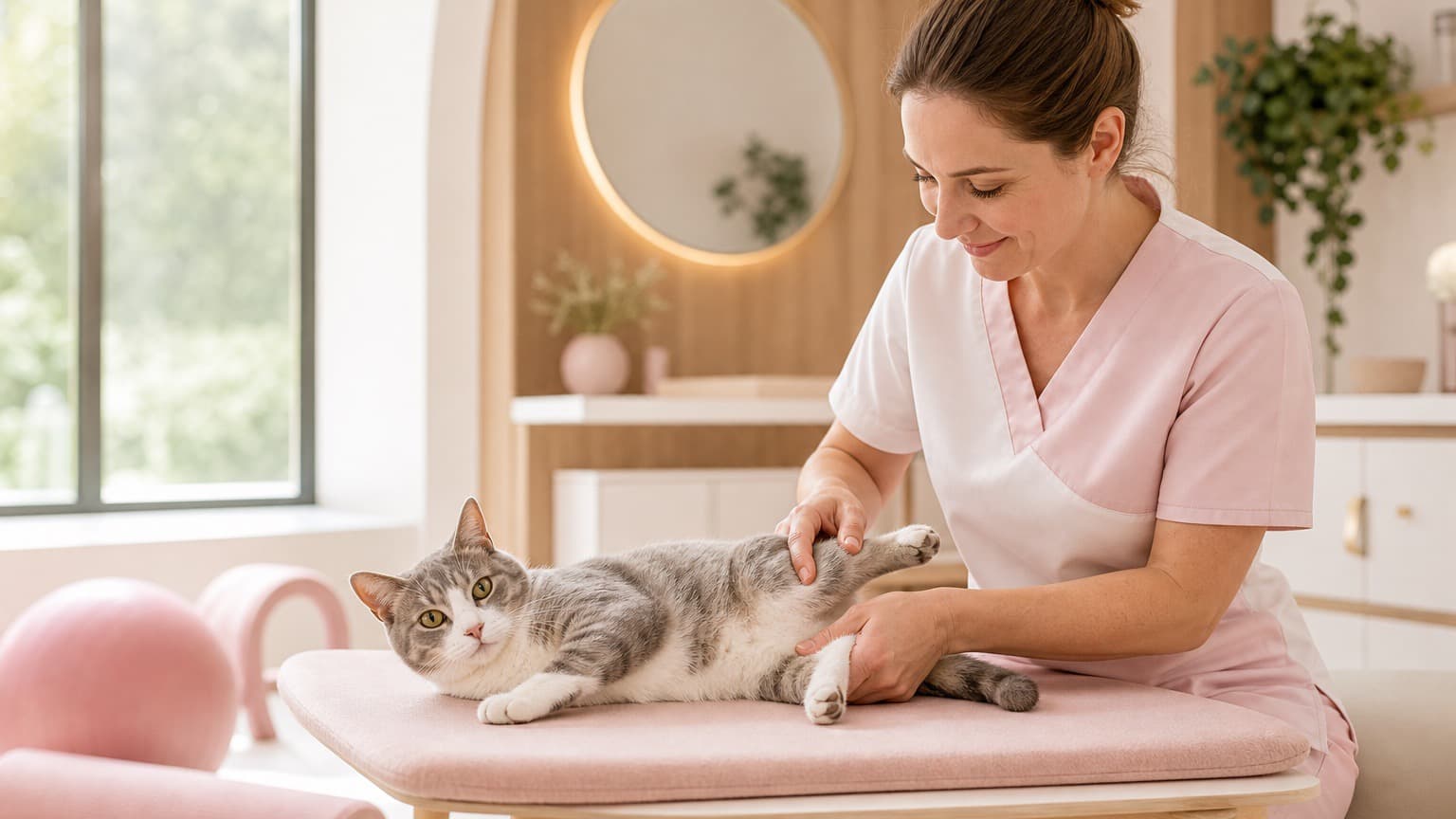
– Manual therapy and massage — joint mobilisation, soft tissue work and stretching most cats tolerate well once they trust the handler; it also lets our therapists feel exactly where a cat is guarding or sore.
– Therapeutic laser therapy — painless, quick, and one of the easiest modalities to introduce to a nervous cat. Great for arthritic joints, wound healing and post-surgical swelling.
– Hydrotherapy — some cats do genuinely tolerate it, introduced far more gradually than for dogs, usually starting in shallow water. Never forced; not every cat is a candidate.
– Therapeutic exercises — targeted exercises woven into play, like batting at a wand toy to encourage weight-shifting or stepping over low obstacles for proprioception, keep a cat engaged far longer than a structured drill.
Signs Your Cat May Need Physiotherapy
Because cats hide discomfort so well, watch for:
– Reluctance to jump onto furniture or counters they used to use easily
– Reduced grooming, especially around the hips and lower back — a stiff cat can't twist to reach
– Hiding more or avoiding being touched in certain spots
– Stiffness after sleeping, or a slower first few steps
– Recent surgery, fracture, or a diagnosed condition like arthritis
– Muscle loss along the spine or on one side of the body
– Weight gain paired with lower activity
– Litter box changes — struggling to climb in or squat comfortably
If any of these sound familiar, it's worth a proper assessment rather than assuming it's just age or personality.
Notice any of these signs in your cat?
Book a cat-friendly rehabilitation assessment at RehabVet — we'll work at your cat's pace and build a plan around what they'll actually tolerate.
What to Expect at a RehabVet Cat Physiotherapy Session
We start with a full history — surgery, diagnoses, home environment, how your cat behaves under stress — before ever putting hands on them, followed by a gentle hands-on exam: gait observation, palpation and range-of-motion checks at your cat's own pace. Sessions themselves stay short, calm and quiet, usually combining two or three modalities rather than one long block, and owners are welcome to stay in the room throughout.
You'll leave with a short list of things to do at home — a few minutes of gentle stretching, an exercise disguised as play, or simple tweaks like ramps and lower-sided litter boxes. Consistency between visits is what actually drives results, so we keep the homework realistic enough that owners stick with it.
Frequently Asked Questions
Conclusion
Cat physiotherapy isn't a niche add-on — it's an evidence-backed part of feline recovery and long-term comfort, delivered at a very different rhythm to the dog rehab most owners picture. If your cat has had surgery, been diagnosed with arthritis, or is simply moving, jumping or grooming less than they used to, it's worth having them properly assessed rather than assuming it's just age.
Ready to get started? Book a cat physiotherapy assessment at RehabVet in Singapore, or message us on WhatsApp — tell us a bit about your cat's temperament and we'll plan the session around them.
Written by the RehabVet clinical team. Last updated: July 2026.