
Hip Luxation
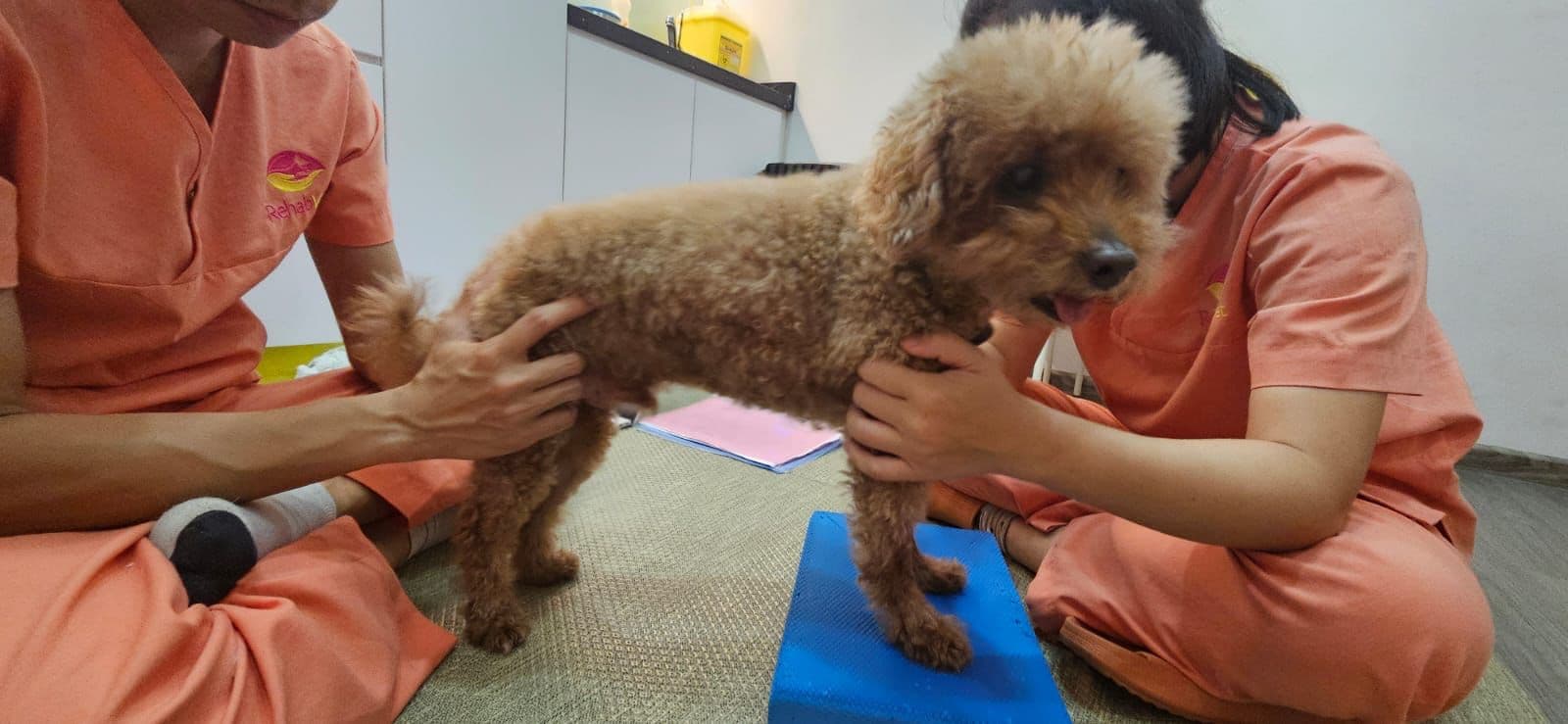
This page is for educational purposes only and is not a substitute for veterinary diagnosis or emergency care. Always consult your primary veterinarian or a rehabilitation veterinarian before starting treatment. If your pet cannot walk, has sudden paralysis, severe pain, or breathing difficulty, seek urgent veterinary attention.
What is Hip Luxation?
Also known as: dislocated hip; coxofemoral luxation; hip dislocation.
The hip is a ball-and-socket joint. Luxation means the femoral head is displaced from the acetabulum — most often craniodorsal after trauma (road accidents, falls, collisions). Pets typically hold the limb and refuse to bear weight. Pre-existing hip dysplasia can predispose to luxation with lesser trauma.
Emergency veterinary care is required. Closed reduction under anaesthesia may be attempted when timely and appropriate; Ehmer sling or similar support may follow. Recurrent or complicated luxations often need surgical stabilisation (toggle pin, capsular reconstruction, femoral head ostectomy, or total hip replacement depending on case).
Rehabilitation begins after veterinary reduction or surgery: protecting the reduction, restoring gentle motion when allowed, rebuilding gluteal and thigh muscle, and guiding return to function. Outcomes vary with concurrent injuries and joint health.
What are the signs of Hip Luxation?
Signs vary by severity and by whether your pet is a dog or cat. Owners of dogs and cats often notice:
- Sudden non-weight-bearing hind-limb lameness after trauma
- Limb held with apparent shortening or abnormal external rotation (varies by luxation direction)
- Severe pain; reluctance to be touched over the hip
- Asymmetry of the hip region; possible crepitus
- In cats: hiding, aggression when handled, or sudden refusal to jump
What causes Hip Luxation?
- Trauma (vehicular accidents, falls, dog fights, high-impact play)
- Underlying hip dysplasia reducing joint congruence
- Previous luxation or soft-tissue compromise around the hip
- Iatrogenic luxation after certain procedures (uncommon; surgeon-managed)
How can veterinary rehabilitation help with Hip Luxation?
After closed or open reduction, rehab supports sling/brace compliance education, controlled muscle activation, and prevention of secondary stiffness in allowed joints.
Post-operative programmes progress range of motion, weight-bearing, and strengthening per surgical method (for example after toggle repair versus FHO).
Hydrotherapy and land exercise are introduced only when the hip is cleared for loading. Home modifications (ramps, confined space, non-slip flooring) reduce re-luxation risk.
Rehabilitation plans at RehabVet are individualised after a veterinary assessment. We coordinate with your primary vet when imaging, medication, or surgery is part of the overall plan.
Which therapies may be used for Hip Luxation?
Depending on your pet’s examination findings, comfort, and goals, a plan may include one or more of the following:
What are the rehabilitation goals for Hip Luxation?
Goals are set for the individual patient. Typical aims may include (not guarantees — outcomes vary):
- Protect hip reduction or surgical repair during healing
- Restore comfortable hip motion within veterinary limits
- Rebuild pelvic-limb strength and weight-bearing
- Improve gait and confidence with stairs and rising
- Reduce risk of re-luxation through activity control
We do not publish invented success percentages. Progress is tracked clinically (gait, strength, range of motion, pain behaviours, and home function) and plans are adjusted over time.
When should you seek veterinary care for Hip Luxation?
- Any suspected dislocation after trauma — emergency veterinary care
- Sudden inability to use a hind limb
- Slippage of a sling, swelling of toes, or cold digits during coaptation
- Recurrent limp after previous hip luxation
No. Closed reduction requires anaesthesia, imaging confirmation, and skilled technique. Incorrect handling risks fracture, cartilage damage, and severe pain.
No. Femoral head ostectomy removes the femoral head to create a false joint when reduction/stabilisation is not suitable. Rehab is especially important after FHO.
Re-luxation can occur, especially with soft-tissue damage or dysplasia. Follow confinement and rehab instructions closely and report any sudden new limp immediately.
Related reading & patient stories
Book a rehabilitation assessment
If your pet has been diagnosed with Hip luxation, or you are noticing mobility changes, our team can assess and design a multimodal rehab plan.
Educational content only — not a diagnosis. For emergencies, contact your nearest veterinary hospital.
Related Conditions
- ConditionMedial Shoulder InstabilityMedial shoulder instability (MSI) describes laxity or injury of the medial glenohumeral support structures, causing forelimb pain, performance decline, and intermittent lameness in dogs.Learn more
- ConditionCranial Cruciate Ligament (ACL) RuptureCranial cruciate ligament (CCL) rupture — often called ACL tear — destabilises the stifle (knee), causing pain, lameness, and secondary meniscal and osteoarthritis risk in dogs and, less often, cats.Learn more
- ConditionCarpal Hyperextension InjuryCarpal hyperextension injury damages the palmar support of the canine wrist, leading to a dropped or collapsed carpus, pain, and altered forelimb mechanics.Learn more