
Myofascial Pain
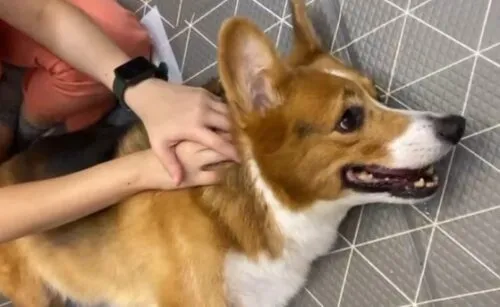
This page is for educational purposes only and is not a substitute for veterinary diagnosis or emergency care. Always consult your primary veterinarian or a rehabilitation veterinarian before starting treatment. If your pet cannot walk, has sudden paralysis, severe pain, or breathing difficulty, seek urgent veterinary attention.
What is Myofascial Pain?
Also known as: myofascial trigger points; muscle knot pain; fascial restriction pain.
Muscles and fascia form a continuous soft-tissue network that should glide and load efficiently. When tissues become ischaemic, overloaded, or guarded after injury, sensitive taut bands and local pain can develop. Pets may flinch on palpation, shorten stride, or avoid certain postures even when radiographs look unremarkable.
Myofascial pain is often secondary to orthopaedic disease, spinal pain, surgery, or compensatory gait. Treating “knots” alone without addressing the primary driver leads to quick recurrence. Cats may show irritability on handling, reduced jumping, or litter-box changes related to discomfort.
Veterinary rehabilitation uses manual therapy, movement retraining, graded exercise, and adjunct modalities to restore soft-tissue comfort while the underlying diagnosis is managed medically or surgically as needed.
What are the signs of Myofascial Pain?
Signs vary by severity and by whether your pet is a dog or cat. Owners of dogs and cats often notice:
- Flinching, skin twitching, or vocalising when specific muscle regions are touched
- Stiffness that improves partly with gentle warm-up
- Reduced flexibility; resistance to grooming or harnessing
- Subtle lameness or gait asymmetry without obvious joint swelling
- Restlessness, frequent position changes, or reluctance to lie on one side
- In cats: hiding, decreased jumping, or aggression when picked up
What causes Myofascial Pain?
- Compensatory overload from joint disease, neurological deficits, or limb injury
- Postural guarding after surgery or trauma
- Repetitive sport or working demands with inadequate recovery
- Stress-related muscle tension and reduced daily movement in some pets
- Direct muscle contusion or strain leaving residual sensitivity
How can veterinary rehabilitation help with Myofascial Pain?
Assessment maps painful soft-tissue regions and links them to gait and posture findings. Manual therapy and soft-tissue techniques aim to reduce guarding and improve glide.
Therapeutic exercise re-teaches efficient movement so muscles share load again. Modalities may ease sensitivity as an adjunct. Home programmes teach owners gentle techniques that are safe and species-appropriate.
Primary orthopaedic or neurological problems are flagged for veterinary management rather than masked by soft-tissue treatment alone.
Rehabilitation plans at RehabVet are individualised after a veterinary assessment. We coordinate with your primary vet when imaging, medication, or surgery is part of the overall plan.
Which therapies may be used for Myofascial Pain?
Depending on your pet’s examination findings, comfort, and goals, a plan may include one or more of the following:
What are the rehabilitation goals for Myofascial Pain?
Goals are set for the individual patient. Typical aims may include (not guarantees — outcomes vary):
- Reduce palpable soft-tissue pain and guarding
- Improve comfort with handling, grooming, and daily movement
- Restore more symmetrical gait and posture
- Support recovery from the primary orthopaedic or spinal driver
- Teach sustainable home comfort strategies
We do not publish invented success percentages. Progress is tracked clinically (gait, strength, range of motion, pain behaviours, and home function) and plans are adjusted over time.
When should you seek veterinary care for Myofascial Pain?
- Pain that is severe, progressive, or associated with neurological weakness
- Sudden lameness — rule out structural injury before assuming “just muscle”
- Cats with sudden behaviour change or inability to jump — veterinary exam
- Post-surgical pets with escalating soft-tissue pain despite rest
Pets clearly show localised muscle pain and taut bands clinically. Terminology varies; what matters is a full veterinary assessment so serious joint, bone, and nerve disease are not missed while soft tissues are treated.
Some rehab and TCVM programmes include acupuncture or related techniques as part of multimodal care. Suitability is individual and decided after examination — not as a standalone cure-all.
If the underlying cause (for example cruciate disease or spinal pain) continues, myofascial guarding returns. Durable plans treat both the soft tissue and the driver.
Related reading & patient stories
Book a rehabilitation assessment
If your pet has been diagnosed with Myofascial pain, or you are noticing mobility changes, our team can assess and design a multimodal rehab plan.
Educational content only — not a diagnosis. For emergencies, contact your nearest veterinary hospital.
Related Conditions
- ConditionFibrotic Myopathy & ContractureFibrotic myopathy and contracture describe replacement of normal muscle with inelastic scar-like tissue, restricting joint motion and altering gait in dogs.Learn more
- ConditionGracilis MyopathyGracilis myopathy involves fibrotic contracture of the gracilis (and sometimes semitendinosus) muscle, producing a distinctive short-stride, circumducting hind-limb gait in dogs.Learn more
- ConditionIliopsoas StrainIliopsoas strain is an injury to the hip-flexor muscle group (iliacus and psoas major), a common cause of cryptic hind-limb lameness and performance issues in dogs.Learn more