
Degenerative Myelopathy
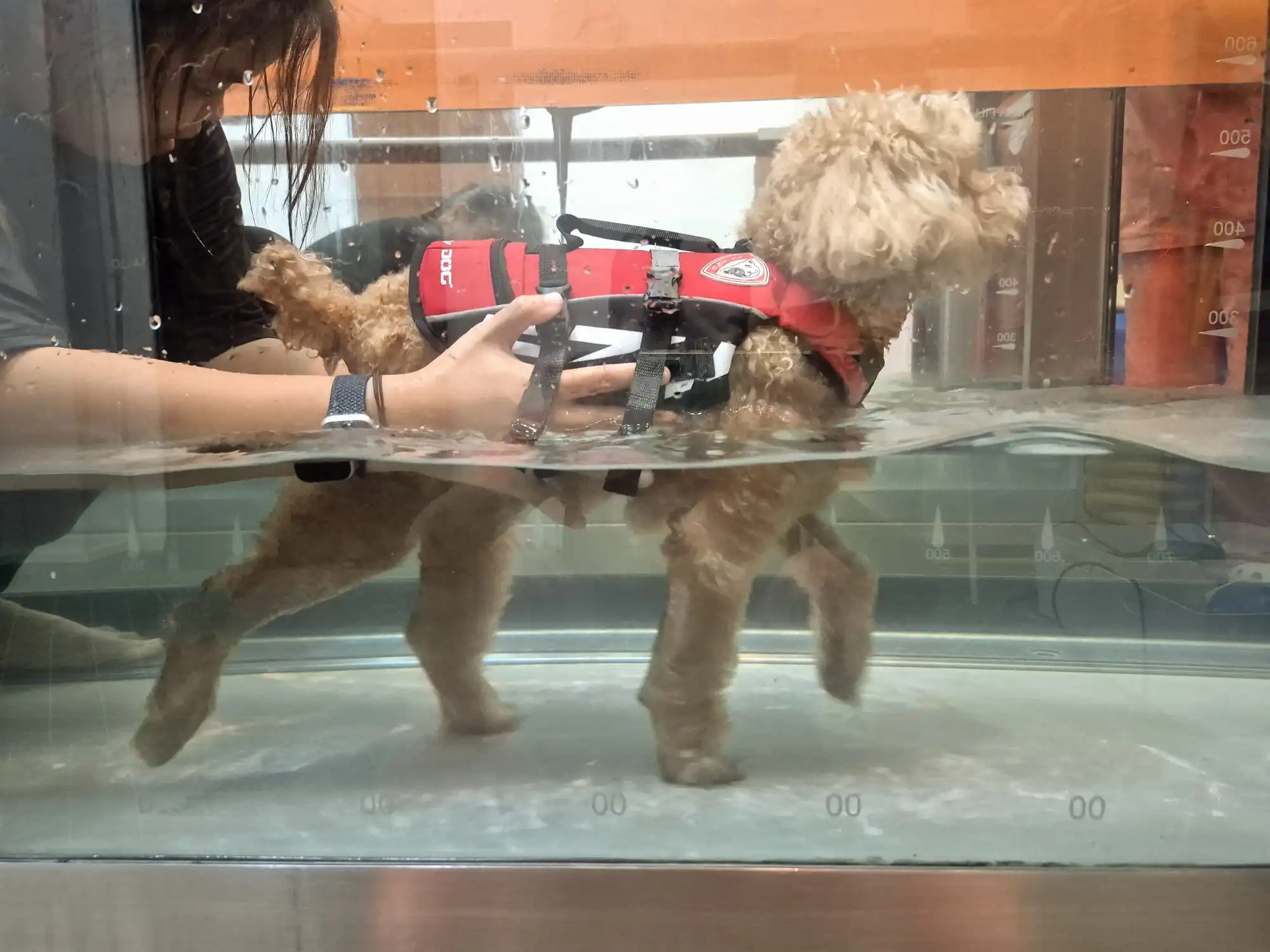
This page is for educational purposes only and is not a substitute for veterinary diagnosis or emergency care. Always consult your primary veterinarian or a rehabilitation veterinarian before starting treatment. If your pet cannot walk, has sudden paralysis, severe pain, or breathing difficulty, seek urgent veterinary attention.
What is Degenerative Myelopathy?
Also known as: canine degenerative myelopathy; DM; German Shepherd myelopathy (historical name).
Degenerative myelopathy is a progressive disease of the spinal cord white matter, most often discussed in middle-aged to older dogs. Early signs resemble orthopaedic or disc disease — scuffing nails, swaying, knuckling — but pain is usually not a dominant feature. Over time, weakness ascends; dogs may lose the ability to walk in the hind limbs and later develop forelimb involvement and more global disability.
A SOD1 gene mutation is associated with risk in many breeds (including German Shepherd Dogs, Boxers, Pembroke Welsh Corgis, and others), but genetic status alone does not equal a clinical diagnosis. Veterinarians diagnose DM by excluding compressive and inflammatory causes (often with imaging) and integrating exam findings and progression. There is currently no cure.
Rehabilitation cannot reverse DM, but it is central to preserving mobility, delaying secondary complications, and supporting dignity and comfort. Strengthening, proprioceptive work, assistive devices, weight management, and owner education form the practical toolkit.
What are the signs of Degenerative Myelopathy?
Signs vary by severity and by whether your pet is a dog or cat. Owners of dogs often notice:
- Progressive hind-limb ataxia: swaying, crossing, or scuffing toenails
- Knuckling that owners may first notice on smooth floors
- Hind-limb weakness progressing over months; difficulty rising
- Muscle atrophy in the pelvic limbs
- Usually non-painful spinal posture compared with typical acute IVDD
- Later: urinary/faecal incontinence and possible thoracic limb involvement
What causes Degenerative Myelopathy?
- Neurodegeneration of spinal cord tracts associated with SOD1-related pathology in many dogs
- Breed predisposition; age of onset typically middle-aged to senior
- Exact mechanisms of progression are still under research
- Other diseases can mimic DM and must be ruled out before assuming this diagnosis
How can veterinary rehabilitation help with Degenerative Myelopathy?
Rehab focuses on maximising remaining function: targeted strengthening, balance and proprioceptive training, and carefully dosed exercise to avoid overfatigue. Hydrotherapy can allow movement with less fall risk when appropriate.
As disease advances, therapists introduce harnesses, carts, boots, and home environment modifications. Manual therapy and stretching address compensatory strain. Pain from concurrent osteoarthritis is treated separately so it does not compound disability.
Goals are quality-of-life oriented and revisited regularly with the family and primary vet.
Rehabilitation plans at RehabVet are individualised after a veterinary assessment. We coordinate with your primary vet when imaging, medication, or surgery is part of the overall plan.
Which therapies may be used for Degenerative Myelopathy?
Depending on your pet’s examination findings, comfort, and goals, a plan may include one or more of the following:
What are the rehabilitation goals for Degenerative Myelopathy?
Goals are set for the individual patient. Typical aims may include (not guarantees — outcomes vary):
- Maintain muscle mass and joint mobility as long as practical
- Improve proprioception and reduce falls in early–mid stages
- Support safe toileting and transfers with appropriate aids
- Manage concurrent orthopaedic pain that worsens mobility
- Guide owners on staging of carts, harnesses, and home adaptations
We do not publish invented success percentages. Progress is tracked clinically (gait, strength, range of motion, pain behaviours, and home function) and plans are adjusted over time.
When should you seek veterinary care for Degenerative Myelopathy?
- New or progressive hind-limb weakness or scuffing — veterinary neurological work-up
- Sudden worsening (may indicate a different, treatable lesion such as IVDD)
- Pressure sores, urine scald, or inability to manage hygiene at home
- Breathing difficulty or profound weakness in later stages — urgent veterinary advice
There is no cure at present. Management centres on rehab, nursing care, assistive devices, and treating concurrent conditions. Be wary of products or programmes that promise reversal with statistics that cannot be verified.
No. Genetic risk increases likelihood but does not confirm clinical disease. Many at-risk dogs never develop DM, and other spinal diseases can look identical early on. Diagnosis requires veterinary exclusion of other causes.
When hind-limb support no longer allows comfortable, safe mobility despite rehab and harness use — timing is individual. A rehab assessment helps fit, train, and integrate a cart without neglecting continuing physiotherapy for the limbs and core.
Related reading & patient stories
Book a rehabilitation assessment
If your pet has been diagnosed with DM, or you are noticing mobility changes, our team can assess and design a multimodal rehab plan.
Educational content only — not a diagnosis. For emergencies, contact your nearest veterinary hospital.
Related Conditions
- ConditionPeripheral NeuropathyPeripheral neuropathy describes disease of the peripheral nerves, leading to weakness, reduced reflexes, sensory changes, knuckling, or voice/swallowing changes depending on the nerves involved.Learn more
- ConditionBrachial Plexus InjuryBrachial plexus injury involves trauma to the nerve network supplying the forelimb, causing weakness, paralysis, knuckling, or sensory loss in dogs and cats.Learn more
- ConditionCerebrovascular Accident (Stroke)A cerebrovascular accident (stroke) is an abrupt interruption of brain blood flow — ischaemic or haemorrhagic — causing sudden neurological deficits in dogs and cats.Learn more