
Deconditioning Recovery
This page is for educational purposes only and is not a substitute for veterinary diagnosis or emergency care. Always consult your primary veterinarian or a rehabilitation veterinarian before starting treatment. If your pet cannot walk, has sudden paralysis, severe pain, or breathing difficulty, seek urgent veterinary attention.
What is Deconditioning Recovery?
Also known as: reconditioning after rest; post-illness fitness recovery; post-crate-rest rehabilitation.
Deconditioning is the drop in cardiovascular fitness, muscle strength, and neuromuscular control that follows reduced activity — crate rest after surgery, hospitalisation, travel quarantine, pain-related inactivity, or simply a quiet indoor month.
Owners often resume previous walk distances too quickly, triggering soft-tissue flares or exhaustion. Cats may appear “fine” until they fail a jump they previously managed.
Rehabilitation provides objective baselines and a laddered return: posture and range first, then strength, then endurance, then agility or off-lead freedom when appropriate.
What are the signs of Deconditioning Recovery?
Signs vary by severity and by whether your pet is a dog or cat. Owners of dogs and cats often notice:
- Panting or lagging on previously easy walks
- Muscle wastage after a period of confinement
- Stiffness when activity resumes
- Trembling standing after lying down for long periods
- Anxiety or reluctance because movement now feels hard
What causes Deconditioning Recovery?
- Prescribed crate or room rest
- Medical illness reducing activity
- Pain episodes that taught the pet to move less
- Owner lifestyle changes (less walking)
- Post-boarding or post-hospitalisation decline
How can veterinary rehabilitation help with Deconditioning Recovery?
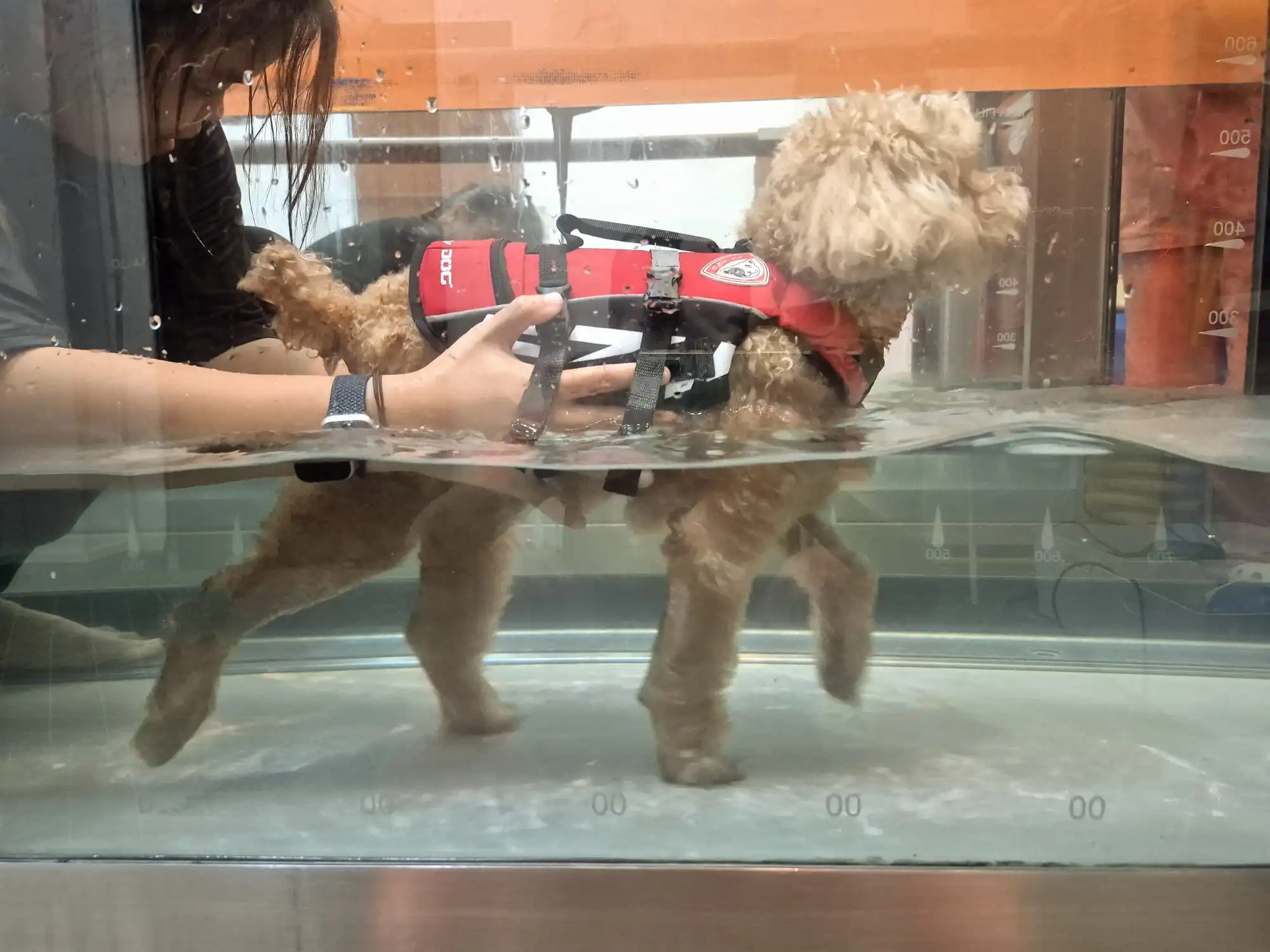
Therapists measure baseline function and set weekly load increases that tissues can tolerate. Underwater treadmill work is useful when land impact must stay low while fitness rises.
Strength and balance drills correct the “cardio-only” trap. Soft-tissue care eases stiffness from immobility.
Clear stop rules prevent boom-bust cycles that demoralise owners and pets.
Rehabilitation plans at RehabVet are individualised after a veterinary assessment. We coordinate with your primary vet when imaging, medication, or surgery is part of the overall plan.
Which therapies may be used for Deconditioning Recovery?
Depending on your pet’s examination findings, comfort, and goals, a plan may include one or more of the following:
What are the rehabilitation goals for Deconditioning Recovery?
Goals are set for the individual patient. Typical aims may include (not guarantees — outcomes vary):
- Restore walk stamina appropriate to the pet’s life stage
- Rebuild muscle lost during inactivity
- Normalise joint motion after stiffness from rest
- Return to prior activities with graded criteria
- Prevent soft-tissue re-injury during the comeback
We do not publish invented success percentages. Progress is tracked clinically (gait, strength, range of motion, pain behaviours, and home function) and plans are adjusted over time.
When should you seek veterinary care for Deconditioning Recovery?
- After any prolonged rest period before returning to full activity
- Pets exhausted by short walks they previously managed
- Post-surgical patients cleared for progressive loading
- Seniors who declined sharply after a brief illness
Fitness can drop noticeably within weeks of major activity reduction. Exact rates vary by age, baseline fitness, and illness severity.
Usually not at full distance. Cutting initial distance/time and rebuilding weekly is safer — especially after orthopaedic restrictions.
Yes. Vertical space and play stamina decline with rest and pain. Short, frequent enrichment sessions work better than rare long workouts.
Related reading & patient stories
Book a rehabilitation assessment
If your pet has been diagnosed with deconditioning recovery, or you are noticing mobility changes, our team can assess and design a multimodal rehab plan.
Educational content only — not a diagnosis. For emergencies, contact your nearest veterinary hospital.
Related Conditions
- ConditionFitness and ConditioningConditioning is proactive rehab: stronger muscles, better balance, and smarter workloads that help active pets perform and recover.Learn more
- ConditionObesity and Weight ManagementExtra body weight amplifies joint load and inflammation. RehabVet pairs veterinary nutrition guidance with joint-friendly conditioning.Learn more
- ConditionSarcopenia (Age-Related Muscle Loss)Ageing pets lose lean muscle even without nerve disease. Targeted strengthening and nutrition support help counter sarcopenia-related frailty.Learn more