

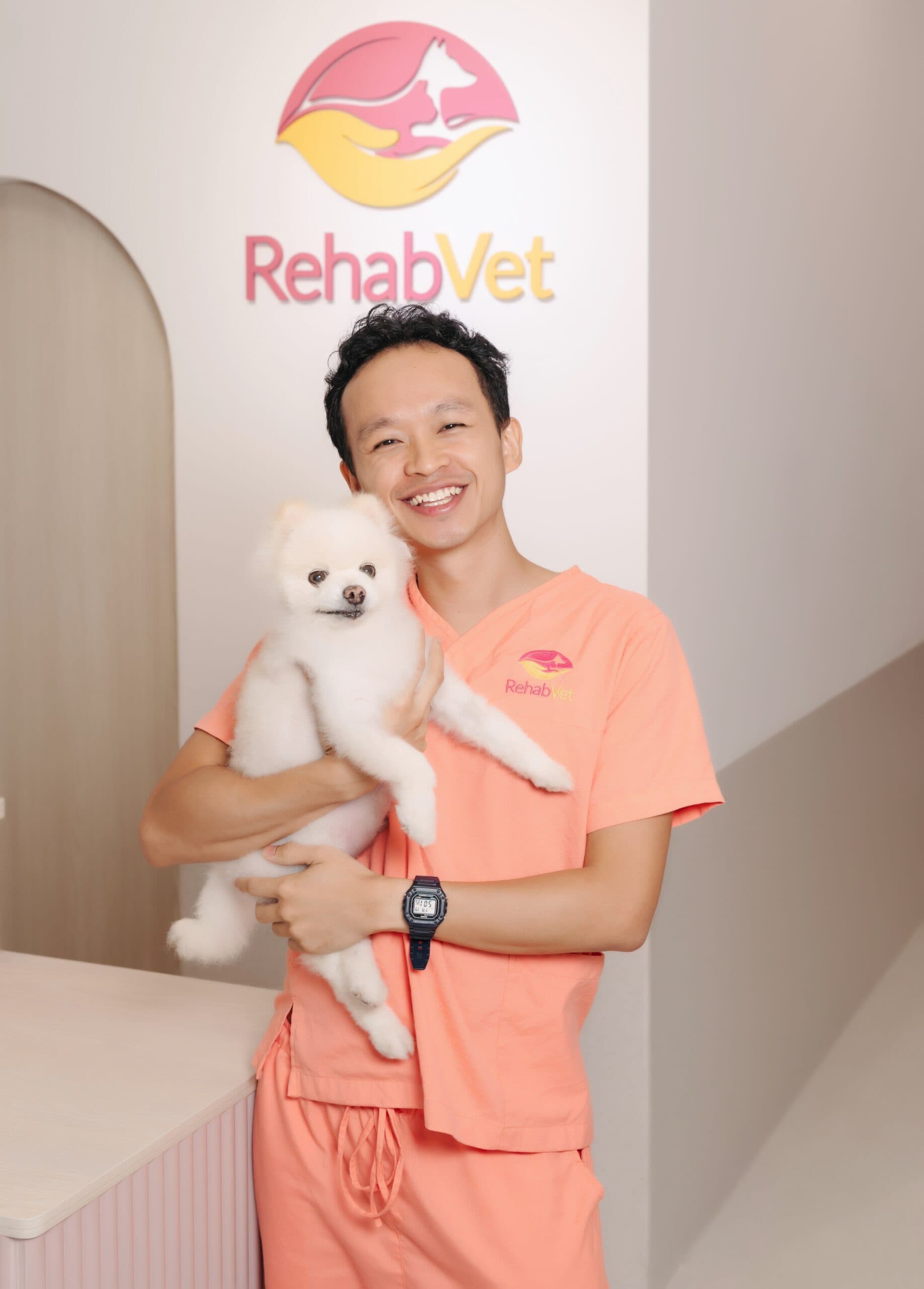
Xan Chuah Yee Chien
Senior Therapist
Xan graduated with a Bachelor of Veterinary Medicine from National Chiayi University and has four years of experience working as a small


StemCellX is a regenerative-medicine company whose international team of stem cell, genetics and regulatory scientists works alongside veterinarians to develop licensed therapies for osteoarthritis. RehabVet is bringing their science to Singapore — paired with the rehabilitation expertise that helps results last.
What are stem cells?
Stem cells are unique cells that can self-renew and develop into different cell types. Because of this, they can help build and repair tissue in the body — which is why they are of such great interest to regenerative medicine.
Mesenchymal stem cells (MSCs)
The therapy uses mesenchymal stem cells — the body's natural tissue-repair cells, found in tissues like fat and bone marrow. Once purified and expanded in a clean laboratory, they can be used to support joint repair.
Why it's different
Most joint medications slow the disease or ease pain but don't rebuild tissue. Regenerative approaches aim to modulate inflammation and support healing at the source — a fundamentally different goal.
MSCs target inflammation and modulate the local immune response in the joint, which can help reduce pain and swelling.
They reduce cell death and help prevent the formation of scar tissue, protecting the cartilage and structures that remain.
MSCs positively affect metabolism at the injection site and are studied for their role in promoting tissue repair and the formation of new blood vessels.
StemCellX uses allogeneic cells from healthy, screened donors — prepared, quality-controlled and packaged as a single, ready-to-use dose, rather than harvested from your own pet.
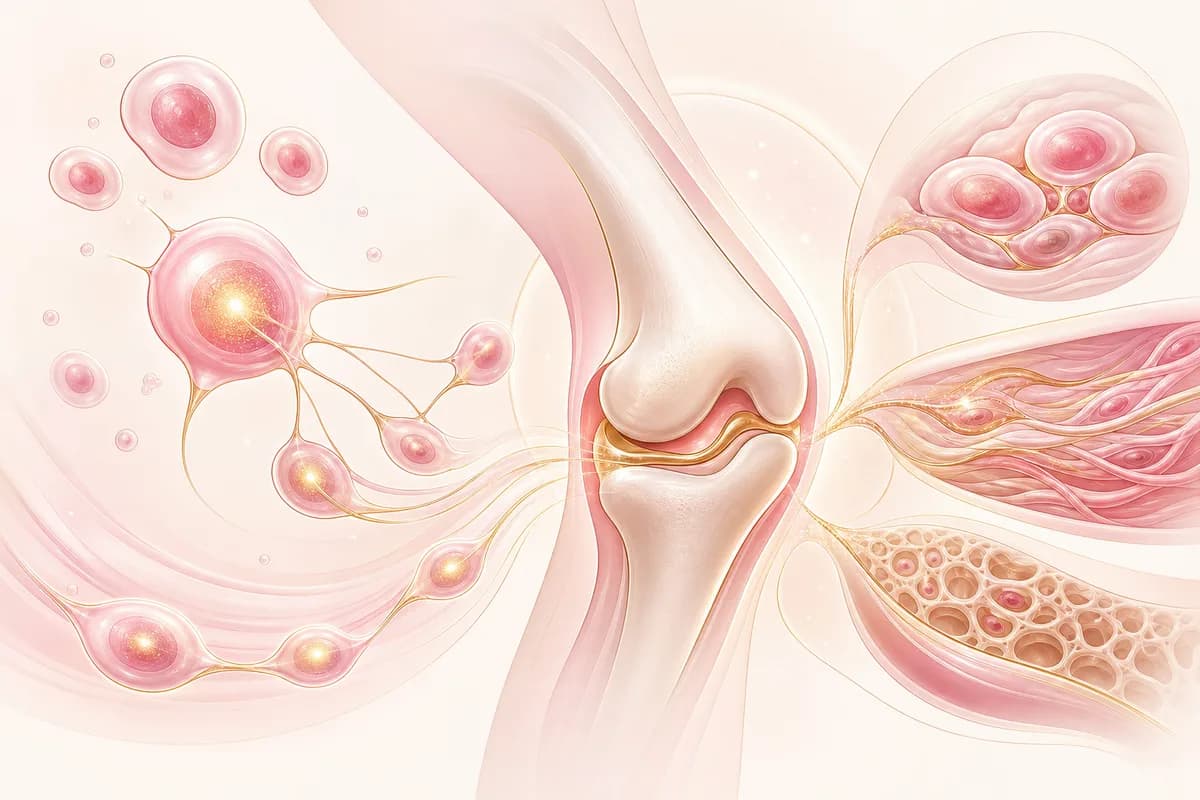
Illustrative only — mesenchymal stem cells acting within a joint.
Autologous treatments use a pet's own cells, which must be harvested and cultured. StemCellX instead uses allogeneic MSCs from orthopaedically healthy donors. In their studies, allogeneic MSCs have been as safe to use as autologous cells, while being consistent, screened and ready off the shelf.
ADStem — StemCellX's allogeneic, adipose-derived mesenchymal stem cell product — has been studied for canine osteoarthritis across early research, long-term follow-up, and controlled clinical trials. Highlights from StemCellX's clinical programme (as of June 2026) are summarised below; full peer-reviewed sources are listed at the bottom of this page.
Stem cell therapy for animals is an emerging, still-evolving field. Trial results describe groups of dogs under study conditions — they are not a guarantee for every pet. Results vary between individuals, and it is not suitable for every pet or condition — a veterinary assessment always comes first.
83%
Long-term lameness benefit
In a published long-term follow-up of 58 dogs, 83% improved or retained improvement in lameness at 3–5 years after treatment.
100%
Target-dose weight bearing
In a double-blind, placebo-controlled proof-of-concept / dose-determination programme (EMA-endorsed design), 100% of dogs treated at the target dose showed improved weight bearing of the treated leg at 8 weeks.
>95%
GCP pivotal confirmation
In the full GCP dose-confirmation pivotal trial (2026), more than 95% of dogs treated at the target dose had improved weight bearing at the same 8-week primary endpoint.
1
Ready-to-use injection
ADStem is designed as a single, quality-controlled allogeneic dose — not harvested from your own pet — with safety follow-up extending years in earlier cohorts.
Early clinical research
30 dogs of various breeds and ages; single injection for elbow osteoarthritis; owner-based lameness assessment with 1-year efficacy follow-up (peer-reviewed).
Long-term safety & efficacy
58 dogs followed long-term. No enrichment in chronic diseases or causes of death versus expected norms; 83% improved or retained lameness improvement at 3–5 years (peer-reviewed).
Controlled clinical trials
EMA-endorsed study design. Double-blind, placebo-controlled work with primary endpoint of weight bearing at 8 weeks, plus owner pain scores (CBPI), clinical examination scores, and comprehensive safety analysis. Target-dose cohorts: 100% (PoC / dose determination) and >95% (GCP pivotal) with improved weight bearing.
Primary focus
Osteoarthritis & degenerative joint disease
The main focus of the therapy — chronic joint wear that causes pain, stiffness and reduced mobility, especially in older pets.
Hip & elbow dysplasia
Developmental joint conditions that commonly progress to osteoarthritis and lameness.
Being explored
Cruciate & ligament / tendon injuries
Soft-tissue injuries around the joint where regenerative support may complement rehabilitation.
Post-surgical joint recovery
Supporting joint healing alongside a structured rehabilitation programme after orthopaedic surgery.
Chronic joint pain & mobility loss
Persistent lameness and stiffness that has not responded adequately to conventional management.
Osteoarthritis in cats
Feline joint disease is under-recognised and painful; candidacy will be assessed individually as the therapy is introduced.
StemCellX is a regenerative-medicine company built by an international team of stem cell, genetics and regulatory scientists. Their ADStem programme is backed by peer-reviewed publications, controlled clinical trials, and intellectual property filings across multiple markets — including Singapore.
Treatment works best when paired with rehab. Our physiotherapy, hydrotherapy and conditioning programmes help rebuild strength and protect the joint after treatment.
We start with a thorough assessment of your pet's gait, history and imaging, and give you honest, measured guidance on whether the therapy is appropriate.
Singapore's first and most established veterinary rehabilitation clinic, with thousands of pets helped and a 5-star reputation for compassionate, evidence-based care.
Step 1
A full rehabilitation consultation — gait analysis, history and review of any imaging — to determine whether stem cell therapy is appropriate for your pet.
Step 2
StemCellX's therapy is designed around a single, ready-to-use injection into the affected joint, performed under appropriate veterinary care.
Step 3
A tailored rehab plan — controlled activity, physiotherapy and hydrotherapy where suitable — to help your pet get the most from the treatment.
Step 4
We track mobility, comfort and function over time and adjust the plan, because recovery is a journey rather than a single event.
Founder & Lead Veterinarian
BVSc (Sydney), CCRT, CVA
Dr Sara founded RehabVet with a vision to give Singapore's pets comprehensive rehabilitation care. She holds a Bachelor of Veterinary Science from the University of Sydney, is a Certified Canine Rehabilitation Therapist (CCRT) and a Certified Veterinary Acupuncturist (CVA) — and has built RehabVet into Singapore's leading animal rehabilitation clinic.
Senior Therapist
Xan graduated with a Bachelor of Veterinary Medicine from National Chiayi University and has four years of experience working as a small

Senior Therapist
Having been in the equestrian sector with Way Of The Horse since 2012, Sean is an experienced horse trainer and manager.
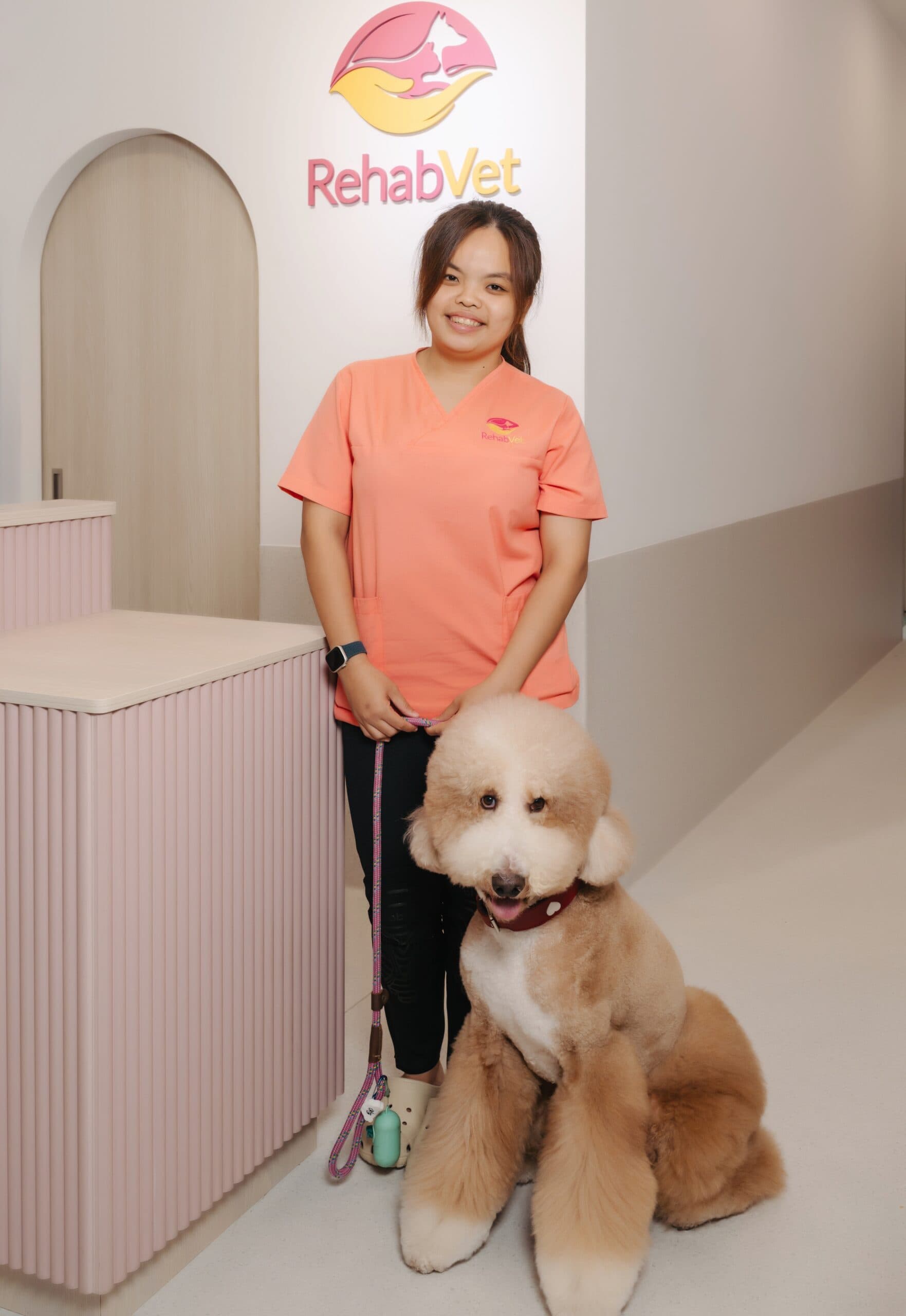
Senior Therapist
Joyce came from a pet grooming background where she has learnt valuable tips in being able to handle an animal with patience and care.

Therapist
Hazel holds a Bachelor of Physiotherapy from AIMST University in Malaysia.
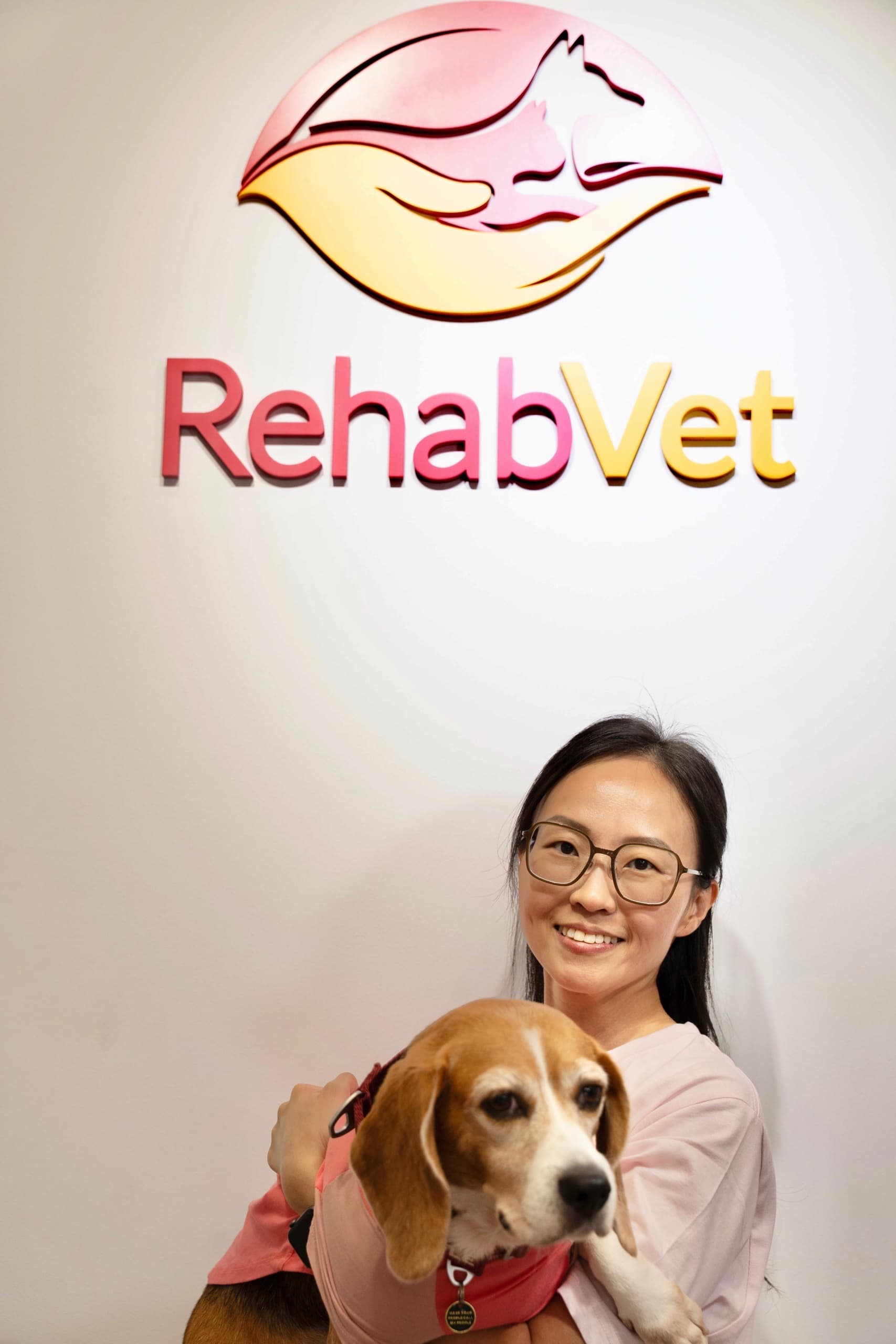
Client Relations, Marketing & Business Development Manager
Claire supports the clinic's daily operations, social media, marketing, events, partnerships and client relations, aiming to make every
Free · No obligation · Same details as booking an assessment
Step 1 of 3
Free · No obligation · We'll only contact you about stem cell therapy.