
Fitness and Conditioning
This page is for educational purposes only and is not a substitute for veterinary diagnosis or emergency care. Always consult your primary veterinarian or a rehabilitation veterinarian before starting treatment. If your pet cannot walk, has sudden paralysis, severe pain, or breathing difficulty, seek urgent veterinary attention.
What is Fitness and Conditioning?
Also known as: canine conditioning; sports fitness for dogs; prehab conditioning.
Fitness conditioning prepares the musculoskeletal and cardiovascular systems for the demands of daily life, sport, or work. It is relevant not only to agility and working dogs but also to pets returning from sedentary periods and seniors who need graded stamina.
A good programme balances strength, endurance, flexibility, proprioception, and recovery. Random hard runs on concrete are not conditioning — they are risk.
Veterinary rehabilitation clinicians screen for occult lameness before loading and periodise training around competitions or lifestyle goals. Cats benefit from play-based conditioning that respects stress limits.
What are the signs of Fitness and Conditioning?
Signs vary by severity and by whether your pet is a dog or cat. Owners of dogs and cats often notice:
- Early fatigue on walks or during sport
- Soreness after typical activity weekends
- Muscle asymmetry in active dogs
- Desire to start a sport with no prior base fitness
- Return-to-sport needs after time off
What causes Fitness and Conditioning?
- Insufficient base strength for sporting demands
- Rapid jumps in training volume or intensity
- Imbalanced training (lots of cardio, little strength/stability)
- Prior injury without full reconditioning
- Age or weight changes altering capacity
How can veterinary rehabilitation help with Fitness and Conditioning?
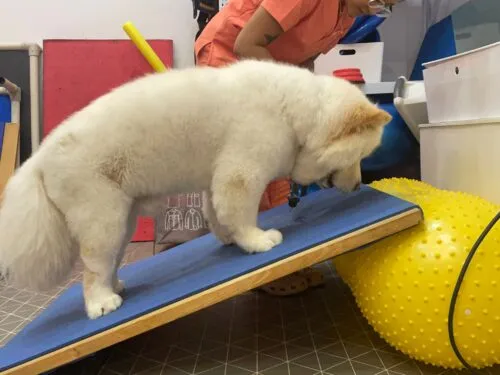
Assessment identifies weak links — core, hind-limb drive, shoulder stability, balance. Programmes use land equipment, therapeutic exercise, and sometimes underwater treadmill intervals.
Load is progressed with clear rules. Education covers warm-up, cool-down, surface choice, and rest days.
For pets with known OA or prior surgery, conditioning doubles as secondary prevention.
Rehabilitation plans at RehabVet are individualised after a veterinary assessment. We coordinate with your primary vet when imaging, medication, or surgery is part of the overall plan.
Which therapies may be used for Fitness and Conditioning?
Depending on your pet’s examination findings, comfort, and goals, a plan may include one or more of the following:
What are the rehabilitation goals for Fitness and Conditioning?
Goals are set for the individual patient. Typical aims may include (not guarantees — outcomes vary):
- Improve strength, endurance, and movement quality
- Reduce soft-tissue injury risk from sudden overload
- Prepare for sport, work, or more active family life
- Correct muscle imbalances found on assessment
- Teach owners a repeatable weekly conditioning template
We do not publish invented success percentages. Progress is tracked clinically (gait, strength, range of motion, pain behaviours, and home function) and plans are adjusted over time.
When should you seek veterinary care for Fitness and Conditioning?
- Starting high-impact sport with a deconditioned pet
- Recurring soreness after ordinary activity
- Return-to-sport planning after injury or surgery
- Any lameness during conditioning — stop and get assessed
No. Pet dogs and some cats benefit from structured strength and balance work for daily resilience, weight control, and senior independence.
Walks help endurance but may not target strength, lateral stability, or specific weak muscle groups. Conditioning adds intentional exercises with progression.
Young dogs need age-appropriate, joint-friendly activity — not heavy repetitive impact. A rehab clinician can tailor safe prehab habits.
Related reading & patient stories
Book a rehabilitation assessment
If your pet has been diagnosed with fitness conditioning, or you are noticing mobility changes, our team can assess and design a multimodal rehab plan.
Educational content only — not a diagnosis. For emergencies, contact your nearest veterinary hospital.
Related Conditions
- ConditionDeconditioning RecoveryAfter rest or illness, pets lose fitness fast. A staged rehab plan rebuilds stamina and strength without repeat injury.Learn more
- ConditionObesity and Weight ManagementExtra body weight amplifies joint load and inflammation. RehabVet pairs veterinary nutrition guidance with joint-friendly conditioning.Learn more
- ConditionSarcopenia (Age-Related Muscle Loss)Ageing pets lose lean muscle even without nerve disease. Targeted strengthening and nutrition support help counter sarcopenia-related frailty.Learn more