
Hind-Limb Weakness in Senior Pets
This page is for educational purposes only and is not a substitute for veterinary diagnosis or emergency care. Always consult your primary veterinarian or a rehabilitation veterinarian before starting treatment. If your pet cannot walk, has sudden paralysis, severe pain, or breathing difficulty, seek urgent veterinary attention.
What is Hind-Limb Weakness in Senior Pets?
Also known as: pelvic limb paresis (geriatric); rear-end weakness; senior back-leg weakness.
Hind-limb weakness in seniors may reflect hip or stifle osteoarthritis, lumbosacral disease, disc disease, degenerative myelopathy, sarcopenia, orthopaedic pain with compensatory collapse, or systemic illness. Cats may present as reduced jumping rather than classic paresis.
A neurological versus orthopaedic distinction matters: knuckling, crossing, and proprioceptive deficits push toward neural pathways; focal joint pain and improved function after warm-up lean orthopaedic — mixed pictures are common.
Rehab plans are diagnosis-informed. Strength and proprioceptive training help many seniors, while unsafe exercise can worsen unstable spinal conditions. Assessment first.
What are the signs of Hind-Limb Weakness in Senior Pets?
Signs vary by severity and by whether your pet is a dog or cat. Owners of dogs and cats often notice:
- Bunny-hopping, swaying hips, or sitting frequently on walks
- Nail scuffing or knuckling of pelvic limbs
- Difficulty climbing stairs or entering the car
- Muscle wastage over the thighs
- Crossing of hind limbs or drunken rear gait (ataxia)
- In cats: missing jumps, landing awkwardly, or avoiding heights
What causes Hind-Limb Weakness in Senior Pets?
- Bilateral hip or stifle osteoarthritis
- Lumbosacral stenosis or thoracolumbar disc disease
- Degenerative myelopathy and other chronic myelopathies
- Sarcopenia and general deconditioning
- Pain inhibition and learned non-use after prior injury
How can veterinary rehabilitation help with Hind-Limb Weakness in Senior Pets?
After veterinary diagnosis, rehab targets the limiting factor: joint comfort, nerve-related proprioception, or pure strength deficits. Harness-assisted walking teaches safer patterns while capacity rebuilds.
Underwater treadmill work can support weak pelvic limbs with buoyancy when neurologically appropriate. Land exercises include weight-shifting, targeted strengthening, and surface variation.
Home safety and realistic walk routes reduce falls. Carts or boots are considered when they improve quality of life.
Rehabilitation plans at RehabVet are individualised after a veterinary assessment. We coordinate with your primary vet when imaging, medication, or surgery is part of the overall plan.
Which therapies may be used for Hind-Limb Weakness in Senior Pets?
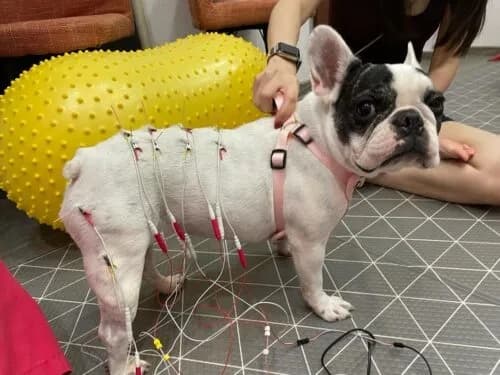
Depending on your pet’s examination findings, comfort, and goals, a plan may include one or more of the following:
What are the rehabilitation goals for Hind-Limb Weakness in Senior Pets?
Goals are set for the individual patient. Typical aims may include (not guarantees — outcomes vary):
- Improve pelvic-limb strength and standing endurance
- Enhance proprioception and reduce scuffing where neural pathways allow
- Decrease pain contribution from concurrent OA or LS disease
- Enable safer toileting and short community walks
- Support owners with handling and assistive equipment skills
We do not publish invented success percentages. Progress is tracked clinically (gait, strength, range of motion, pain behaviours, and home function) and plans are adjusted over time.
When should you seek veterinary care for Hind-Limb Weakness in Senior Pets?
- Progressive hind-limb weakness over days to weeks
- Knuckling, falling, or dragging nails
- Loss of bladder or bowel control — urgent veterinary care
- Acute paralysis — emergency
No. Severe hip arthritis and muscle loss can mimic neurological disease. A proper exam (and imaging when indicated) avoids mistreatment.
Support harnesses are helpful when weakness or pain limits independent walking, but they should complement — not replace — a strengthening plan unless decline is palliative.
Many benefit from proactive physiotherapy focused on maintaining function and delaying secondary complications. Expectations are supportive rather than curative.
Related reading & patient stories
Book a rehabilitation assessment
If your pet has been diagnosed with senior hind-limb weakness, or you are noticing mobility changes, our team can assess and design a multimodal rehab plan.
Educational content only — not a diagnosis. For emergencies, contact your nearest veterinary hospital.
Related Conditions
- ConditionSarcopenia (Age-Related Muscle Loss)Ageing pets lose lean muscle even without nerve disease. Targeted strengthening and nutrition support help counter sarcopenia-related frailty.Learn more
- ConditionSenior Mobility Decline“Slowing down” is not a diagnosis. Senior mobility decline has treatable contributors — joints, nerves, muscle, and fitness — that rehab can address.Learn more
- ConditionPalliative Mobility SupportWhen cure is not the goal, mobility support still matters — pain ease, assisted movement, and home adaptations that protect quality of life.Learn more