
Osteoarthritis in Cats
This page is for educational purposes only and is not a substitute for veterinary diagnosis or emergency care. Always consult your primary veterinarian or a rehabilitation veterinarian before starting treatment. If your pet cannot walk, has sudden paralysis, severe pain, or breathing difficulty, seek urgent veterinary attention.
What is Osteoarthritis in Cats?
Also known as: feline degenerative joint disease; arthritis in cats; feline OA; DJD in cats.
Osteoarthritis (OA) is extremely common in ageing cats — studies suggest radiographic or clinical evidence in well over 90% of cats aged 12 and older — yet it remains heavily under-diagnosed. Cats rarely “limp” the way dogs do. Instead they quietly drop high-effort behaviours: jumping onto counters, climbing cat trees, or using stairs. Elbows, hips, stifles, and the spine are frequently involved.
Radiographs can confirm bony change, but clinical signs and owner-reported behaviour often matter more for day-to-day comfort. Some cats have marked X-ray changes with subtle lifestyle impact; others show clear pain with milder imaging. A feline-focused orthopaedic exam plus history of jumping, grooming, litter-tray use, and temperament change is essential.
Pain may show as irritability when stroked over the back or limbs, reduced grooming with a scruffy coat, house-soiling if the litter tray has high sides, or sleeping in more accessible locations. Owners often assume these changes are “just ageing.”
Management is multimodal: veterinary analgesia appropriate for cats (including options such as Solensia / frunevetmab when prescribed by a vet), weight optimisation, environmental modification, and gentle rehabilitation adapted to feline stress thresholds. NSAIDs have a narrower safety margin in cats than in dogs and are not a casual long-term default — your primary vet decides what is safe. Forcing water therapy or prolonged handling is counterproductive for many cats. Cat owners seeking broader neurological mobility concerns may also find our guide to neurological conditions in cats useful.
In RehabVet's clinic dataset, 67 pets in the arthritis and osteoarthritis cluster averaged 41 rehabilitation sessions. This historical mean includes long-term maintenance cases and is not a recommended course length; see the June 2026 Impact Report.
What are the signs of Osteoarthritis in Cats?
Signs vary by severity and by whether your pet is a dog or cat. Owners of cats often notice:
- Reduced or abandoned jumping up or down
- Hesitation before stairs or litter-tray entry
- Matted coat, especially over the lower back and hips
- Stiff gait after rest; occasional visible lameness
- Withdrawal, hiding, or aggression when handled
- Muscle loss over the thighs or shoulders
- Choosing lower resting spots; less play or hunting behaviour
- House-soiling or avoiding a high-sided litter tray
What causes Osteoarthritis in Cats?
- Age-related cartilage degeneration (highly prevalent in senior cats)
- Prior trauma or developmental joint abnormalities
- Obesity increasing joint stress and inflammatory load
- Concurrent dental or systemic disease reducing activity and compounding decline
- Possible hereditary factors in some populations
- Secondary OA after orthopaedic injury (for example stifle instability)
How can veterinary rehabilitation help with Osteoarthritis in Cats?
Feline rehab prioritises low-stress handling, short sessions, and home-centric programmes. Passive range of motion, assisted standing, and gentle play-based movement can maintain mobility when the cat tolerates them. See our cat physiotherapy and cat rehabilitation services for how sessions are structured.
Environmental modification is often as powerful as clinic work: low-entry litter trays, ramps or steps to favourite perches, warm soft beds, and non-slip surfaces reduce daily pain load without forcing the cat to jump.
Weight management lowers mechanical stress on painful joints. Even modest loss in an overweight cat can meaningfully improve comfort when paired with pain care and movement therapy.
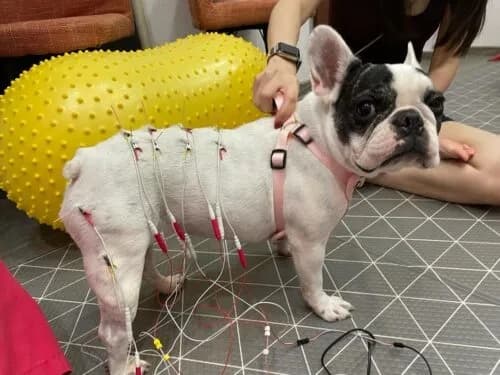
When appropriate, acupuncture or other comfort modalities may be used alongside medical pain control. Solensia (frunevetmab) — a once-monthly monoclonal antibody injection prescribed by veterinarians — is increasingly part of multimodal feline OA plans; rehab complements it by preserving muscle, range, and home function rather than replacing medical care.
NSAID limitations in cats mean multimodal strategies matter more, not less. Coordination with the primary vet ensures medicines safe for cats are optimised while rehab and home setup do the daily work.
Rehabilitation plans at RehabVet are individualised after a veterinary assessment. We coordinate with your primary vet when imaging, medication, or surgery is part of the overall plan.
Which therapies may be used for Osteoarthritis in Cats?
Depending on your pet’s examination findings, comfort, and goals, a plan may include one or more of the following:
What are the rehabilitation goals for Osteoarthritis in Cats?
Goals are set for the individual patient. Typical aims may include (not guarantees — outcomes vary):
- Improve comfort with essential daily behaviours (toileting, resting, navigating the home)
- Preserve lean muscle and joint range within feline tolerance
- Reduce painful high-impact jumps via smarter home setup
- Support healthy body condition
- Help owners recognise and respond to feline pain cues
- Integrate rehab with veterinary pain plans (including Solensia when used)
We do not publish invented success percentages. Progress is tracked clinically (gait, strength, range of motion, pain behaviours, and home function) and plans are adjusted over time.
When should you seek veterinary care for Osteoarthritis in Cats?
- Any lasting drop in jumping, grooming, or litter-tray use
- Visible lameness or crying when touched
- Rapid weight loss or gain with mobility change
- Sudden inability to walk or severe pain — emergency care
- Senior cats (especially 10–12+) without a recent feline OA-focused exam
Cats instinctively mask vulnerability. Behavioural and environmental clues often appear before a classic limp. With prevalence estimates above 90% in cats 12 and older, a veterinary exam focused on feline OA is worthwhile for any senior cat — even when X-rays are “mild” or not yet done.
Solensia (frunevetmab) is a veterinary monoclonal antibody injection targeting nerve growth factor, typically given monthly for feline OA pain under your vet’s care. It addresses pain signalling; rehab still helps with muscle preservation, joint mobility, environmental modification, and weight management. Multimodal care — medicine plus low-stress physio and home setup — usually works better than either alone.
Some cats tolerate water-based therapy; many do not. Suitability is individual. Land-based and home environmental strategies are often the first line for feline OA rehab in Singapore.
Cats metabolise many NSAIDs differently and have a narrower safety margin. Never give dog or human pain medicines at home. Your veterinarian selects feline-appropriate options (which may include Solensia, carefully chosen NSAIDs, or other agents) and monitors organ function as needed.
Supplements may be part of a plan for some cats but are not a standalone treatment for established OA. Pain control, weight, environment, and movement therapy usually matter more.
Related reading & patient stories
Book a rehabilitation assessment
If your pet has been diagnosed with feline osteoarthritis, or you are noticing mobility changes, our team can assess and design a multimodal rehab plan.
Educational content only — not a diagnosis. For emergencies, contact your nearest veterinary hospital.
Related Conditions
- ConditionChronic Pain and Mobility DeclineLong-standing pain changes how pets move, rest, and engage with family. A structured rehab plan addresses both comfort and function.Learn more
- ConditionOsteoarthritis (Degenerative Joint Disease) in DogsStiff in the mornings, slower on walks, no longer keen on stairs? Arthritis is manageable. RehabVet builds multimodal treatment plans that reduce pain and protect the mobility your dog has left.Learn more
- ConditionPolyarthritis in DogsPolyarthritis means inflammation in multiple joints. Dogs may shift lameness, stiffen, or seem systemically unwell. Rehab supports comfort once medical care is underway.Learn more