
Chronic Pain and Mobility Decline
This page is for educational purposes only and is not a substitute for veterinary diagnosis or emergency care. Always consult your primary veterinarian or a rehabilitation veterinarian before starting treatment. If your pet cannot walk, has sudden paralysis, severe pain, or breathing difficulty, seek urgent veterinary attention.
What is Chronic Pain and Mobility Decline?
Also known as: chronic pain-related disability; pain-associated mobility loss; long-term musculoskeletal discomfort.
Chronic pain lasts beyond expected tissue healing or recurs over months. In dogs and cats it is often musculoskeletal (OA, spinal disease, soft-tissue sensitisation) but can have neuropathic components. Pets adapt by moving less, which leads to muscle loss, stiffness, weight gain, and further pain — a self-reinforcing cycle.
Owners may notice shorter walks, less jumping, irritability, house-soiling in cats that no longer climb into the litter tray easily, or restlessness at night. Because animals hide discomfort, chronic pain is under-recognised, especially in cats and stoic dogs.
Veterinary rehabilitation partners with primary care pain management. The aim is not only “less pain on paper” but better real-world mobility: rising, toileting, social interaction, and comfortable rest.
What are the signs of Chronic Pain and Mobility Decline?
Signs vary by severity and by whether your pet is a dog or cat. Owners of dogs and cats often notice:
- Gradual reduction in walk distance or play
- Hesitation on stairs, slippery floors, or jumping
- Altered posture, weight shifting, or guarding when touched
- Sleep disruption, panting, or restlessness without obvious cause
- Muscle wasting and a tucked or hunched posture
- Behaviour change: withdrawal, clinginess, or uncharacteristic aggression
What causes Chronic Pain and Mobility Decline?
- Osteoarthritis and other degenerative joint or spinal disease
- Inadequately controlled post-injury or post-surgical pain
- Myofascial tension and compensatory overload of other limbs
- Neuropathic pain after nerve root or spinal cord insult
- Obesity and deconditioning amplifying load and fatigue
How can veterinary rehabilitation help with Chronic Pain and Mobility Decline?
A full functional pain assessment looks at gait, palpation findings, strength, and home barriers. Plans combine comfort modalities with carefully progressed exercise so pets re-enter movement without repeated flares.
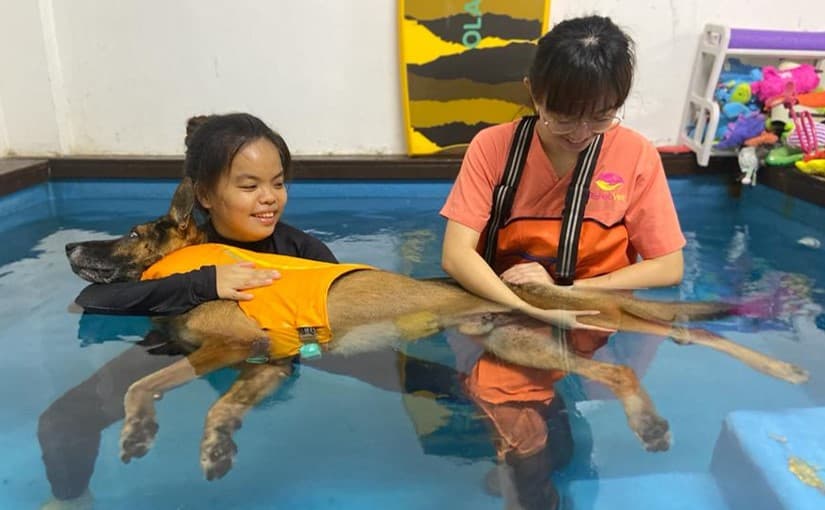
Manual therapy, acupuncture, therapeutic exercise, and (when suitable) hydrotherapy are selected to the individual. Owner coaching on pacing — little and often — is as important as clinic sessions.
Progress is tracked with practical markers (sit-to-stand ease, walk tolerance, jump willingness, sleep quality) rather than unverifiable success percentages.
Rehabilitation plans at RehabVet are individualised after a veterinary assessment. We coordinate with your primary vet when imaging, medication, or surgery is part of the overall plan.
Which therapies may be used for Chronic Pain and Mobility Decline?
Depending on your pet’s examination findings, comfort, and goals, a plan may include one or more of the following:
What are the rehabilitation goals for Chronic Pain and Mobility Decline?
Goals are set for the individual patient. Typical aims may include (not guarantees — outcomes vary):
- Reduce daily pain behaviours and improve rest quality
- Interrupt the disuse–weakness–pain cycle with graded activity
- Restore capacity for essential home functions
- Improve owner confidence in safe handling and exercise
- Coordinate with veterinary medication review when needed
We do not publish invented success percentages. Progress is tracked clinically (gait, strength, range of motion, pain behaviours, and home function) and plans are adjusted over time.
When should you seek veterinary care for Chronic Pain and Mobility Decline?
- Pain or mobility decline lasting weeks despite rest
- Escalating analgesic needs or breakthrough pain
- Loss of ability to toilet independently or walk for basic needs
- Sudden severe pain, paralysis, or collapse — emergency veterinary care
Yes. Chronic musculoskeletal pain often does not show on routine blood panels. Diagnosis relies on history, orthopaedic/neurological exam, and sometimes imaging. Rehab assessment adds a functional layer.
Strict rest can worsen stiffness and muscle loss in chronic pain. Relative rest (avoiding flares) plus guided therapeutic movement is usually preferable once serious injury has been ruled out.
Cats are subtler: reduced jumping, less grooming, hiding, litter-tray accidents, and lower interaction are common clues. Feline-friendly, low-stress approaches matter.
Related reading & patient stories
Book a rehabilitation assessment
If your pet has been diagnosed with chronic pain & mobility, or you are noticing mobility changes, our team can assess and design a multimodal rehab plan.
Educational content only — not a diagnosis. For emergencies, contact your nearest veterinary hospital.
Related Conditions
- ConditionOsteoarthritis (Degenerative Joint Disease) in DogsStiff in the mornings, slower on walks, no longer keen on stairs? Arthritis is manageable. RehabVet builds multimodal treatment plans that reduce pain and protect the mobility your dog has left.Learn more
- ConditionOsteoarthritis in CatsCats hide joint pain well. Reduced jumping, grooming changes, and irritability can signal OA. RehabVet offers Solensia-aware, feline-friendly mobility support in Singapore.Learn more
- ConditionPolyarthritis in DogsPolyarthritis means inflammation in multiple joints. Dogs may shift lameness, stiffen, or seem systemically unwell. Rehab supports comfort once medical care is underway.Learn more