Dog Swimming Pools in Singapore: Recreational Swims vs Supervised Fitness Swims
Two reasons to put a dog in water
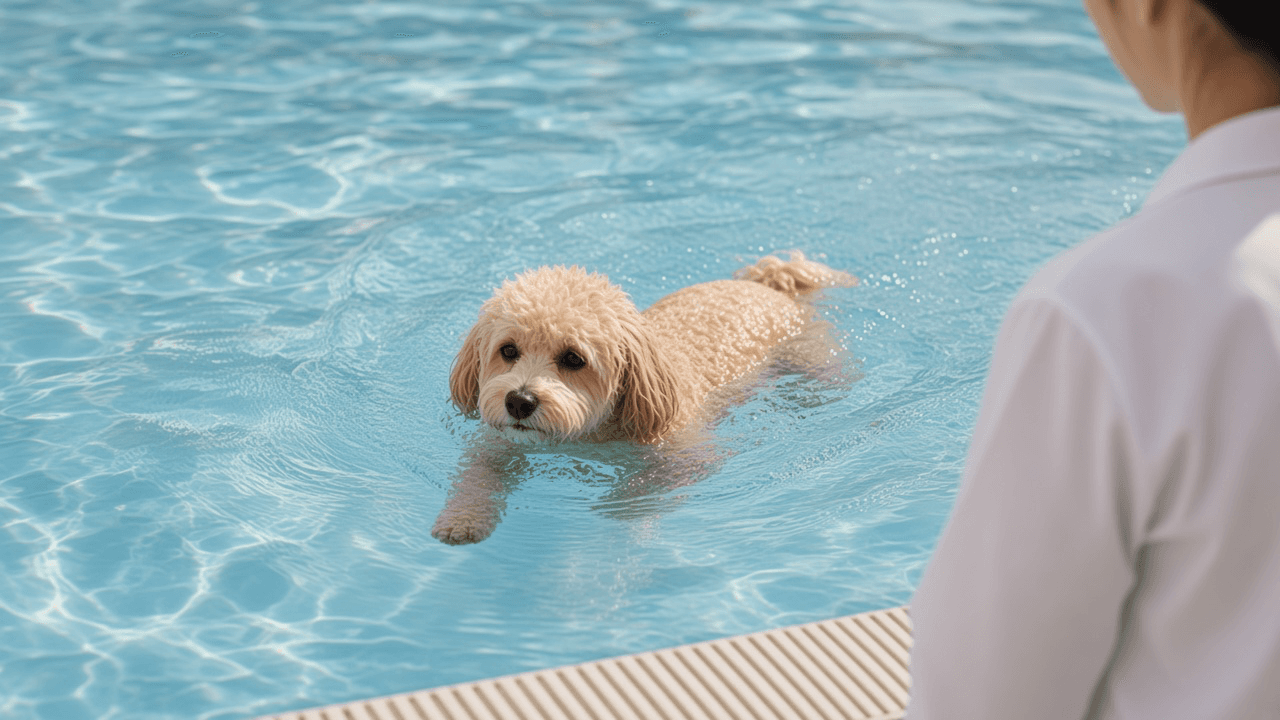
A dog swimming pool Singapore owners book on a hot weekend is usually a recreational swim: a private pool, other dogs, a life jacket, and a dog who is there to cool off and play. A supervised fitness swim is a different appointment. One dog, a person who is watching the legs and the breathing, a set time, and a reason that has something to do with strength or load. Treating those as the same product is how sore dogs get bumped by excited ones, and how healthy dogs get bored in a clinical pool.
Public swimming complexes are not where this happens. Recreational dog swims are private businesses with their own rules. This article will not name venues or invent entry fees, because both change and a wrong price helps nobody. Judge the pool in front of you. If what you want is a planned session rather than a party, look at supervised fitness swims and the fitness swim fees instead of a group booking. The rest of this page is how to tell which outing you are actually buying.
What a recreational swim is good for
A confident, healthy dog can enjoy a swim as exercise and cooling, especially in a flat with no garden and a climate that makes midday walks miserable. Water supports the body, and a dog who swims well will work the whole frame without pounding the paws on concrete. It is also social, which is a plus for some dogs and a fright for others. You are choosing a play environment. You are not choosing a treatment, even if the dog comes home tired and sleeps well.
Go at a quiet time for the first visit. Fit a life jacket with a handle if the pool allows it, so you can turn the dog towards the ramp without grabbing the collar. Let them enter on a ramp rather than being thrown in. A dog who is dumped in the water may swim, and they may also decide water is something that happens to them. Short sessions beat a long one that ends in frantic paddling. Bring fresh drinking water. Pool water is not a drink, however clean it looks.
Dogs who should skip the play pool
Do not take a dog with an open wound, diarrhoea, vomiting, or a contagious skin problem into a shared pool. Do not take a dog who panics, cannot find the exit, or cannot be lifted out by the person with them. Puppies who are not yet safe around water, dogs in season if the venue's rules exclude them, and dogs who resource-guard toys are poor group candidates. If your dog has just had surgery, a play pool is the wrong place. Other dogs bump, the footing at the edge is chaotic, and nobody there is managing the repair.
Back pain, neck pain and a dog who is knuckling or weak should not be in a social swim. Twisting in water, slipping on the ramp and excitement are a bad combination for a disc or a sore neck. Those dogs need a vet, not a weekend booking. If the weakness or paralysis is new, go to an emergency clinic. A fitness session is a later decision, made after someone has said the spine is stable. A recreational pool cannot make that decision for you, however calm the photographs look.
Want a vet to look at how your pet is moving?
A rehabilitation assessment looks at pain, gait and what should happen next. You leave with a plan, whether that is physiotherapy, hydrotherapy or a referral back to your own vet.
How to judge a private pool
Ask how many dogs are in the water at once, and whether you can book a single-dog slot. Ask what they do when a dog panics. Look at the ramp: it should be wide, non-slip and usable by your dog's size, not a decorative step. Look at the deck. Tile plus excited claws is how nails tear and wrists twist on the way out. Ask how the water is kept, how often it is tested, and what happens after a dog fouls the pool. A straight answer is the standard. A vague answer about natural balance is not.
Ask about vaccination and behaviour rules without assuming they match your last venue. Ask whether staff are in the water or watching from phones. Shade, a hose to rinse chlorine or salt off the coat, and a place to dry off matter in this weather. If the only supervision is the owners chatting, you are the lifeguard. That is acceptable only if you accept it and your dog is an easy swimmer. It is not acceptable if you hoped someone qualified was watching the legs.
What a supervised fitness swim is doing instead
A fitness swim at a rehabilitation clinic is a planned load. The therapist decides whether the dog should swim or walk, how long, how the session stops, and what a good stride looks like in the water. The point may be to rebuild thigh muscle after a knee injury, to let an arthritic dog move with less load, or to work a dog who cannot tolerate a long walk on land. It is not a social hour, and another dog will not be invited in to make it more fun.
RehabVet has a saltwater pool and an underwater treadmill at 513 Serangoon Road. Saltwater is simply the water we use. It is not a spa claim. The treadmill is often the more precise tool, because the dog walks rather than swims in circles, and the water height changes how much weight the legs carry. A dog who only paddles randomly may be fit and still be missing the exercise that was asked for. Fees for those sessions are the ones on the pricing page, not the entry fee of a play pool.
Walking in water is a different exercise from swimming
Swimming is a skill. Some dogs drive with the front legs and trail the back legs, which is the opposite of what you want if the goal was to work the hindquarters. A walking belt forces a step. Water depth is chosen. The session can be short and still specific. That is why a dog can be cleared for treadmill work and still be a poor candidate for a free swim with friends, or the other way around. Ask which one was recommended. Do not substitute the more convenient one.
Entry and exit matter as much as the minutes in the water. A controlled ramp, a dry non-slip mat, and a person who does not want the dog to shake and bolt are part of the session. After a fitness swim, the dog goes home to rest, not to the dog run because they seem full of energy. The energy is the point at which owners overdo the day. If your dog is stiffer the next morning, tell the therapist. The session can be too long even when it looked gentle.
After injury, illness or a long break
A dog who has not swum since puppyhood should not be taken to a busy pool to see if they remember. Start shallow, with an exit they have already practised, and stop while it is still successful. A life jacket does not teach them where the ramp is. Show them. Dogs recovering from orthopaedic surgery go in the water only when the surgeon and the rehabilitation vet agree the wound is sealed and the repair can take that load. A friend's pool party is not that agreement.
Ear infections, skin disease and diarrhoea are reasons to cancel, both for your dog and for the other dogs in a shared pool. Rinse the coat afterwards if the venue asks you to. Dry the ears as your vet has shown you if your dog is prone to ear problems. None of this is fussy. Shared water is only as safe as the last dog in it and the honesty of the owner who knew their dog was unwell and came anyway. Stay home if that owner might be you this week.
Heat, fatigue and getting there
Midday heat plus a swim plus a hot car is how a fun outing becomes distress. Panting that does not settle, dark red gums, stumbling or a dog who seems dazed are reasons to stop, cool them with air moving and water on the body as a vet has advised for heat, and seek urgent care if they do not improve quickly. Do not assume the pool means they cannot overheat. A panicked paddler works extremely hard. Watch the face, not your booking slot.
If your dog cannot walk easily, a group pool is the wrong experiment. A supervised session can still be appropriate once a vet has cleared them, and you will need a way to get them there safely. Book rather than arrive on spec. You can arrange a fitness swim assessment and ask, before you come, whether your dog should be swimming, walking in water, or staying on land for now. Call +65 6291 6881. Bring any surgical instructions. A pool is a tool. The tool has to match the dog, or it is just a wet afternoon with extra risk.