Dog Wheelchairs in Singapore: Who Needs One, Fit and How to Choose
A cart is a tool for a specific body, not a symbol
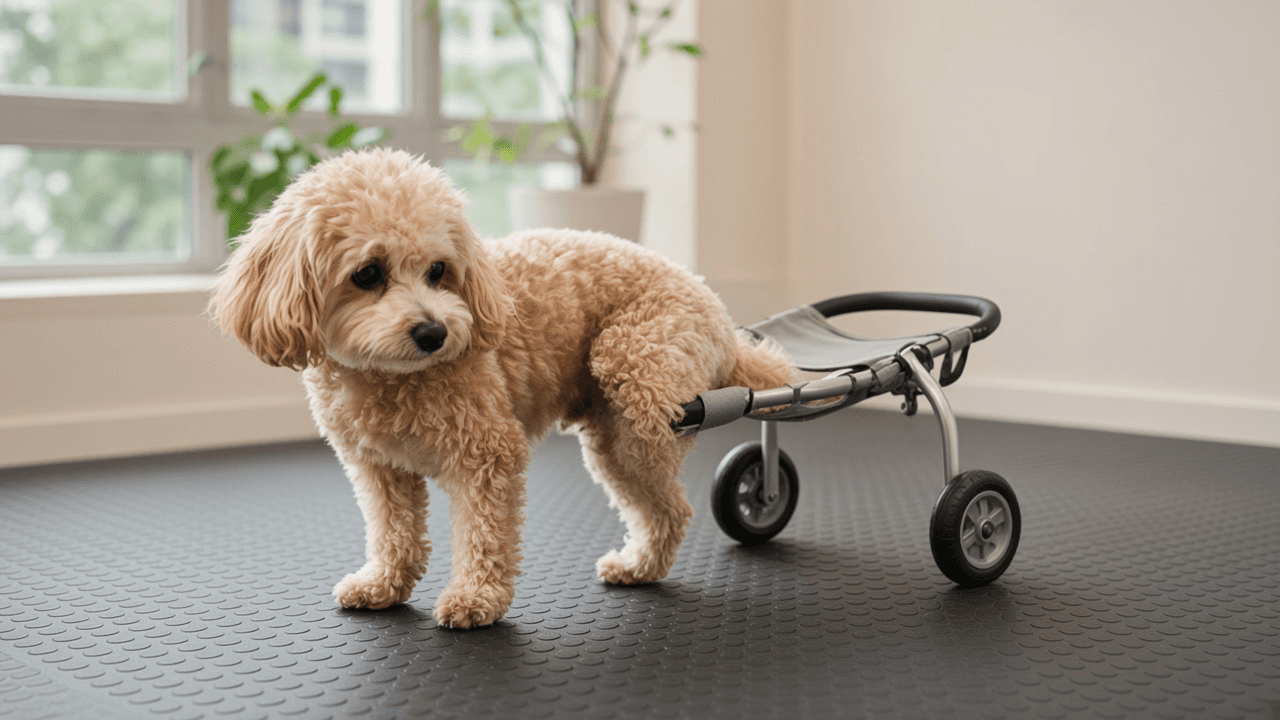
A dog wheelchair Singapore owners ask about is usually a rear-support cart: two wheels, a frame, and a harness that holds the hindquarters up when the back legs can no longer do that job. Some dogs need a four-wheel cart because the front legs are weak as well. A few cats tolerate a small cart. Many do not, and a cat should not be put in one to see what happens on a Saturday. The useful question is not where to order the cheapest frame. It is whether this animal is stable, comfortable and strong enough in the legs that still work.
We will not print a price. Carts are sized and sometimes built to the dog, and a number invented here would be fiction. Ask the fitter for a written quote that separates the cart, the fitting, the adjustments and any sling or orthosis that is also recommended. Session fees for rehabilitation, which should happen around the cart rather than instead of a plan, are on the pricing page. A cart bought from a measurement you took alone, on a soft mattress, is how dogs get sores.
Who may benefit
Dogs with degenerative myelopathy are the group people picture: an older dog, usually not in much pain, slowly losing the back legs, scuffing nails, knuckling, then struggling to stand. A cart can give those dogs a way to move when the disease has taken standing away, and it can spare the front legs from doing the entire job of dragging the body. It does not slow the disease process itself. Read the degenerative myelopathy page for the diagnosis. The cart is a mobility aid after that diagnosis is honest, not a test you use to avoid further investigation.
Some dogs who remain paralysed after a disc injury, once the spine is stable and the pain is controlled, also use a cart for exercise and for a more normal day. So do some dogs after amputation, when the remaining limbs are overloaded and a cart or a prosthesis is being compared. The tripod rehabilitation page is the right briefing if you are in that decision. A dog who is acutely painful, still in the early days of a disc extrusion, or not yet imaged does not go in a cart to keep them busy. Movement through an unstable spine is how neurological injuries get worse.
Who should not be put in one yet
Do not use a cart for a dog who became weak or paralysed today. That dog needs an emergency vet. A cart is also wrong for a dog on strict crate rest, for a dog with an unstable spine, and for a dog whose pain is not controlled. Pressure sores, a full bladder and a chest that cannot steer are reasons to stop, not to lengthen the session. If you cannot check the skin and you cannot monitor urine, you are not ready to use the device at home.
Front-leg weakness changes the design. A rear cart on a dog who knuckles in front can tip them onto their face. Neck pain, severe arthritis in the remaining legs, and a dog who panics and freezes are reasons to reconsider or to choose a different aid. Some dogs need a custom orthosis or a prosthesis rather than wheels. The difference is explained in our article on custom orthotics and prosthetics. Link the two ideas when you shop. A brace and a cart solve different mechanical problems, and some dogs need both, introduced in an order the vet chooses.
Want a vet to look at how your pet is moving?
A rehabilitation assessment looks at pain, gait and what should happen next. You leave with a plan, whether that is physiotherapy, hydrotherapy or a referral back to your own vet.
Fit: the measurements that matter
The frame should hold the spine in a natural line, not arched up and not sagging. The hips should not rub the bars. The wheels should be tall enough that the paws can touch the ground for dogs who still have some movement, or clear the ground slightly for dogs who would otherwise drag and skin their toes. Width has to pass through your actual doorways and the lift, not a showroom aisle. A cart that does not fit the HDB flat will live in a corner.
Measure on a non-slip floor with the dog supported in a standing position if they can tolerate it, and have a second person help. Chest girth, the length from the shoulder to the hip, and the width of the pelvis are the usual numbers, and the fitter should recheck them on the dog rather than trusting a tape photo. Weight change means the fit changes. A dog who loses muscle after the first month will shift inside the harness. Book a refit. Skin checks happen every session, under the straps and between the thighs.
Introducing it without a battle
Start indoors, for a few minutes, with the dog already tired of being bored rather than fresh and frantic. Let them feel the frame. Feed them. Do not clap and cheer the first stumble. A helper walks in front. Another person stays at the hips so the cart is not a runaway. Stop before the dog is exhausted or starts to pant heavily. Singapore heat and a nervous dog are a bad mix for a long first outing. The first week is habituation, not a parade at the park.
Watch the front legs. They will do more work, and they can become sore if the sessions are too long or the cart is poorly balanced. Short and frequent beats one heroic loop. If the dog sits down and refuses, or yelps, take the cart off and look at the skin and the spine. Call the fitter or the rehabilitation vet. Do not tighten every strap as a response to refusal. Tight straps cause sores and panic. A dog who hates the cart on day one may accept it on day four if you stop turning the day into a test of character.
Bladder, bowels and skin still come first
A cart does not empty a bladder. Dogs with spinal disease may leak, or they may not be able to pass urine at all. Leaking is not a successful wee. Learn the difference from a vet or a nurse before you rely on walks in the cart to solve toileting. Urine scald plus a harness is how skin breaks down. Clean and dry the dog before the cart goes on. Check after it comes off. Any red patch that does not fade is a day off the device and a phone call.
Paws that still drag inside the frame need protection and a fit adjustment. Nails worn to the quick, bleeding on the top of the foot, or a nail torn because it caught the wheel are fit problems. Boots can help for short periods if they stay on and do not tourniquet the leg. Take them off and look. A dog who is exhausted, falling sideways or scraping the chest on the frame is finished for the day, even if the walk was shorter than you planned. Fatigue is a clinical sign, not a lack of grit.
Cats, small flats and transport
A small number of cats with permanent hind-limb paralysis use a cart for supervised indoor time. Most cats do better with a low litter box, non-slip floors and a life arranged on one level, and some will not tolerate the frame at all. Do not leave a cat in a cart unsupervised, near a balcony, or with another animal who might chase them. The introduction is slower than for a food-motivated dog. If the cat panics, stop. A cart is optional. Breathing and not falling from a height are not.
Getting the dog to a fitting appointment is its own problem if they cannot walk. Use a board or a firm mattress in the car, two people, and a spine that stays level. Our notes on pet transport are a separate practical question. For the fitting itself, come to a rehabilitation assessment first if you are unsure a cart is even the right aid. At RehabVet, 513 Serangoon Road, call +65 6291 6881 and describe whether the dog can stand at all. You can book that assessment before you spend money on a frame that has to be rebuilt.
The plan around the wheels
A cart is one hour of the day, not the whole treatment. Dogs still need pain control if they have pain, weight management, skin care, and exercises for the legs that work. Some dogs surprise you and start to step again once they are supported, which is useful information for the physiotherapist. Some will never step, and the cart remains the way they sniff the corridor. Both outcomes can be kind. What is unkind is a frame so badly fitted that the dog only associates movement with fear.
Bring any neurology report to the appointment so we are not guessing whether the spine is stable. If the diagnosis is still unknown, get that named before the shopping. A wheelchair can sit beside physiotherapy. It cannot replace an examination. If your dog worsened today, the emergency vet is the next stop, and the cart conversation can wait until someone has said the cord is not in the middle of a crisis.