
Brachial Plexus Injury
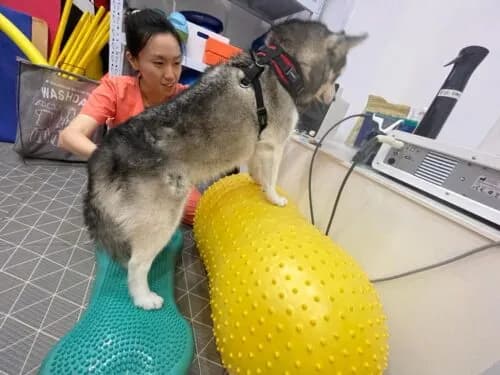
This page is for educational purposes only and is not a substitute for veterinary diagnosis or emergency care. Always consult your primary veterinarian or a rehabilitation veterinarian before starting treatment. If your pet cannot walk, has sudden paralysis, severe pain, or breathing difficulty, seek urgent veterinary attention.
What is Brachial Plexus Injury?
Also known as: brachial plexus avulsion; forelimb nerve paralysis; radial nerve paralysis (when radial distribution predominates).
The brachial plexus is a network of nerves arising from the caudal cervical and cranial thoracic spinal nerves that control the forelimb. Traction injuries — often from road traffic accidents, falls, or limb entrapment — can stretch, bruise, or avulse these nerves. Severity ranges from neuropraxia (temporary conduction block) to neurotmesis or root avulsion with poor spontaneous recovery.
Pets may drag a knuckled forelimb, lose elbow or shoulder stability, or show a flaccid limb with sensory deficits. Horner’s syndrome or ipsilateral facial signs can accompany severe root injuries. Veterinary assessment determines whether the injury is peripheral, whether fractures or joint luxations coexist, and whether amputation becomes a welfare discussion in irreversible, painful cases.
Rehabilitation protects the limb from abrasion, maintains joint mobility, combats contracture, stimulates remaining muscle, and retrains gait if function returns. Early, skilled care reduces secondary complications even when nerve recovery is incomplete.
What are the signs of Brachial Plexus Injury?
Signs vary by severity and by whether your pet is a dog or cat. Owners of dogs and cats often notice:
- Sudden forelimb lameness or flaccid paralysis after trauma
- Knuckling on the dorsum of the paw; worn skin on the top of the foot
- Inability to extend the elbow or bear weight (pattern depends on nerves involved)
- Muscle atrophy developing over weeks in denervated muscles
- Sensory loss; chewing at the limb (paraesthesia) in some cases
- Possible Horner’s syndrome (smaller pupil, third eyelid) with severe root injury
What causes Brachial Plexus Injury?
- Traction or blunt trauma (vehicle accidents, falls, limb caught)
- Iatrogenic injury rare but possible with certain procedures
- Severe abduction or distraction of the limb relative to the trunk
- Concurrent fractures, luxations, or soft-tissue trauma of the shoulder girdle
How can veterinary rehabilitation help with Brachial Plexus Injury?
Immediate priorities include protective boots, sling support if needed, and passive range of motion to prevent contracture while nerves recover — under veterinary guidance regarding fractures.
Neuromuscular electrical stimulation, therapeutic exercise, and weight-shifting are introduced as motor return allows. Laser and manual therapy may support comfort in associated soft tissues. Owners learn skin checks and massage for circulation.
If function does not return, rehab still helps prepare for prosthesis discussion or amputation recovery (tripod conditioning of the remaining limbs).
Rehabilitation plans at RehabVet are individualised after a veterinary assessment. We coordinate with your primary vet when imaging, medication, or surgery is part of the overall plan.
Which therapies may be used for Brachial Plexus Injury?
Depending on your pet’s examination findings, comfort, and goals, a plan may include one or more of the following:
What are the rehabilitation goals for Brachial Plexus Injury?
Goals are set for the individual patient. Typical aims may include (not guarantees — outcomes vary):
- Prevent pressure sores, abrasion, and joint contracture
- Maintain range of motion and soft-tissue extensibility
- Facilitate reinnervation-related motor return when present
- Retrain functional weight-bearing and gait
- Condition compensatory limbs and core for long-term mobility
We do not publish invented success percentages. Progress is tracked clinically (gait, strength, range of motion, pain behaviours, and home function) and plans are adjusted over time.
When should you seek veterinary care for Brachial Plexus Injury?
- Any traumatic forelimb paralysis — urgent veterinary assessment
- Open wounds, fractures, or a cold, pulseless limb
- Self-mutilation or severe pain in the affected limb
- No improvement over time — re-evaluation for prognosis and options
Peripheral nerves recover slowly when they can regenerate — often discussed in millimetres per day after the acute phase — but avulsed roots may not recover. Serial exams by your vet guide prognosis better than calendar promises.
Not always. Many traction injuries improve partially or fully. Amputation is considered when the limb is permanently non-functional, repeatedly injured, or painful. Rehab helps either pathway.
Cats can sustain similar injuries and follow the same principles: protect the limb, maintain joints, and retrain function if motor returns. Prognosis still depends on injury severity.
Related reading & patient stories
Book a rehabilitation assessment
If your pet has been diagnosed with Brachial plexus injury, or you are noticing mobility changes, our team can assess and design a multimodal rehab plan.
Educational content only — not a diagnosis. For emergencies, contact your nearest veterinary hospital.
Related Conditions
- ConditionDegenerative MyelopathyDegenerative myelopathy (DM) is a progressive neurodegenerative disease of the spinal cord in dogs, typically starting with hind-limb ataxia and weakness and advancing over months.Learn more
- ConditionFibrocartilaginous Embolism (FCE)Fibrocartilaginous embolism (FCE) is an acute spinal cord infarction caused by disc material blocking a spinal blood vessel — typically sudden, often asymmetric, and usually non-progressive after the first hours.Learn more
- ConditionIntervertebral Disc Disease (IVDD)Veterinary rehabilitation for dogs with IVDD in Singapore — pain relief, neuro-recovery and safe mobility work after disc disease, coordinated with your vet.Learn more