
Cerebrovascular Accident (Stroke)
This page is for educational purposes only and is not a substitute for veterinary diagnosis or emergency care. Always consult your primary veterinarian or a rehabilitation veterinarian before starting treatment. If your pet cannot walk, has sudden paralysis, severe pain, or breathing difficulty, seek urgent veterinary attention.
What is Cerebrovascular Accident (Stroke)?
Also known as: stroke; CVA; ischaemic brain infarct; intracranial haemorrhage (haemorrhagic stroke).
Strokes in pets are less often discussed than in humans but are well recognised. Ischaemic strokes result from blocked cerebral vessels; haemorrhagic strokes from bleeding into brain tissue. Underlying contributors can include hypertension, kidney disease, heart disease, endocrine disorders (such as hyperadrenocorticism or thyroid disease), clotting disorders, and vascular anomalies — a full medical work-up matters.
Signs are typically peracute: circling, head tilt, seizures, altered mentation, vision changes, or asymmetric weakness. Vestibular disease is a common differential; imaging (MRI) often distinguishes them. Emergency veterinary care is required for diagnosis and stabilisation.
Rehabilitation begins when the patient is stable: supporting balance, preventing injury, maintaining musculoskeletal health, and retraining motor control as the brain compensates. Recovery varies widely with lesion location and size.
What are the signs of Cerebrovascular Accident (Stroke)?
Signs vary by severity and by whether your pet is a dog or cat. Owners of dogs and cats often notice:
- Sudden onset circling, head tilt, or falling to one side
- Seizures, disorientation, or behaviour change
- Vision deficits or bumping into objects on one side
- Asymmetric facial or limb weakness
- Nausea or loss of appetite associated with vestibular-like signs
- In some cases: relatively preserved spinal reflexes with intracranial localisation on exam
What causes Cerebrovascular Accident (Stroke)?
- Ischaemic infarction from thromboembolism or vascular disease
- Haemorrhage related to hypertension, coagulopathy, or vascular malformations
- Underlying systemic disease: renal, cardiac, endocrine, neoplastic
- Idiopathic stroke when a cause is not identified after work-up
How can veterinary rehabilitation help with Cerebrovascular Accident (Stroke)?
Rehab provides a safe environment for early mobility: assisted walking, proprioceptive stimulation, and fall prevention. Sessions are short if fatiguability or seizures are concerns.
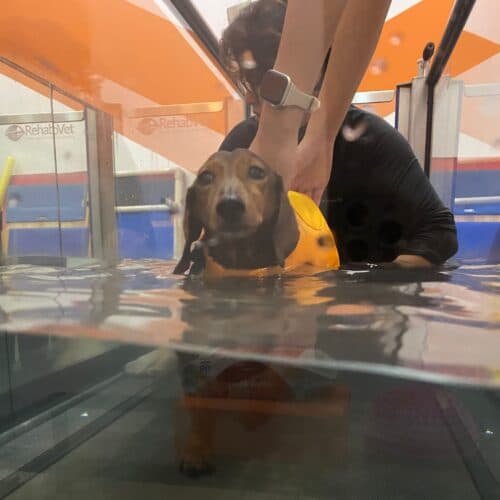
Therapeutic exercise and balance work help harness neuroplasticity. Manual therapy eases secondary muscle tension. Hydrotherapy is introduced cautiously when neurological and cardiovascular status allow.
Concurrent medical management of blood pressure and underlying disease remains the veterinarian’s domain; rehab coordinates timing and intensity.
Rehabilitation plans at RehabVet are individualised after a veterinary assessment. We coordinate with your primary vet when imaging, medication, or surgery is part of the overall plan.
Which therapies may be used for Cerebrovascular Accident (Stroke)?
Depending on your pet’s examination findings, comfort, and goals, a plan may include one or more of the following:
What are the rehabilitation goals for Cerebrovascular Accident (Stroke)?
Goals are set for the individual patient. Typical aims may include (not guarantees — outcomes vary):
- Maximise safe mobility and independence in daily routines
- Improve balance, coordination, and spatial awareness
- Maintain muscle mass during reduced activity
- Reduce secondary musculoskeletal strain
- Support owners with home modifications and realistic staging
We do not publish invented success percentages. Progress is tracked clinically (gait, strength, range of motion, pain behaviours, and home function) and plans are adjusted over time.
When should you seek veterinary care for Cerebrovascular Accident (Stroke)?
- Any sudden neurological event — emergency veterinary care
- Cluster seizures, severe dullness, or unresponsiveness
- Known hypertension with new neurological signs
- Inability to walk or eat safely after a suspected stroke
History, neurological localisation, and often MRI help. Idiopathic vestibular disease is usually peripheral and may improve quickly; strokes are intracranial vascular events and may have different accompanying signs. Do not self-diagnose at home.
Many pets improve as brain swelling settles and compensation occurs, especially with supportive care and rehab. Others have lasting deficits. We avoid quoting invented recovery rates — your vet interprets imaging and exam findings for your pet.
Yes. Hypertension is an important contributor to some cerebrovascular events and must be managed medically. Rehab does not replace blood-pressure treatment.
Related reading & patient stories
Book a rehabilitation assessment
If your pet has been diagnosed with Stroke (CVA), or you are noticing mobility changes, our team can assess and design a multimodal rehab plan.
Educational content only — not a diagnosis. For emergencies, contact your nearest veterinary hospital.
Related Conditions
- ConditionNeurological Conditions in CatsSudden weakness, head tilt, or a cat dragging back legs can signal neurological disease. RehabVet supports feline neuro recovery with low-stress physio, acupuncture, and HBOT when appropriate.Learn more
- ConditionSpinal Cord InjurySpinal cord injury from trauma, compression, or ischaemia can cause pain, ataxia, paresis, or paralysis. Rehabilitation supports nursing care and neurological recovery after veterinary stabilisation.Learn more
- ConditionDegenerative MyelopathyDegenerative myelopathy (DM) is a progressive neurodegenerative disease of the spinal cord in dogs, typically starting with hind-limb ataxia and weakness and advancing over months.Learn more