
Medial Shoulder Instability
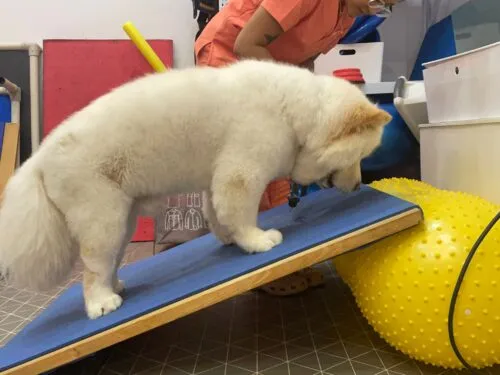
This page is for educational purposes only and is not a substitute for veterinary diagnosis or emergency care. Always consult your primary veterinarian or a rehabilitation veterinarian before starting treatment. If your pet cannot walk, has sudden paralysis, severe pain, or breathing difficulty, seek urgent veterinary attention.
What is Medial Shoulder Instability?
Also known as: medial glenohumeral instability; shoulder instability; medial shoulder syndrome; MSI.
The canine shoulder relies heavily on soft-tissue stabilisers — including the medial glenohumeral ligament complex, joint capsule, and surrounding cuff musculature — more than on deep bony congruence. When medial structures stretch, tear, or become chronically lax, the humeral head can subluxate under load, especially with abduction and external rotation demands of agility, working roles, or rough play.
MSI may present as subtle performance issues (reluctance to jump, weave, or turn) rather than dramatic non-weight-bearing lameness. Diagnosis is veterinary and may include abduction-angle assessment under sedation, imaging, and arthroscopy in selected cases.
Mild to moderate cases are often managed with structured rehabilitation, activity modification, and sometimes supportive therapies; severe instability may need surgical stabilisation. Rehab is central either as primary management or post-operative care.
What are the signs of Medial Shoulder Instability?
Signs vary by severity and by whether your pet is a dog or cat. Owners of dogs often notice:
- Intermittent or exercise-related forelimb lameness
- Reluctance to jump, land, or perform sharp turns
- Pain on shoulder abduction or deep palpation of medial structures
- Performance decline in sporting dogs without obvious “pet” limp at home
- Muscle atrophy or asymmetry over the shoulder girdle
What causes Medial Shoulder Instability?
- Acute sprain or tear of medial glenohumeral ligaments/capsule
- Repetitive microtrauma from sport, working tasks, or chronic overuse
- Inadequate conditioning relative to training intensity
- Secondary weakness after pain inhibition or concurrent shoulder pathology
How can veterinary rehabilitation help with Medial Shoulder Instability?
Assessment maps pain, abduction tolerance, scapular control, and sport or lifestyle demands. Early care protects healing medial structures while maintaining mobility elsewhere.
Therapeutic exercise emphasises controlled strengthening of medial stabilisers and scapular muscles, proprioception, and gradual return to sport-specific skills with clear stage gates.
Manual therapy and modalities may address secondary tightness. Hydrotherapy can maintain conditioning when land impact must be limited — when cleared by the veterinarian.
Rehabilitation plans at RehabVet are individualised after a veterinary assessment. We coordinate with your primary vet when imaging, medication, or surgery is part of the overall plan.
Which therapies may be used for Medial Shoulder Instability?
Depending on your pet’s examination findings, comfort, and goals, a plan may include one or more of the following:
What are the rehabilitation goals for Medial Shoulder Instability?
Goals are set for the individual patient. Typical aims may include (not guarantees — outcomes vary):
- Reduce medial shoulder pain and protective guarding
- Improve dynamic stability and scapular control
- Restore confident weight-bearing and gait symmetry
- Return to appropriate activity or sport with graded criteria
- Reduce re-injury risk through conditioning and load management
We do not publish invented success percentages. Progress is tracked clinically (gait, strength, range of motion, pain behaviours, and home function) and plans are adjusted over time.
When should you seek veterinary care for Medial Shoulder Instability?
- Persistent or intermittent forelimb limp, especially after sport
- Sudden shoulder pain after a slip, fall, or awkward landing
- Declining agility or working performance with suspected shoulder pain
- Before resuming jumping or weave training after a shoulder injury
No. OCD is a cartilage flap disease; MSI is soft-tissue instability of medial support structures. They can coexist, so proper diagnosis matters.
Many mild to moderate cases are managed with rest protocols and progressive rehab. Severe or refractory instability may need surgical stabilisation — your vet advises.
Return to jumping follows clinical criteria (pain-free function, strength, and controlled progressions), not calendar days alone. Sporting dogs typically need a staged plan.
Related reading & patient stories
Book a rehabilitation assessment
If your pet has been diagnosed with MSI, or you are noticing mobility changes, our team can assess and design a multimodal rehab plan.
Educational content only — not a diagnosis. For emergencies, contact your nearest veterinary hospital.
Related Conditions
- ConditionCranial Cruciate Ligament (ACL) RuptureCranial cruciate ligament (CCL) rupture — often called ACL tear — destabilises the stifle (knee), causing pain, lameness, and secondary meniscal and osteoarthritis risk in dogs and, less often, cats.Learn more
- ConditionCarpal Hyperextension InjuryCarpal hyperextension injury damages the palmar support of the canine wrist, leading to a dropped or collapsed carpus, pain, and altered forelimb mechanics.Learn more
- ConditionElbow Osteochondritis Dissecans (OCD)Elbow OCD involves a cartilage flap on the medial humeral condyle and is one component of the canine elbow dysplasia complex, mainly in young large-breed dogs.Learn more