
Osteochondrosis
This page is for educational purposes only and is not a substitute for veterinary diagnosis or emergency care. Always consult your primary veterinarian or a rehabilitation veterinarian before starting treatment. If your pet cannot walk, has sudden paralysis, severe pain, or breathing difficulty, seek urgent veterinary attention.
What is Osteochondrosis?
Also known as: OC; osteochondritis dissecans (when flap forms); developmental cartilage disorder; OCD spectrum disease.
During normal growth, cartilage templates are replaced by bone (endochondral ossification). In osteochondrosis, that process fails in focal areas, leaving thickened, vulnerable cartilage. When fissures form a flap and joint inflammation develops, the clinical disease is called osteochondritis dissecans (OCD).
Common sites in dogs include the caudal humeral head (shoulder), medial humeral condyle (elbow), femoral condyles (stifle), and medial or lateral trochlear ridges of the talus (hock). Large, rapidly growing breeds are predisposed. Lesions may be bilateral.
Veterinary diagnosis uses exam and imaging; arthroscopy both diagnoses and treats many OCD flaps. Rehabilitation supports recovery after surgical or medical management and helps maintain muscle during restricted activity — without reversing the developmental lesion itself.
What are the signs of Osteochondrosis?
Signs vary by severity and by whether your pet is a dog or cat. Owners of dogs often notice:
- Lameness in a juvenile or young adult large-breed dog
- Joint swelling and pain on manipulation of the affected joint
- Exercise intolerance; stiffness after rest
- Reduced performance in training or play
- Muscle atrophy with chronicity
What causes Osteochondrosis?
- Failure of endochondral ossification (developmental)
- Genetic predisposition in many large and giant breeds
- Rapid growth and possible nutritional influences
- Biomechanical overload of vulnerable cartilage during growth
How can veterinary rehabilitation help with Osteochondrosis?
Rehab plans are joint-specific: protecting healing cartilage beds after flap removal, restoring range, and rebuilding stabilising muscle.
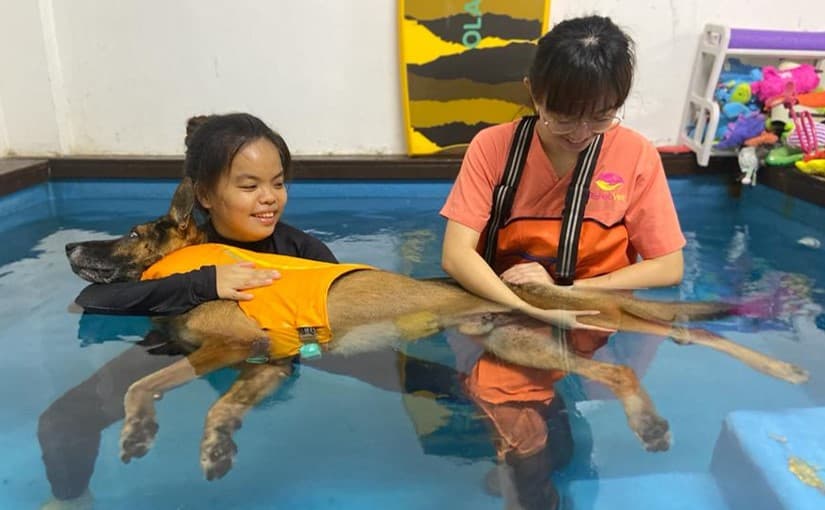
Controlled land exercise and, when cleared, aquatic therapy help maintain fitness during growth and recovery.
Owners receive guidance on growth-period activity, weight, and monitoring the opposite limb when bilateral disease is possible.
Rehabilitation plans at RehabVet are individualised after a veterinary assessment. We coordinate with your primary vet when imaging, medication, or surgery is part of the overall plan.
Which therapies may be used for Osteochondrosis?
Depending on your pet’s examination findings, comfort, and goals, a plan may include one or more of the following:
What are the rehabilitation goals for Osteochondrosis?
Goals are set for the individual patient. Typical aims may include (not guarantees — outcomes vary):
- Support comfort and joint function at the affected site
- Restore muscle and gait symmetry
- Protect healing cartilage surfaces after treatment
- Reduce secondary OA risk through smart loading
- Educate owners on long-term joint health
We do not publish invented success percentages. Progress is tracked clinically (gait, strength, range of motion, pain behaviours, and home function) and plans are adjusted over time.
When should you seek veterinary care for Osteochondrosis?
- Any persistent limp in a growing large-breed dog
- Joint swelling or pain on handling
- Bilateral or shifting lameness
- Before intensifying sport training in an adolescent dog with joint pain
Osteochondrosis is the underlying developmental cartilage–bone conversion failure. Osteochondritis dissecans (OCD) refers to the stage with flap formation and inflammatory joint disease.
Shoulder and elbow are among the most commonly discussed sites, but stifle and hock OCD also occur. Location changes the exam and surgical approach.
Balanced, large-breed-appropriate nutrition supports healthy growth but cannot eliminate genetic risk. Follow your veterinarian’s feeding advice; avoid over-supplementation without guidance.
Related reading & patient stories
Book a rehabilitation assessment
If your pet has been diagnosed with Osteochondrosis, or you are noticing mobility changes, our team can assess and design a multimodal rehab plan.
Educational content only — not a diagnosis. For emergencies, contact your nearest veterinary hospital.
Related Conditions
- ConditionAngular Limb DeformityAngular limb deformity describes abnormal angulation or rotation of a limb from asymmetric growth-plate function or trauma, altering joint alignment and gait in dogs.Learn more
- ConditionElbow DysplasiaElbow dysplasia is a group of developmental elbow disorders — including FMCP, UAP, OCD, and incongruity — that cause forelimb pain and progressive osteoarthritis, mainly in dogs.Learn more
- ConditionHip DysplasiaBunny-hopping, struggling to stand, sore after exercise? Many dysplastic dogs are managed well without surgery. RehabVet builds the muscle that supports the joint and keeps your dog moving comfortably.Learn more