Why Has My Cat Stopped Jumping? Arthritis and Other Causes
Stopping the jump is a sign, not a personality change
The phrase cat not jumping anymore usually describes a cat who reached the bed, the counter or the windowsill last season and now waits to be lifted, or who has quietly chosen the floor. Cats are light, private and good at looking fine while something hurts. They rarely limp in a way that matches a sore dog. A change in where they are willing to go is often the first honest clue you get.
Write down what changed and when. Which landing spots have they abandoned? Do they still jump onto a low stool but refuse the bed? Do they hesitate, scramble with the back legs, or cry on the way down? A video of one attempt, even a refused attempt, is more useful than a long description. Do not punish the hesitation, and do not start a human painkiller. Paracetamol or Panadol can kill a cat. If any has been given, go to an emergency vet with the box.
Arthritis is the common reason in an older cat
Osteoarthritis is common in older cats and badly under-noticed, because the cat still walks to the food bowl. The sore joints are often the elbows, hips, stifles and spine. What you see at home is a shorter vertical life. They stop jumping, they miss the landing, they sleep more, and they may growl when you touch the lower back. Thigh muscles get thinner. The coat mats along the spine because twisting to groom is no longer worth it. The litter box becomes negotiable if the sides are high.
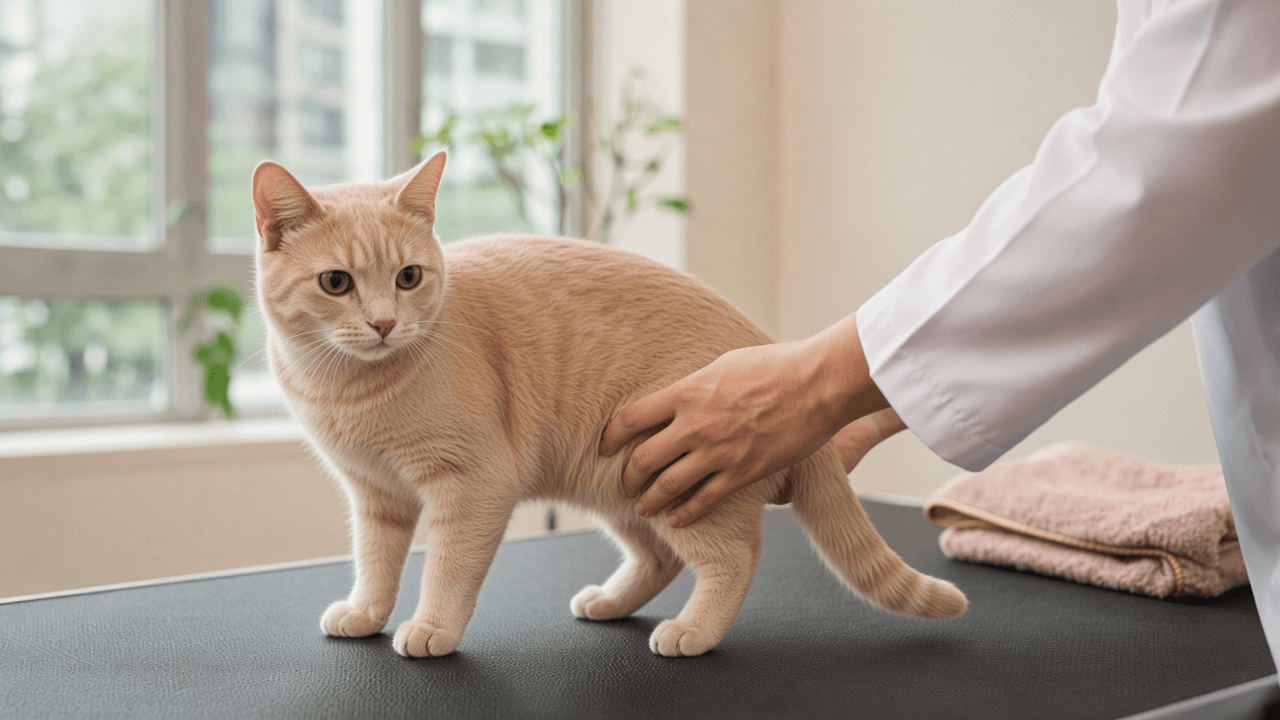
Our page on osteoarthritis in cats is the condition briefing. This article stays with the behaviour you rang about. An examination, and sometimes X-rays under sedation, confirms which joints are involved. Age alone is not the confirmation. A younger cat who stops jumping needs the same careful look, because injury, a kneecap problem or a hip that did not form properly can show up before anyone calls the cat senior. Weight makes every joint louder. Ask the vet for a target rather than a crash diet.
Hips, knees and a back that will not coil
Hip pain shows up as a narrow stance behind, difficulty getting onto the bed in one movement, and resentment when the hip is extended. Some cats with hip dysplasia have looked slightly stiff since they were young and only become obvious when arthritis is added. Knee pain, including a kneecap that slips, can make a cat skip, hold a back leg up for a few steps, or refuse a jump that needs a strong push-off. You may never see the kneecap move. You see the job the cat has resigned from.
Spinal pain produces a flat or hunched back and a cat who does not want to be picked up around the middle. A disc problem is less common in cats than in dogs, and it is still possible. Weakness is different from unwillingness. If the back legs wobble, cross, or stop supporting the cat, this is no longer a story about a favourite cushion. Book a vet promptly. If both back legs fail over minutes, the cat cries, or the paws feel cold, that is an emergency. A blood clot to the back legs is one of the causes, and it cannot wait for a rehabilitation appointment.
Want a vet to look at how your pet is moving?
A rehabilitation assessment looks at pain, gait and what should happen next. You leave with a plan, whether that is physiotherapy, hydrotherapy or a referral back to your own vet.
Pain is not the only reason a cat stays down
Some cats stop jumping because they are short of breath, anaemic, or feeling ill, and the jump is simply too expensive. Heart disease can look like laziness. So can a fever, a sore mouth, or nausea. If your cat is breathing with the mouth open, breathing faster at rest, hiding, or not eating, treat that as urgent and see a vet the same day. Do not spend the afternoon rearranging furniture for a cat who is medically unstable. Open-mouth breathing in a cat is an emergency, not a heat complaint.
Vision loss makes some cats unwilling to leap onto a surface they can no longer measure. You may notice them missing a narrow sill, feeling for the edge, or sticking to routes they know. Obesity is both a cause and a consequence. A heavy cat jumps less, loses muscle, and then jumps less again. Claw pain, a nail grown into the pad, or a sore wrist will also cancel a jump. Look at the feet before you assume the hips. Gently. If they flinch, stop.
What to change at home this week
Give them a route that does not require a full jump. A sturdy low step to the bed, a chair placed as a halfway landing, and a litter box with a low entry are reasonable immediately. Put food, water and a comfortable bed on the level they are already using. Keep the box in a quiet place they do not have to climb to reach. A high-sided box in a bathroom down a slippery corridor is a common reason cats start toileting elsewhere. That accident is often pain, not spite.
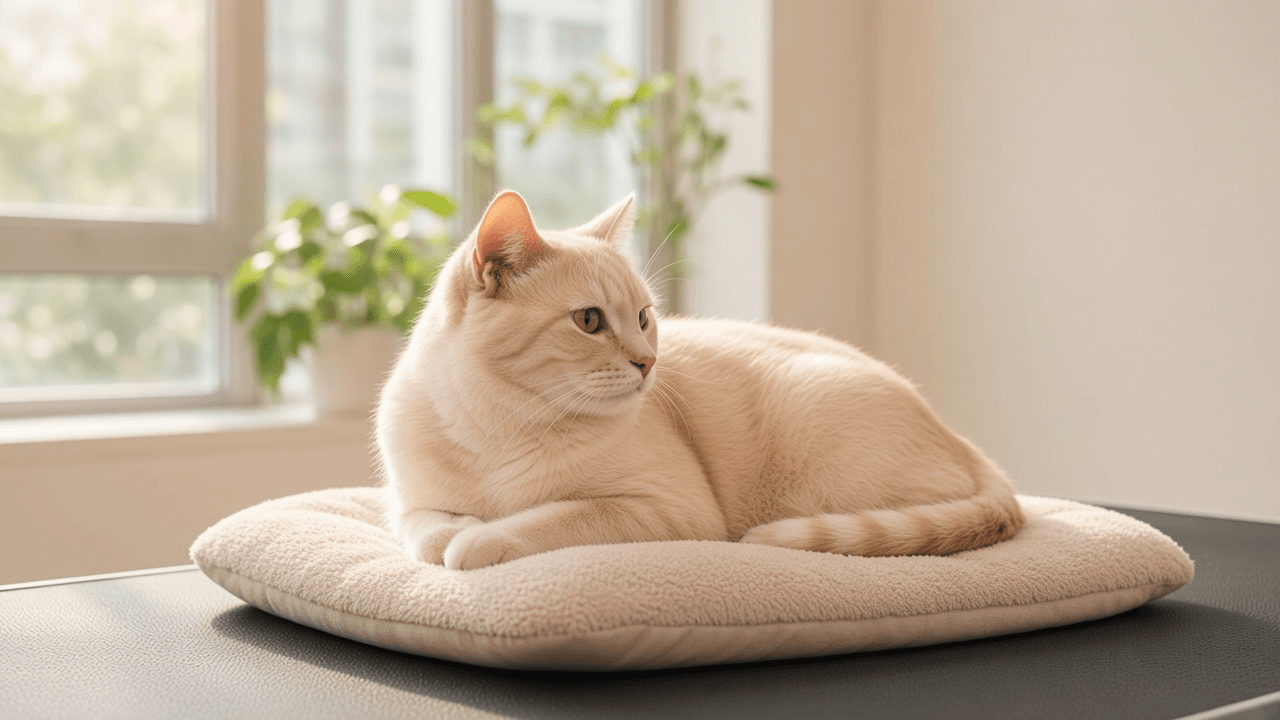
Warm, padded beds beat a bare tile floor. Singapore flats are cool and hard under an arthritic cat at night. Do not buy a complicated brace online. Do not force the hip through a stretch you saw in a video. Keep other pets from chasing them. If they still want a window, build the route and let them choose. Forcing a jump to prove they can is how a reluctant cat becomes a lame one. Note whether the new route actually gets used. That is your baseline for the vet.
What the vet should sort before any exercise plan
A useful visit includes a hands-on orthopaedic and neurological examination, a look at weight, a dental check, and a decision about blood tests if the cat seems unwell rather than purely stiff. Tell the vet about litter habits, grooming, night-time yowling and any fall. Bring the video. Ask which joints they think are sore. If X-rays are suggested, ask what question the pictures will answer. Sedation is often kinder and more accurate than wrestling a painful cat flat.
Medicine, if it is needed, is prescribed for that cat. There is no dose on this page. A monthly antibody injection exists for osteoarthritic pain in some cats. Not every cat is a candidate, and availability is confirmed by the prescribing vet, not by an article. Do not buy a dog product and split it. Do not use a human anti-inflammatory. If your cat is already on medicine and still will not jump, that is a review, not a reason to add a second drug yourself.
How physiotherapy helps a cat who has stopped jumping
Once painful medical emergencies are excluded, rehabilitation is often the part that changes the vertical life rather than only the X-ray. We look at muscle over the thighs and spine, how they sit, and whether they can shift weight. Treatment is quiet and short. Cats do not do well with long, loud sessions. Manual therapy, acupuncture, laser and a home setup are chosen to the cat. An underwater treadmill is possible for some cats and irrelevant for others. Nobody should promise that a cat will return to the top of a wardrobe.
The practical starting point is cat physiotherapy, coordinated with your own vet. Some cats also suit acupuncture when needling is appropriate and the cat can be handled calmly. Fees are on the pricing page. At RehabVet, 513 Serangoon Road, you can book an assessment or call +65 6291 6881 and describe what the cat has stopped doing. Bring any X-rays. A cat who has stopped jumping is telling you something specific. The job is to find out whether the limiter is a joint, a nerve, an illness or a route through the flat that no longer fits the body.
A simple way to judge urgency
Go tonight if both back legs are suddenly weak or paralysed, if the cat is in severe pain, if the paws are cold, if breathing is open-mouthed or laboured, if they cannot pass urine, or if they may have been given human medicine. Those are not physiotherapy problems first. Go to an emergency vet. Phone ahead so they expect you, and move the cat in a top-opening carrier lined with a towel so you are not tipping them out.
Book a prompt daytime visit if the change has been over days or weeks, the cat is eating, breathing normally and walking, but the jumps have shrunk. Do not wait for a limp that may never appear. Keep a note of good and bad days for a fortnight if the vet asks for one. Most of these cats are more comfortable once the pain and the furniture are both taken seriously. The ones who do poorly are the ones whose silence was mistaken for contentment.