Luxating Patella in Cats: Grades, Symptoms and Non-Surgical Options
A kneecap that slips is a cat problem too
Owners searching for luxating patella cats are usually watching a small skip. The cat trots, holds a back leg up for three or four steps, shakes or stretches it, and then walks as if nothing happened. The kneecap has left the groove at the front of the knee and then popped back. It can be medial, towards the inside of the leg, which is the common direction, or lateral. You may never see the pop itself. You see the gait that goes with it.
This page is about cats. A dog with a slipping kneecap is a different conversation and a different surgical caseload. Do not copy a dog exercise plan or a dog medicine onto a cat. Do not give paracetamol or Panadol. Those medicines can kill a cat, and there is no safe dose for an owner to choose. If one has already been given, go to an emergency vet with the packet. If the leg is fractured, dangling or the cat cannot walk, that is an emergency too.
What you see at home
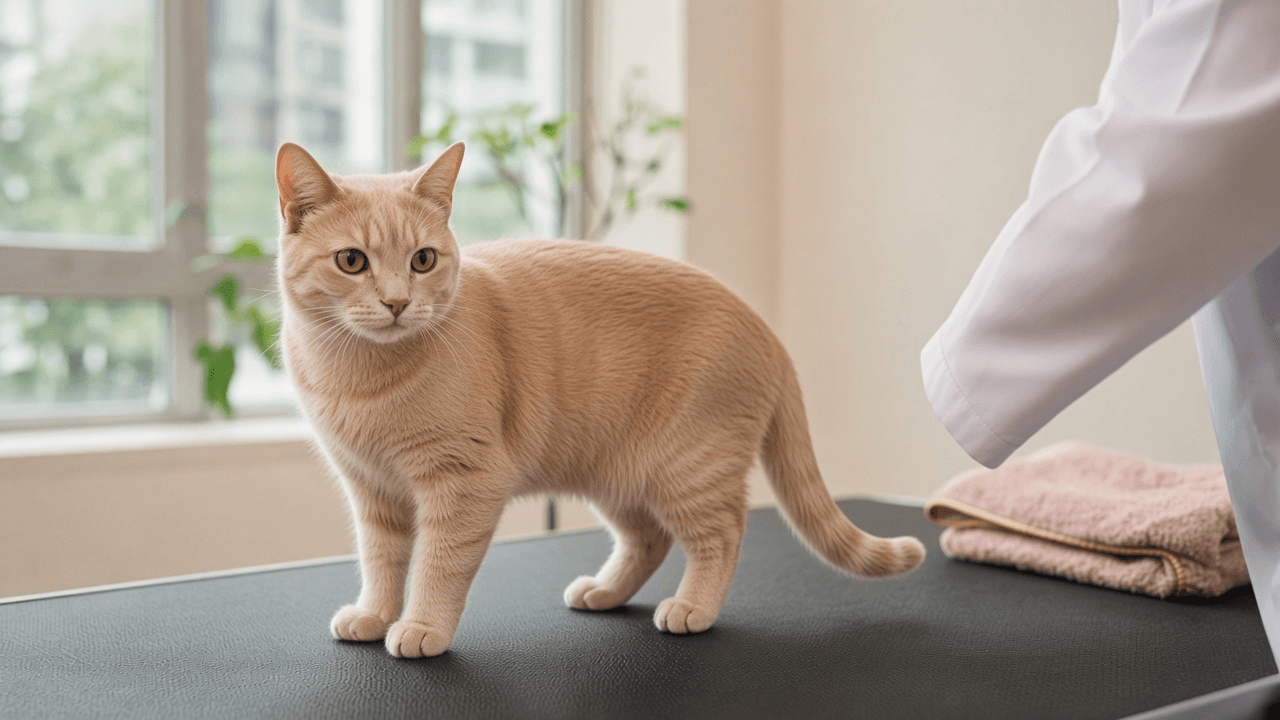
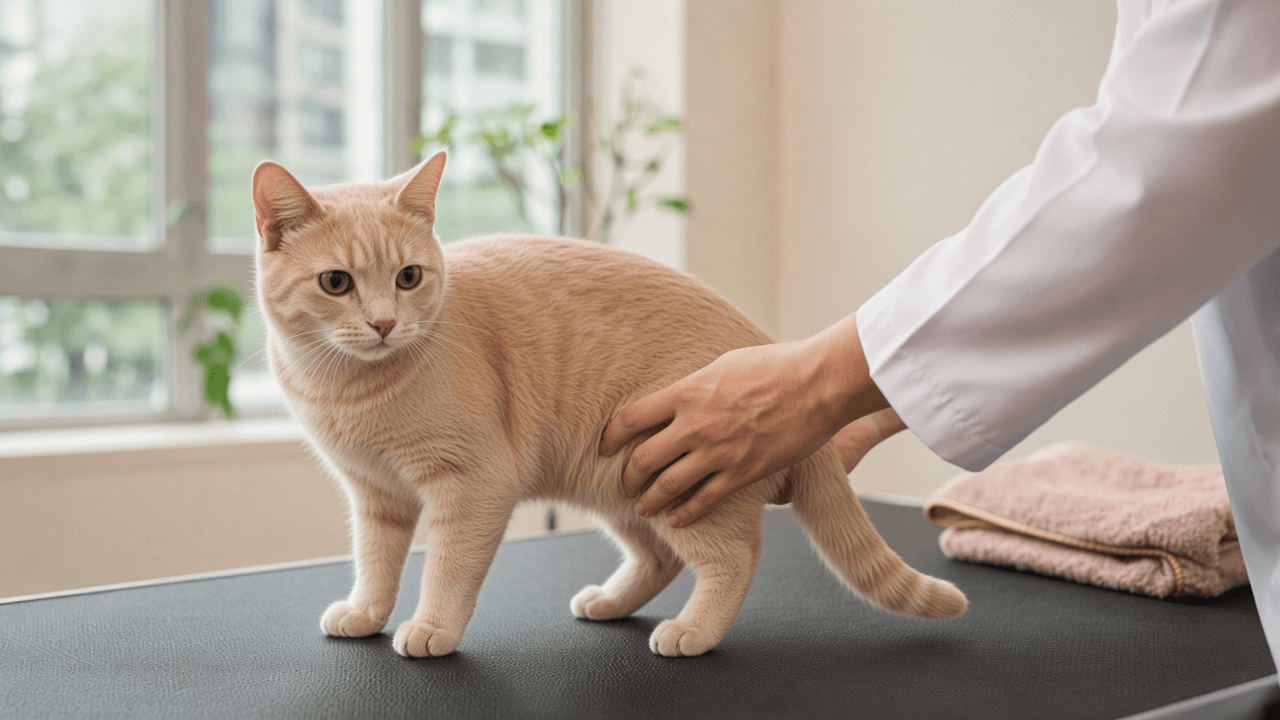
The classic sign is an intermittent skip on a back leg, often at the trot, often not at every step. Some cats sit with the sore leg stuck out. Some stop jumping onto the bed because the push-off hurts, long before anyone notices a limp. You may feel a slight click if the kneecap moves under your hand, but do not chase it. Repeatedly shoving the kneecap in and out inflames the joint and teaches you nothing the vet will not find more safely.
Look at the thigh. Muscle loss on one side means the cat has been unloading that leg for longer than the week you noticed. Look at the nails and the hock as well, because a skip can be a sore toe, a tendon or a hip. Film ten seconds from behind on a non-slip floor. Cats perform in clinics and then skip in the corridor on the way out. The corridor video is often the honest one.
Grades, in plain language
Vets grade the looseness so that a note from one clinic means something in the next. In the mildest grade, the kneecap can be moved out of the groove and it returns by itself as soon as you let go. In the next, it pops out more readily and may stay out until the leg is extended and the cat flicks it back, which is the skip you see. In a higher grade it is out most of the time and can still be pushed back. In the highest grade it is out and will not stay in the groove at all.
You cannot grade this accurately on a struggling cat in the kitchen. The grade also does not, by itself, decide on surgery. A low grade in a cat who is lame and has painful cartilage can need more help than a higher grade in a cat who is comfortable and strong. Ask the vet what they felt, whether one stifle or both are involved, and whether the hip is part of the picture. Cats quite often have more than one loose joint. Treating the kneecap and missing the hip leaves the skip half explained.
Want a vet to look at how your pet is moving?
A rehabilitation assessment looks at pain, gait and what should happen next. You leave with a plan, whether that is physiotherapy, hydrotherapy or a referral back to your own vet.
When a non-surgical plan is reasonable
Many cats with a low grade, little lameness and no evidence that the cartilage is being badly worn are managed without an operation. The plan is weight control, a limit on high-impact jumping while the joint is sore, and a physiotherapy programme that keeps the thigh muscle holding the kneecap in line. Pain relief, if it is needed, is prescribed for that cat. There is no dose here. A supplement is not a substitute for an examination, and it will not deepen a shallow groove.
Environmental changes do more than most people expect. A step to the bed, a litter box with a low entry, and floors that do not skid reduce the twists that flick the kneecap out. Keep nails a sensible length so they do not catch in fabric. Stop games that involve leaping straight up and twisting to catch a toy, at least while the vet says the joint is angry. Reintroduce play on the flat. If the skip disappears and the muscle returns, you have a working non-surgical plan. Write down the good weeks so you notice when they stop.
When surgery enters the conversation
Surgery is discussed when the kneecap is out most or all of the time, when the cat stays lame, when the joint is thickening, or when pain continues despite a real conservative plan. The operation is tailored. It may deepen the groove, tighten or loosen soft tissues, or change the pull of the thigh muscle so the kneecap tracks straight. Your surgeon should say which of those they intend, and whether one stifle or both are included. A price guessed from a dog forum is not an estimate.
Ask for a written estimate that includes anaesthesia, any implants, hospital time, rechecks and the rehabilitation afterwards. Clinics vary, and this article is not a quote. Recovery rules are strict for a reason. A cat who feels better on day three will try to jump onto a wardrobe. That jump can undo the repair. Read our notes on recovery after kneecap surgery so you know the kinds of restrictions that are coming, and then follow the version your own surgeon writes for this cat. Cat rules and dog rules are not automatically the same.
What physiotherapy is trying to do
The quadriceps and the muscles around the hip decide how the kneecap tracks. A weak, wasted thigh lets the patella slip. Rehabilitation after the acute pain settles, or after surgery when the surgeon allows it, rebuilds that control without asking for the jump that caused the trouble. We use short sessions. Cats are not asked to sit-to-stand on a cue the way a dog is. Manual therapy, laser and a careful return to household routes are the usual tools. Acupuncture is added for some painful cats who can be handled calmly.
The right service page is cat physiotherapy. If the cat is also generally stiff and older, cat rehabilitation describes the wider plan. Neither page is a reason to delay surgery that a surgeon has said is urgent, and neither is a reason to operate on a comfortable, mildly affected cat. Fees are on the pricing page. Bring the grading note and any X-rays to the assessment so we are not starting from a blank form.
Home checks that are safe
Compare the two back legs for swelling, heat and muscle. Look between the toes. Watch one jump, if they are already doing it, and do not stage a jump for the camera. Note whether the skip is new this week or has been a party trick for years. A long-standing skip that suddenly becomes a carried leg needs a prompt vet visit. Something has changed: a flare, a worsening grade, a torn ligament or an injury on top of the loose kneecap.
Keep them in one level of the flat if they are acutely lame, with the litter and the food nearby. Use a carrier for travel, not a wriggle on a lead down tile stairs. At RehabVet, 513 Serangoon Road, call +65 6291 6881 if you need to know whether a planned visit is appropriate or whether your own vet should see an acute lameness first. Acute non-weight-bearing lameness belongs with a vet who can X-ray the leg if needed. Rehabilitation is the next step, not the X-ray machine.
A fair decision, made once rather than monthly
Grade, pain, muscle and what the cat is refusing to do: those four facts are the decision. A cat who skips twice a month, jumps happily and has equal thighs is not in the same place as a cat whose kneecap lives out of the groove and who has stopped leaving the floor. Revisit the decision if the skip becomes a limp or the thigh shrinks. Do not revisit it every evening by manipulating the kneecap to see if tonight is the night it stays in.
You can book a rehabilitation assessment when you already have a veterinary diagnosis, or ask your vet to refer you with the grade written down. If you do not have a diagnosis yet, start there. A skip is a reason for an examination. It is not, by itself, a reason for an operation, and it is not something to stretch out of existence with a video routine. Most cats do well once someone has actually felt the joint and the plan matches the grade.