Dog Knuckling Paws: What It Means, Causes and How to Help
Knuckling is a nerve sign, not a clumsy habit
Dog knuckling is the moment the paw turns under so the dog stands or walks on the top of the foot, or drags the nails until they scrape. Healthy dogs feel the paw and flip it back instantly. A dog who leaves it turned under has lost some of that position sense. Owners sometimes call it laziness or long nails. It is neither. It is a neurological sign until a vet shows you otherwise.
Which paw matters, and so does the speed. One back paw that started scuffing this week is a different story from both back paws slowly wearing down over months. A front paw that knuckles, especially with neck pain, is different again. Film the dog walking towards you and away from you on a floor that is not slippery. Look at the nails. Nails ground flat on the top surface have been scraping for a while, even if you only noticed today.
A quick check that does not turn into a test you should not do
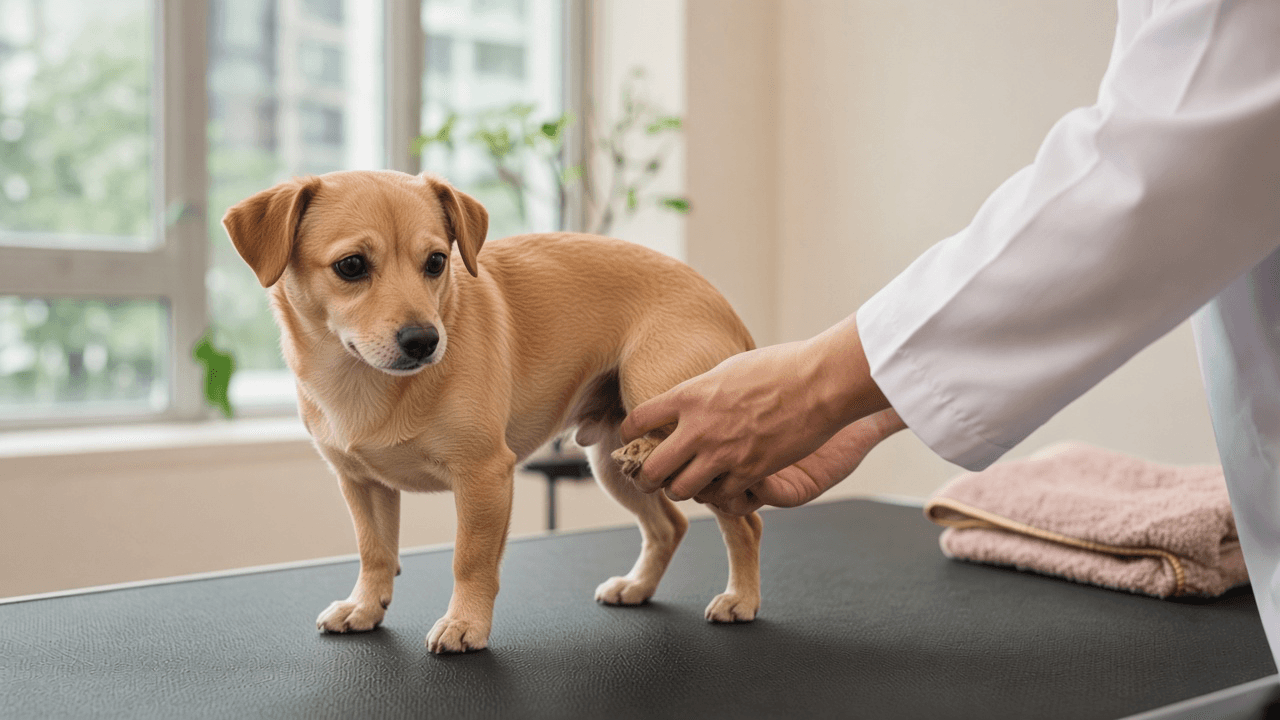
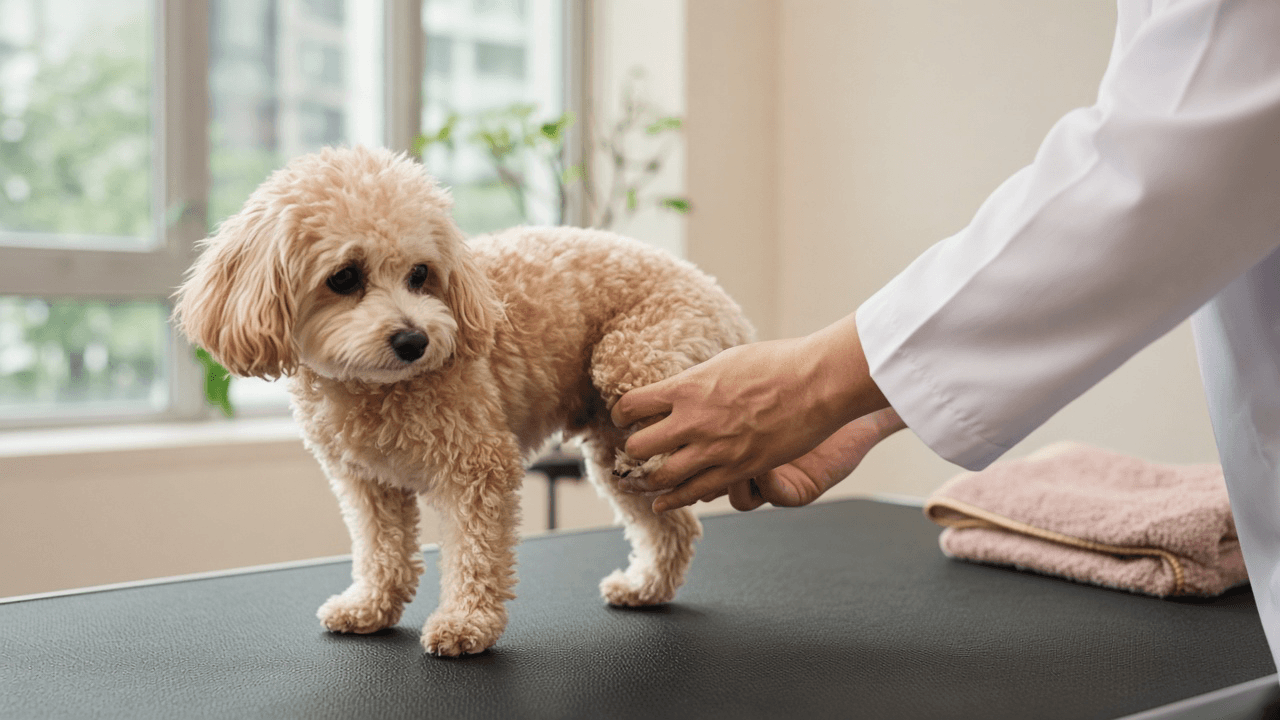
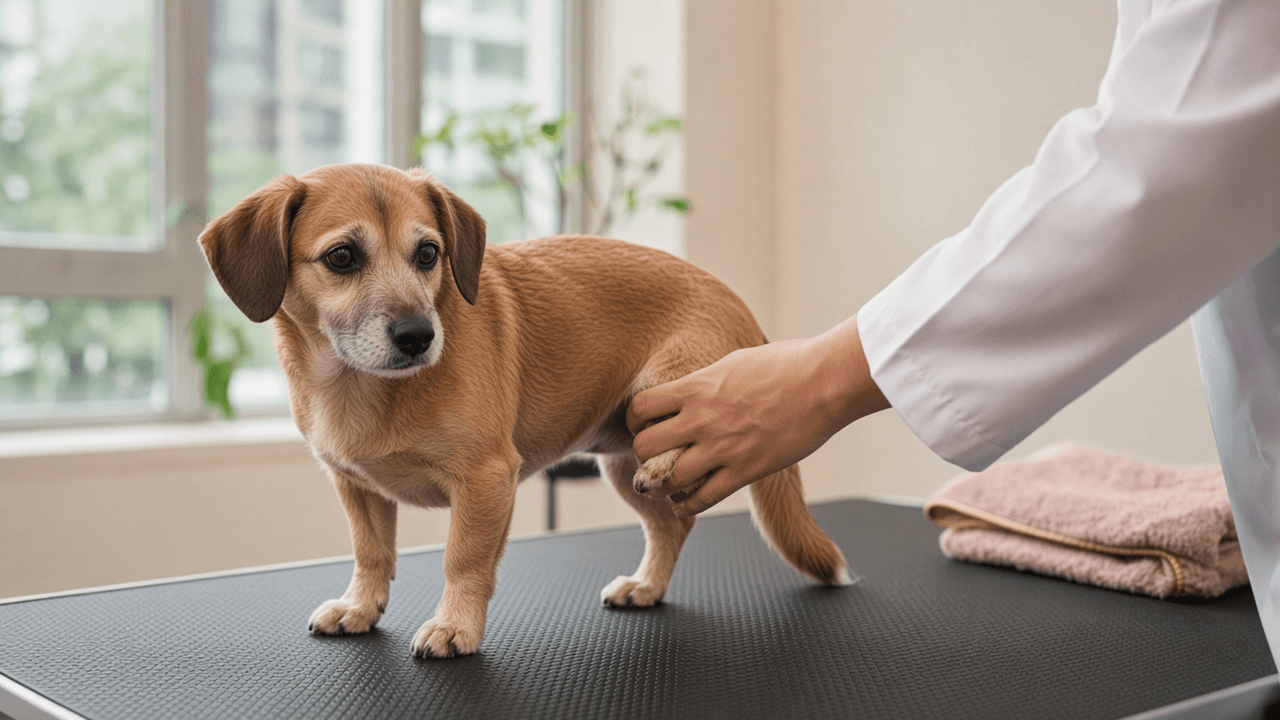
You can look. You should not invent a neurological examination. On a non-slip floor, watch whether the paw lands flat. If your dog is standing calmly, you may gently turn one paw onto its knuckles and see if they replace it. Do this once, not ten times, and stop if they resent it. A dog who is panicked, painful or exhausted will fail the check for reasons that have nothing to do with the spinal cord. A dog who cannot feel the paw at all needs a vet, not a repeated home trial.
While you watch, note stumbling, crossing of the back legs, a swaying hindquarters, a hunched back, or a cry when you lift the chest. Note whether they can still get up without help. Note urine and stools. A dog who is leaking urine, or who has not passed urine and seems to be straining with a swelling belly, needs an emergency vet. A full bladder from a spinal injury is painful and can become dangerous. Do not wait for a rehabilitation slot to check that.
Sudden knuckling is an emergency until proved otherwise
If the knuckling appeared over minutes or hours, treat it as urgent. A disc pressing on the spinal cord can move from pain, to a weak leg, to a dog who cannot walk. Neck pain with a weak or knuckling front leg belongs in the same category. Go to an emergency hospital that can examine the nervous system. Carry your dog with the spine supported and level. Do not let them scramble into the car, and do not give a human painkiller.
Some sudden weakness is not a disc. A fibrocartilaginous embolism, often called a spinal stroke, can cause a sudden, usually asymmetric, loss of strength. The dog may yelp once and then seem oddly comfortable, which confuses people into waiting. You cannot tell a stroke of the spinal cord from a disc extrusion in the living room. Both need a vet the same day. Rehabilitation often becomes the main treatment after a spinal stroke is diagnosed, but the diagnosis comes first. If there is any chance of trauma, a fall from a height or a road accident, say so at the door.
Want a vet to look at how your pet is moving?
A rehabilitation assessment looks at pain, gait and what should happen next. You leave with a plan, whether that is physiotherapy, hydrotherapy or a referral back to your own vet.
A disc problem versus a slow loss of feeling
Intervertebral disc disease is the cause owners fear, and it is common enough in Singapore's long-backed and small dogs that the fear is reasonable. It can be painful. The dog may refuse to jump, shiver, or yelp when picked up, and only later start to scuff a paw. Some dogs are already weak by the time anyone sees the foot turn. The condition page for intervertebral disc disease is the right next read if your vet uses that term. This article will not try to replace it. If your dog is suddenly paralysed, the emergency vet comes before either page.
Degenerative myelopathy is the slow, typically non-painful pattern. Older dogs, often with both back legs involved, scrape nails, knuckle, and gradually lose coordination over months. It is not diagnosed by a video alone. Other, more treatable spinal diseases have to be ruled out, because a disc in an older dog can look deceptively quiet. Our degenerative myelopathy page explains that work-up. What you should not do is buy a cart on the day you first notice a scrape and call the problem solved.
Other reasons a paw turns under
The spinal cord is not the only wire. A nerve in the leg can be injured by a fracture, a deep wound, a pelvic trauma or pressure from a tight bandage or a poorly fitted boot. If the paw went cold, or the problem started the hour a bandage was placed, phone the clinic that placed it and have the bandage removed or revised. Do not add another layer at home. Front-leg knuckling with a stiff neck raises wobbler syndrome and other cervical diseases, which are discussed on their own pages. Low blood sugar, severe anaemia and a dog who is collapsing from systemic illness can also stumble and fold a paw. Those dogs look unwell, not just uncoordinated.
A worn nail can change the way a paw lands and can fool you into seeing knuckling when the dog is only sore. That is why the video and the simple paw-replacement check matter. Painful joints usually produce a limp with the paw still placed the right way up. Knuckling plus a normal-looking paw surface is much more suggestive of a nerve pathway. If you are unsure, assume the nerve pathway and get it examined. The cost of a careful examination is smaller than the cost of a missed disc.
Protect the paw while you get an answer
A paw that drags will bleed. Raw skin on the top of the foot gets infected, and infection makes a weak dog miserable. Keep walks to clean, soft ground and only for toileting until a vet has seen the cause. Check the skin every day. If it is already broken, a vet should see the wound rather than you experimenting with human antiseptics that sting or are unsafe to lick. Nails that have worn to the quick need a clinic trim and a plan, not a deeper grind on the pavement.
Grip on tiles helps a dog who still has some feeling and some strength. A temporary boot can protect skin, but a boot that twists or is too tight will create a pressure sore and can make the knuckling look worse. Take it off often and look. Some dogs do well with a rubberised nail grip once the vet agrees the paw can tolerate it. The product page for Dr Buzby's ToeGrips is a fitting aid, not a diagnosis. Do not put grips on a bleeding paw, and do not expect them to restore a spinal cord.
Floors, stairs and how you lift
Singapore homes are hard on dogs who cannot feel their feet. Tile, a short turn into the kitchen, and a flight of stairs are enough to make a mildly ataxic dog fall. Put a runner where they turn. Block the stairs. Use a harness with a handle only if the vet has said the spine is stable, and lift from the chest and pelvis rather than hauling the dog up by the handle alone. A belly towel can help a dog stand to toilet if you have been shown how, and if standing is allowed. It is the wrong tool during an unstable disc episode.
Weight matters because a weak leg has less muscle to begin with. Ask your vet for a target rather than putting a dog on a crash diet while they are unwell. Keep claws short so they do not catch. If both back legs are crossing or the dog cannot stand, read the gait notes on gait and posture after the emergency work is done, so you know what a rehabilitation vet is watching for. Do not start cavaletti poles and balance discs from a social media clip this week.
How rehabilitation fits, once the cause is named
Rehab does not shrink a disc and it does not reverse degenerative myelopathy. It does teach the body that still has some signal to place the paw, build the muscles that remain, protect joints that are working overtime, and keep the dog as functional as the disease allows. For a dog recovering from a disc injury or a spinal stroke, that work is often the difference between a scuffed paw and a usable stride. For a dog with a progressive disease, the goal is honest: slow the loss of function, prevent sores, and decide with you when a cart helps rather than harms.
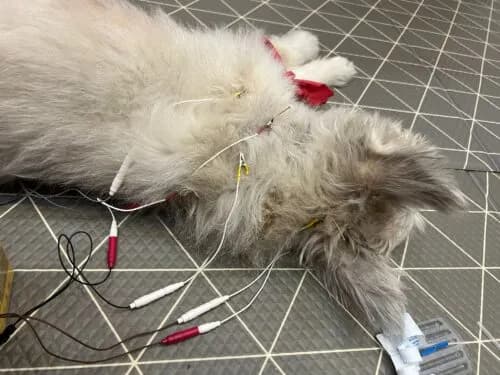
At RehabVet the assessment looks at which paws fail, whether pain is still present, and whether the bladder is someone else's urgent problem. Treatment may include physiotherapy, an underwater treadmill once it is safe for that dog, acupuncture, and laser. A cart is considered only when the spine is stable and the remaining legs can steer. Fees are published on the pricing page. If your dog is not in an emergency tonight and you want that assessment, book it and bring any MRI or neurology report you already have. If they worsened today, the emergency vet is the booking.
What to tell the vet on the phone
Say which paw, when you first saw it, and whether it is getting worse by the hour or by the month. Say whether there is pain, a hunched back, neck stiffness, or trouble urinating. Say what medicines were given, including anything human. Say whether your dog can stand unassisted. Those six facts let a nurse tell you to come in now or to come in the morning. Do not accept a long wait if the dog is newly unable to walk.
Bring the video, the nail wear, and a list of illnesses your dog already has. If a previous vet called this arthritis, say so, and also say that you are now seeing the paw fold. Arthritis and a nerve problem can exist in the same dog. One label should not close the file. The sooner a true knuckling sign is examined, the more options remain, especially when a disc is involved and surgery is still on the table.