Dog Limping Back Leg: 9 Causes, When to Worry and What Helps
What a back-leg limp is telling you
You can usually spot a dog limping back leg from the kitchen doorway. The stride on one side shortens, the paw kisses the floor, or your dog hops for a few steps and then carries on as if nothing happened. That pattern is useful. It is not a diagnosis. A torn nail, a strained muscle, a sore knee, an arthritic hip and a painful back can all produce a similar picture on a tiled HDB floor.
Write down when it started, whether there was a slip, a jump from the sofa or a longer walk than usual, and whether the limp is worse after sleep. Film ten seconds from behind on a non-slip surface, then ten seconds from the side. Bring the clip to the vet. Do not give a human painkiller while you wait. Those tablets are a common cause of emergency visits, and they hide the very signs the vet needs to see.
A home check that stays on the safe side
Start with the foot, because it is the thing owners most often miss and the thing you can inspect without twisting a joint. Look between the pads for a grass seed, a glass splinter, a cracked nail or a swollen toe. Compare the two back paws. A nail worn flat on one side, or hair stained from licking, has been there longer than this morning. Smell the paw as well. Infection has a sweet, unpleasant odour that a simple bruise does not.
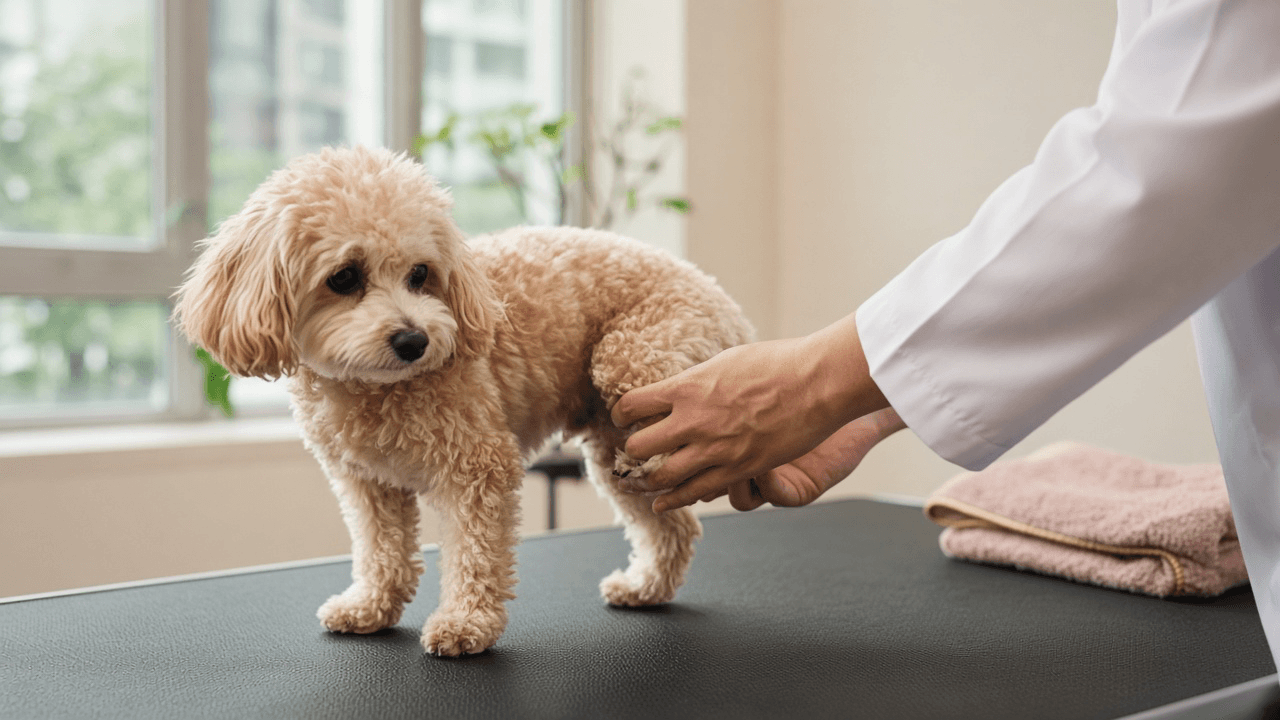
Then look at the leg without forcing a bend. Heat, obvious swelling at the knee or hock, and a cry when you barely touch the area are reasons to stop the examination and phone a vet. Gently running a hand along the thigh is enough. Do not perform a drawer movement on the knee, and do not yank the hip out to the side to see what happens. Those tests hurt, and a tense dog in the living room will not give a reliable result.
Nine causes we work through
The list we use in the consult room is practical rather than alphabetical. A broken or infected nail and a pad wound come first. A strain of the calf, the hamstring or the iliopsoas muscle in the groin comes next, often after a sudden dash on a wet floor or a weekend of ball throwing. Knee problems follow, especially a torn cranial cruciate ligament and a kneecap that slips out of its groove. Hip pain, including wear-and-tear arthritis in an older dog, is the next group. The hock and the Achilles tendon are less famous and easy to overlook. Spinal or nerve pain referred down the leg is the group that becomes urgent when the paw starts to scrape or both legs weaken. Infection, immune-mediated joint disease and bone disease, including tumours in older large dogs, are the reasons a limp that will not settle needs X-rays rather than another week of rest.
You do not need to sort these at home. You do need to notice which storey of the leg looks wrong. A dog that cries when the toe is touched is a different appointment from a dog that walks with a short stride and resents the thigh being felt, and different again from a dog whose paw folds under. Tell the vet which of those three you are seeing. It shortens the visit.
Want a vet to look at how your pet is moving?
A rehabilitation assessment looks at pain, gait and what should happen next. You leave with a plan, whether that is physiotherapy, hydrotherapy or a referral back to your own vet.
Knees: a torn ligament or a slipping kneecap
A cranial cruciate tear is one of the most common reasons a previously sound dog starts toe-touching on a back leg. Some dogs yelp once in the park and then carry the leg. Others become gradually stiffer over weeks, because the ligament frays rather than snapping. They often sit with the sore leg slung out to the side instead of tucked under the body. The stifle can feel thickened. Your own vet or a surgeon confirms this with an examination and X-rays. Read our notes on a ruptured cranial cruciate ligament if that is the direction the examination is heading. Surgery is sometimes the right plan, and sometimes a smaller or quieter dog is managed more conservatively. That decision belongs to the clinician who has felt the joint.
A slipping kneecap is a different story and is especially familiar in small breeds. The dog may skip for three or four steps, then stretch the leg and walk normally. You might even see or feel a small pop. Low grades can be monitored and strengthened. Higher grades, and any dog that stays lame, need a proper plan so the cartilage is not left to grind. The kneecap page explains the grades without asking you to decide them in the kitchen. What you should not do is keep throwing a ball to see if the skip goes away.
Hips, groin muscles and the older dog
Hip pain often looks less like a clean limp and more like a dog who has become slow. They rise stiffly, bunny-hop on stairs, or refuse the car boot. Both hips can be affected, so there may be no obvious left-versus-right. You may notice the thigh muscles looking thinner than they did last year. That muscle loss is a clue that the dog has been unloading the leg for a long time, even if you only noticed the limp this week. Weight makes every one of these problems louder. A kilogram on a small dog is a large share of the load.
A groin or iliopsoas strain is the injury we see in active dogs who still want to play and then pay for it that night. The limp may be mild. Extending the hip or asking for a stretch into a play bow can sharpen it. Rest from jumping matters more than another anti-inflammatory from the cupboard, which you should not be giving anyway. If the dog is older, large, and the limp is getting worse over a fortnight despite real rest, ask the vet to X-ray the bone itself, not only the joint. Persistent pain in one long bone is not something to label as a sprain by default.
When the leg is not the part that is injured
A back-leg limp that comes with a hunched spine, a yelp when you lift the chest, or a paw that turns onto its knuckles is no longer a simple orthopaedic story. Disc pain and other spinal problems send confusing signals down one leg before they affect both. Weakness is not the same as soreness. A sore dog shortens the step. A weak dog may stand on the top of the paw, scuff the nails, or sway. Our guide to weak hind legs walks through that difference. If both back legs become weak over hours, or your dog cannot get up, treat it as an emergency. Go to an emergency vet before you book rehabilitation.
Tick-borne disease and immune-mediated polyarthritis tend to shift from leg to leg or involve more than one limb, sometimes with fever, lethargy or a poor appetite. A single-leg story after a known slip is less likely to be either of those, but a dog who is quiet, hot and off food needs a clinic the same day. Rehabilitation is the wrong first stop when the body is fighting an infection.
Rest, walks and stairs while you wait
Until a vet has examined the leg, keep walks short, on a leash, and on ground that does not skid. Skip the dog run, the ball and the stairs if you can carry a small dog or use a lift. A slippery living room is where a mild strain becomes a worse one. A runner in the hallway, or even a towel on the tile where they turn, is a reasonable same-day change. Do not start a new joint supplement tonight and expect it to explain the limp away. Supplements are not pain relief, and they are not a test of whether the knee is stable.
Cold can help a strain you actually saw happen, for a few minutes, wrapped in a cloth so the skin is protected. Do not ice a leg that might have a nerve injury, and do not heat a swollen joint. If your dog is miserable, phone a vet rather than building a longer home pharmacy. Same-day examination matters more when the dog cannot put the foot down at all, the leg looks distorted, there is an open wound, or the limp follows a fall, a road accident or a fight.
What helps once the cause is known
After the diagnosis, the plan splits. Some dogs need surgery and a staged return to weight-bearing. Some need a period of controlled activity, pain relief prescribed for that dog, and hands-on work to stop the rest of the body compensating. Physiotherapy for a back-leg injury usually targets thigh muscle, knee or hip range, and a stride that has become short and quick. An underwater treadmill can let a dog walk with less load once the vet says the joint or the surgical wound is ready. It is not a swimming party, and it is not appropriate for every fresh injury.
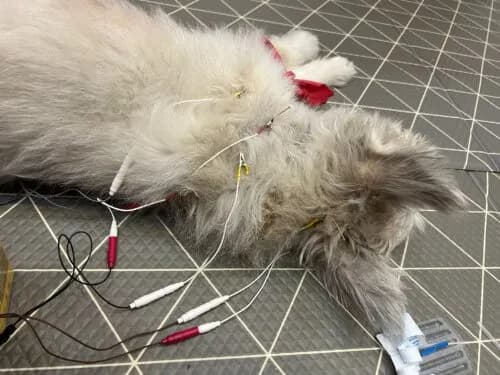
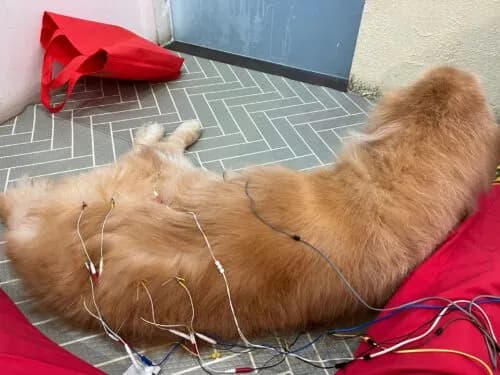
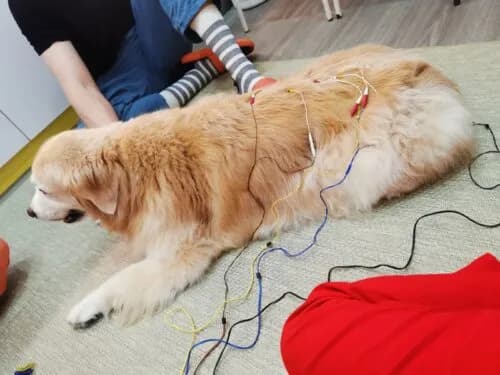
If you are unsure how serious the limp looks on camera, you can start with an online mobility assessment and still book hands-on care. The video screen is a triage aid. It does not replace palpation. At RehabVet, 513 Serangoon Road, the rehabilitation vet examines gait, pain and muscle, then decides whether dog physiotherapy, water work, acupuncture or a return to your surgeon is the honest next step. Fees for those sessions are listed on the pricing page, not guessed in an article. Bring your X-rays if you already have them.
A simple way to decide how fast to act
Use three lanes. Lane one is a dog who is bright, eating, putting some weight on the leg, with a normal paw and no spinal pain. Book a veterinary examination within a day or two, and keep them quiet. Lane two is a dog who will not use the leg, has swelling, or has been lame for more than a few days. They need a clinic promptly, including X-rays if the examination does not explain it. Lane three is both back legs, a paw that knuckles, crying when picked up, collapse, or a limp after major trauma. That is an emergency vet, now, not a rehabilitation appointment later in the week.
Most limps we see are treatable once they are named. The costly delay is the month of ball throwing and sofa jumping while everyone hopes it is a bruise. Film the walk, check the paw, skip the human tablets, and get a person who treats dogs to put hands on the leg. If you want that person to be a rehabilitation vet, you can book an assessment after urgent causes have been ruled out, or ask your own vet to refer you with the notes.