Dog Limping Front Leg: Causes, Home Checks and When to See a Vet
Start with which part of the step looks wrong
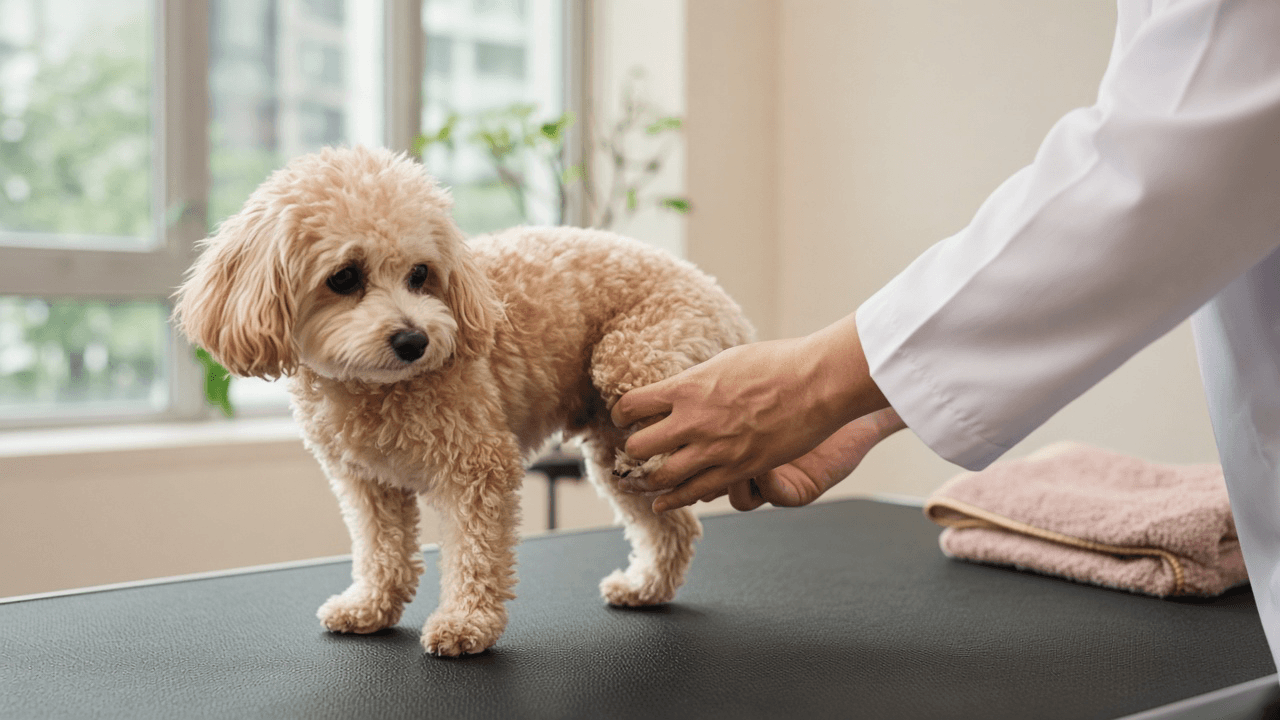
A dog limping front leg is often easier to see than a back-leg limp, because the head bobs. Watch from the side. The head usually lifts when the sore front paw lands, and drops when the good paw lands. Owners remember it as the head going up on the bad step. Film that, on a leash, on a surface that is not slippery. Ten seconds from the side and ten from the front is enough for a vet.
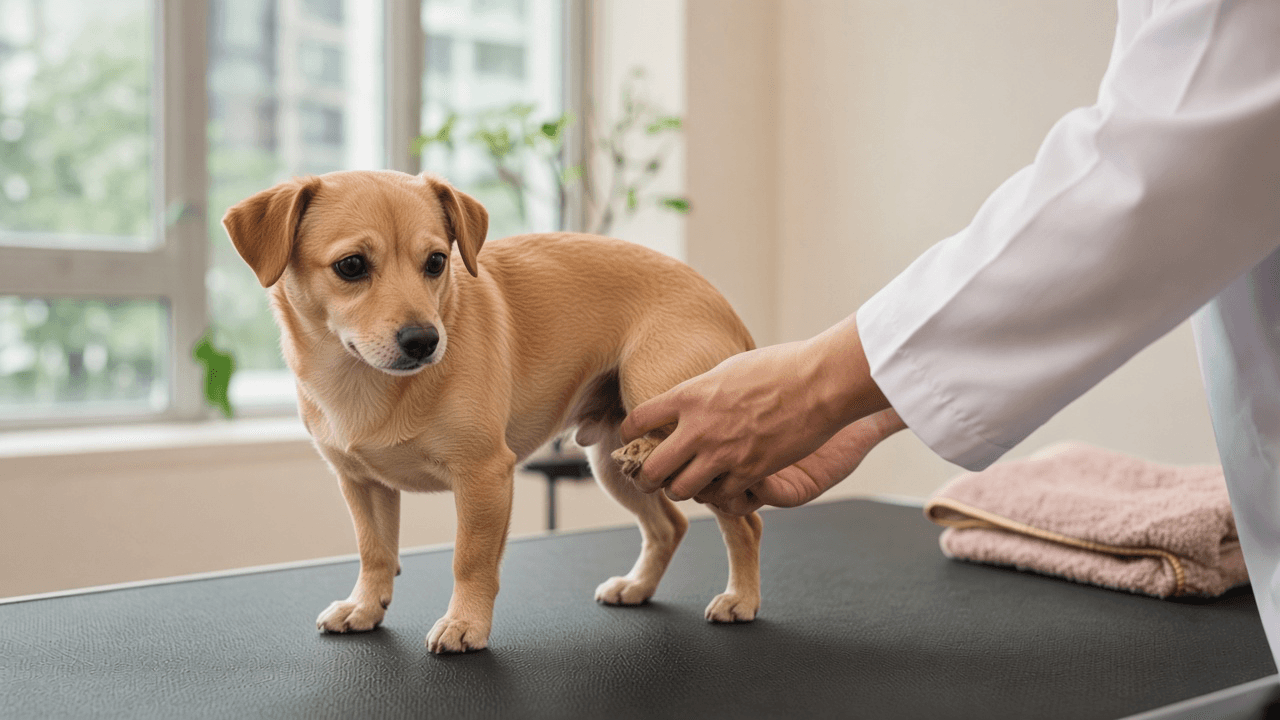
Before you decide it is the shoulder, look at the foot. A broken nail, a cut pad, a foxtail or a small piece of glass will make a dog hop just as dramatically as an elbow problem. Compare the two front paws for heat, swelling between the toes, and nails worn short on one side. If your dog yelps when you touch one toe, you may already have found the area. Stop poking. A same-day vet visit is still wise if the nail is torn down to the quick or the pad is split.
What you can check without making it worse
Run your eyes from the toes up to the shoulder. You are looking for a wound, a swollen toe, a carpus that looks dropped or puffy, and any difference in muscle over the shoulder blade. Feel for heat with the back of your fingers. Do not bend the wrist or shoulder to the end of its range to test it. Do not lift the leg out to the side. Those movements are examination techniques, and they hurt when the joint is unstable or inflamed.
Note whether the limp was sudden or has been a morning stiffness for months. Note stairs, ball throwing, a jump off a bed, or a longer walk on a hot pavement. Hot concrete burns pads and is a very Singapore-specific reason for a dog to be lame after an evening stroll. If the pads look blistered or shiny, keep your dog off hot ground and see a vet. Do not apply human burn creams without asking, because many are not safe if licked.
The paw, the nail and the wrist
Toe and pad injuries are the causes we hope for, because they are local and usually obvious once the foot is examined properly. A nail broken at the base needs pain control from a vet and sometimes a bandage. A grass seed between the toes can track under the skin and will not resolve with a rinse. Lick the same spot for two days and you should assume there is a reason. A cone does not treat the reason. It only hides the noise the dog is making about it.
The carpus, the wrist, is the next stop. A sprain after a stumble, a hyperextended wrist in a dog who lands heavily, or arthritis in an older dog can all shorten the front step. The joint may look thickened. Some dogs stand with the paw slightly knuckled or with the wrist dropped. That is not a detail to film and forget. It changes which X-rays are taken. Keep walks to toileting only until the joint has been examined, and use a chest harness rather than dragging on a neck collar if the dog also seems stiff through the neck.
Want a vet to look at how your pet is moving?
A rehabilitation assessment looks at pain, gait and what should happen next. You leave with a plan, whether that is physiotherapy, hydrotherapy or a referral back to your own vet.
Elbow pain that owners call a shoulder problem
Elbow disease is a frequent cause of front-leg lameness, in young dogs while the joint is developing and in older dogs once arthritis has settled in. The limp is often worse after rest, eases a little as they warm up, and returns after exercise. You may not see swelling. The dog may resent the elbow being straightened. Large and medium breeds are classic, but any dog can develop an arthritic elbow, so breed is a clue rather than a rule.
This article stays with the limp. The diagnosis, the X-ray views and the long-term joint plan live on our elbow dysplasia page. What matters at home is that you do not turn a young dog's intermittent front-leg limp into a fitness project. More fetching will not grow a congruent joint. Ask for an examination early, while the cartilage still has a chance to be protected. Weight control is part of that protection in almost every case.
Shoulder tendons and an unstable shoulder
Further up the leg, two problems come up often in active dogs. The biceps tendon runs across the front of the shoulder. When the tendon and its sheath are inflamed, the dog is lame on a front leg, often worse after exercise, and the pain is easy to miss if nobody feels the shoulder properly. Ultrasound is sometimes needed. Rest from jumping and controlled reloading are the usual themes, with medicine only as the vet prescribes it. Our page on biceps tenosynovitis describes that pattern in more detail.
Medial shoulder instability is looseness on the inside of the shoulder, again more often in athletic dogs, though a fall can injure any shoulder. The dog may guard the leg, resent a turn, or stay lame in a way that does not match the paw. The vet tests this. You should not abduct the leg at home to copy the test. Rehabilitation, when it is appropriate, builds the muscles that steady the joint and times the return to play. Read the notes on medial shoulder instability if that phrase appears in your vet's report, and bring the report with you.
A front-leg limp that starts in the neck
Not every front-leg limp lives in the front leg. A painful neck can make a dog refuse to lower the head, cry when the collar is touched, and unload one front paw because a nerve root is angry. The leg can look weak rather than simply sore. Knuckling of a front paw, stumbling, or wobbliness in the back legs as well means you stop the home checks. That combination can worsen quickly. Go to an emergency vet rather than booking a routine slot.
Do not flex the neck up and down to see where it hurts, especially in a toy breed. A small number of small dogs have an unstable junction between the first two neck bones, and bending the neck is dangerous. Support the body if you have to lift them, keep the neck in a neutral line, and travel carefully. If the only sign is a mild paw limp and the neck is comfortable, a daytime vet appointment is still the right next step. Mention the neck even if you think it is fine. It prompts the right examination.
Older dogs, bone pain and lameness that will not fade
A front-leg limp in an older large dog that gets steadily worse, with no off day and no off switch, needs X-rays of the bone, not only a theory about a sprain. Bone tumours are not the most common cause, and this paragraph is not here to frighten you. It is here because a month of lead walks and leftover pain tablets is the wrong test. Infection of a bone or joint is uncommon and serious, and it tends to come with heat, swelling and a dog who feels unwell.
Shifting lameness, several sore legs, fever or a dog who is quiet and off food belongs with your primary vet promptly. Immune-mediated joint disease and tick-borne illness are part of that work-up. Rehabilitation does not start until those are excluded. If the diagnosis is straightforward arthritis in a known joint, then a pain plan, weight, floor traction and a sensible exercise dose are the work. The vet sets any medicine. You set the slippery-floor problem tonight.
How to wait without making the limp bigger
Use a leash. Skip stairs where a lift exists. Carry a small dog on the flights you cannot avoid, with the chest and hindquarters supported so you are not yanking a front leg. Stop ball games. A harness that fits the chest is kinder than a collar if the neck might be involved, but do not buy a complicated brace online and strap a shoulder still before anyone has examined it. The wrong brace changes the load and hides the limp from the vet.
Ice is optional and only for a strain you watched happen, wrapped, for a few minutes, with the dog supervised so they do not chew the pack. Heat is a poor idea on a fresh swelling. Human ibuprofen and paracetamol products stay in the cupboard. If a dose has already been given, that is an emergency, particularly for a cat in the house who may have been given the same tablet. Phone an emergency vet and take the box.
What treatment looks like after the examination
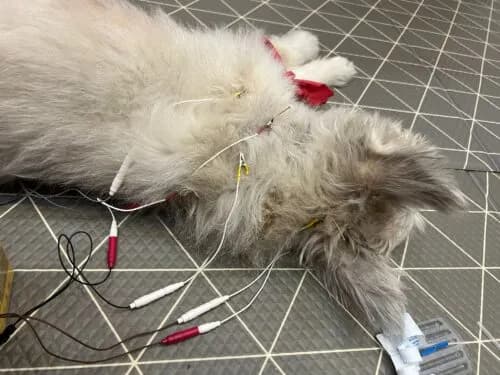
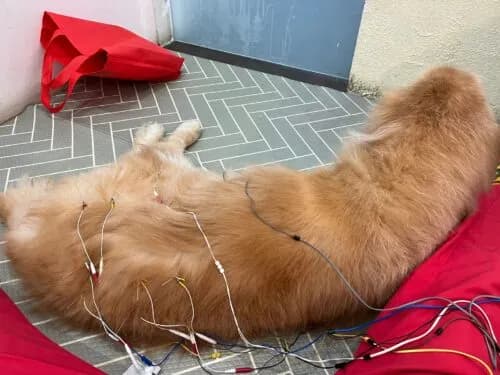
The useful order is diagnosis, then loading, then strengthening. A torn nail is not a physiotherapy case. An arthritic elbow, a biceps tendon, a post-operative shoulder or a dog who has been lame for so long that the muscles have shrunk often is. At RehabVet we examine how the leg lands, which muscles have wasted, and whether the neck is part of the picture. Treatment can include manual therapy, a class 4 laser, acupuncture, shockwave for selected tendon problems, and an underwater treadmill once weight-bearing is safe. Session fees are on the pricing page.
Your own vet should stay in the loop, especially if surgery is being discussed. Bring X-rays or the written report. If you want a rehabilitation vet to look at the gait after urgent problems have been checked, you can request an assessment at 513 Serangoon Road, or call +65 6291 6881 and describe the limp. A front-leg limp that is mild but still there next week is not a personality change. It is a joint, a tendon, a paw or a neck asking for a name.