IVDD in Dogs: Can They Recover Without Surgery? | RehabVet
What 90+ Spinal Cases at Our Singapore Clinic Show
If your dog has just been diagnosed with IVDD — or has suddenly gone weak, wobbly, or paralysed in the back legs — you are probably facing two frightening questions at once: Will my dog walk again? And do we have to do spinal surgery?
The honest answer is that many dogs with IVDD in dogs can recover meaningful function without surgery, depending on how severe the disc injury is. But “can” is not “always,” and getting the decision right matters. This article walks through what IVDD actually is, what the published recovery rates look like by grade, how non-surgical treatment works, and what we’ve seen across more than 90 spinal cases treated at our rehabilitation clinic in Singapore.
A note before you read: Acute spinal injury is time-sensitive. If your dog has suddenly lost the ability to feel or move its back legs, or has lost bladder control, see a vet today — some cases genuinely do need emergency surgery, and the window matters. This article is here to help you understand the options, not to replace an in-person assessment.
What IVDD actually is
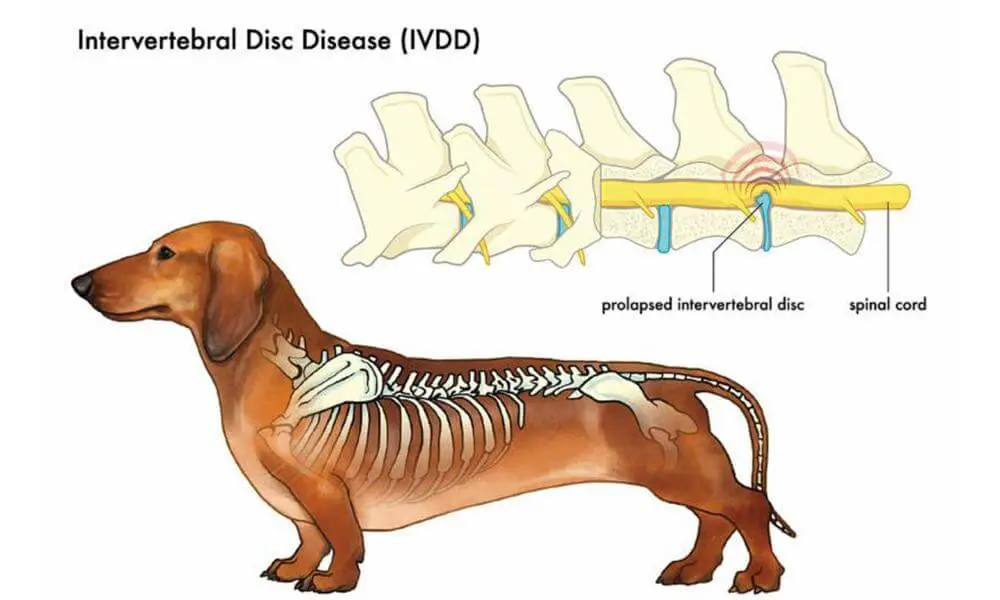
IVDD stands for intervertebral disc disease. The discs are the soft cushions that sit between the bones of the spine. In IVDD, a disc either bulges or ruptures and presses on the spinal cord. That pressure interrupts the nerve signals travelling between the brain and the legs, bladder, and tail — which is why the signs range from mild back pain all the way to full paralysis.
Vets grade IVDD on a scale of 1 to 5 based on how much function the dog has lost:
| Grade | What it looks like |
|---|---|
| Grade 1 | Pain only. The dog is reluctant to move, may yelp, arch the back, or tremble — but walks normally. |
| Grade 2 | Walking but wobbly. Weak or uncoordinated in the back legs (ataxia), still able to stand and walk. |
| Grade 3 | Can move the legs but cannot walk unsupported. |
| Grade 4 | Paralysed in the back legs, but can still feel deep pain (deep pain sensation present). |
| Grade 5 | Paralysed and has lost deep pain sensation — the most severe grade. |
Two things drive the treatment decision: the grade (how much function is lost) and how fast it came on. A grade 5 that appeared overnight is a very different conversation from a grade 2 that’s been slowly progressing.
Small breeds are especially prone to IVDD — Dachshunds most famously, but also Shih Tzus, Maltese, Poodles, Pomeranians, and Pekingese. These breeds make up a large share of the spinal cases we see.
Surgery vs conservative management: the honest numbers
There is no single “right” answer for every dog — it depends on the grade. Here’s the broad picture from the published veterinary literature, kept deliberately plain:
- Grades 1–3 (still has some movement): Conservative (non-surgical) management has good reported success rates — commonly cited in the range of roughly 60–95% of dogs recovering the ability to walk, particularly with strict rest and a structured rehab plan.
- Grade 4 (paralysed, can still feel pain): Recovery is possible both ways. Surgery often offers faster and more reliable results, but conservative management still helps a meaningful proportion of dogs. This is the grade where an honest case-by-case discussion matters most.
- Grade 5 (paralysed, no deep pain): This is the hardest category. Surgery — done quickly — gives the best odds, with reported recovery often in the 50–60% range when performed early. Without deep pain sensation, the prognosis is more guarded, and the speed of intervention becomes critical.
The takeaway: the lower the grade and the sooner you act, the more the odds favour recovery — and for many of the less severe cases, surgery is not the only path to walking again.
These figures are general guidance from the literature, not a promise about your individual dog. Your vet’s neurological exam — especially whether deep pain sensation is present — is what actually sets the prognosis.
How we treat IVDD without surgery at RehabVet
Non-surgical recovery is not “wait and see.” When it works, it’s because of a structured, multi-part protocol that gives the injured spinal cord the best possible environment to heal. At RehabVet, a conservative IVDD program typically combines:
- Strict rest, the right way. Controlled confinement in the early phase prevents re-injury while the disc settles. We coach owners on how to do this without the dog re-aggravating the spine — getting this wrong is one of the most common reasons home recovery stalls.
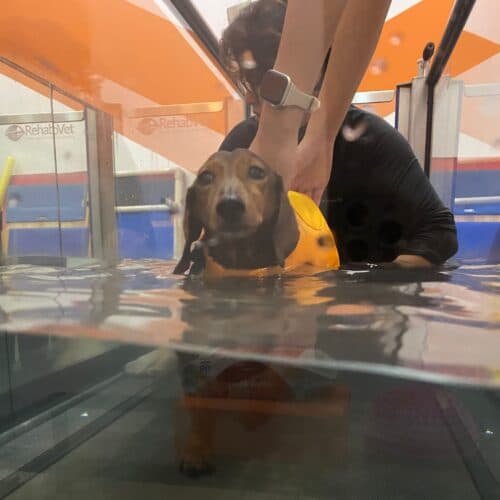
- hydrotherapy and underwater treadmill. Water supports the dog’s weight so it can practise the walking motion and rebuild muscle long before it could on dry land.
- Targeted rehabilitation. Hands-on physiotherapy, controlled exercises, and proprioceptive (coordination) work to rebuild the brain-to-leg connection, often supported by laser and TCVM Tui Na.
- hyperbaric oxygen therapy (HBOT). Used to help calm inflammation and swelling around the injured cord and deliver oxygen to compromised tissue (more on the mechanism below).
- Pain and home management. Comfortable, pain-controlled dogs rest better and recover better — plus a home-exercise program so progress continues between visits.
Crucially, HBOT is not a standalone miracle cure — it’s one component of a combined plan. The dogs who do best are the ones on a complete program, not a single therapy.
Why hyperbaric oxygen helps an injured spinal cord
After a disc injury, the spinal cord swells and becomes inflamed, and blood flow to the damaged area is compromised. Swollen, poorly-perfused nerve tissue is starved of the oxygen it needs to recover.
Hyperbaric oxygen therapy places the patient in a pressurised chamber breathing a high concentration of oxygen. Under pressure, far more oxygen dissolves into the blood plasma and reaches tissue that the normal circulation is struggling to supply. The aim is to reduce swelling and inflammation around the cord and oxygenate the injured tissue so the body’s own repair processes can work.
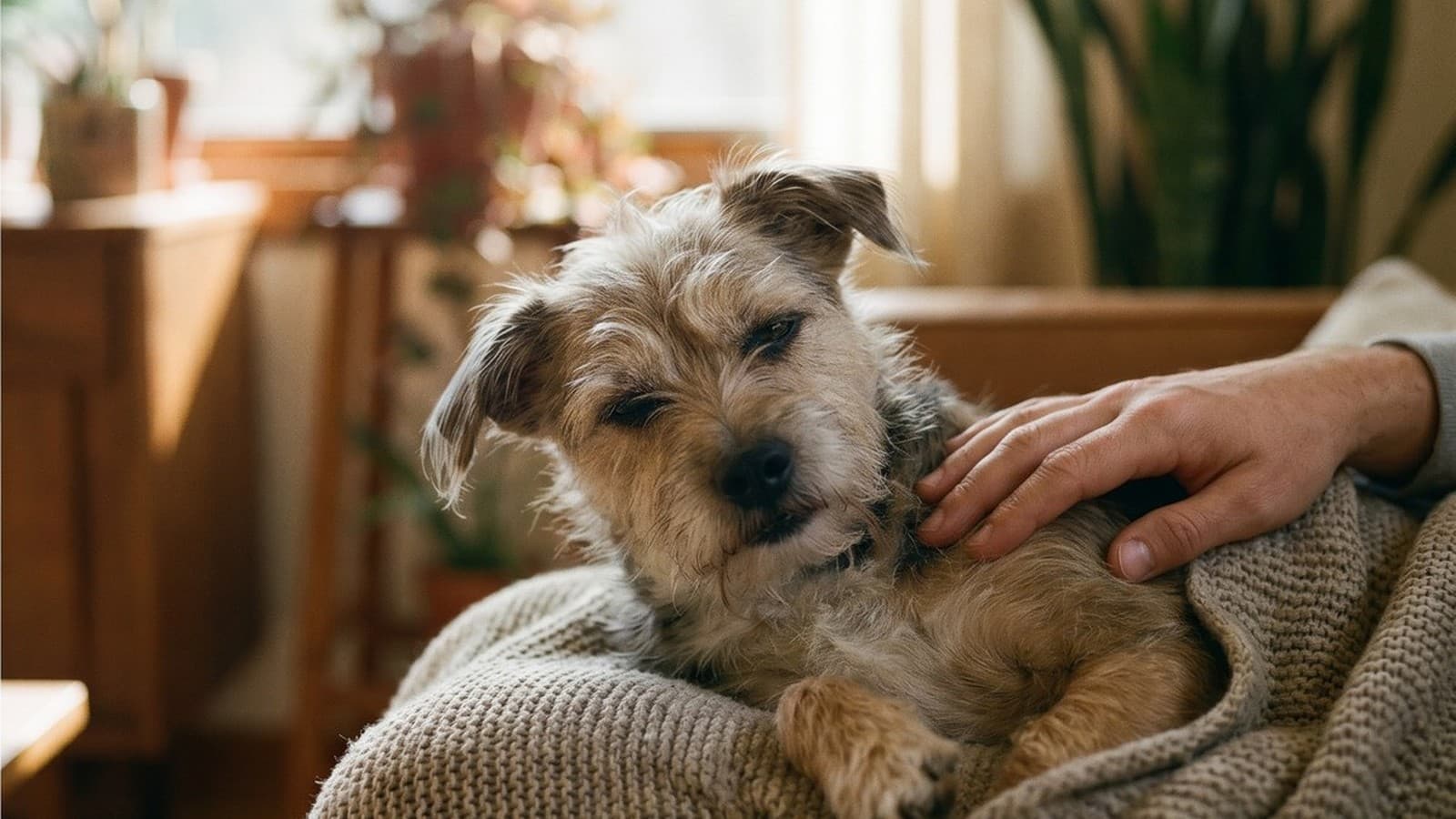
A dog resting calmly during a hyperbaric oxygen therapy session, monitored throughout. Sessions are non-invasive and require no sedation.
This isn’t a fringe use. In the largest published veterinary HBOT dataset to date — a retrospective analysis of 2,792 treatment sessions in which neurologic injuries were the single most common indication at 50.4%, followed by tissue healing at 31.4% — spinal and neurological cases were exactly what the chamber was used for most. The same study, looking at small animals treated between November 2012 and February 2020, recorded only minor adverse events in a handful of dogs (agitation in two, vomiting in three), consistent with HBOT’s strong safety profile when properly supervised.
Real recoveries: spinal cases treated without surgery
These are real patients from our clinic. Every one was managed without spinal surgery. We’ve included a range of outcomes deliberately — including a hard case — because honest expectations matter more than a highlight reel.
Underwater-treadmill hydrotherapy lets a dog rebuild strength and coordination while the water supports its weight — a core part of non-surgical IVDD recovery. (Illustrative; not a specific patient.)
DIO — Schnauzer, 4 years old — paralysed to walking again
DIO arrived completely flat and unable to walk after a sudden grade 5 disc injury at T13. The owners chose conservative management — no surgery — with an intensive course of HBOT, rehabilitation, hydrotherapy, and Tui Na. Within about two months he was back to regular walks, and the owners were “happy with the result.” Months later he was managing 30-minute walks and even occasionally jumping onto the sofa. A young dog, a dramatic injury, and a full functional recovery — no operation.
BUB — Shih Tzu, 12 years old — collapse to active
BUB collapsed suddenly with multi-level lumbar disc herniation compressing the cord, leaving the hind legs paralysed (grade 3). He started a daily intensive HBOT protocol alongside rehab and hydrotherapy. Within roughly two months he was “being active and always walking around with the back brace,” eating well, walking into the room on his own, with no pain in the spine — a strong recovery in a senior dog.
BUBBLE — Maltese, 10 years old — paralysed to running at home
BUBBLE had been paralysed for weeks, and acupuncture and herbs alone hadn’t turned things around. With a combined program of HBOT, hydrotherapy, rehab, and Tui Na, she was — about three months later — “very active at home… running around and walking well,” and still mobile at follow-ups more than two years later.
WIN CHONG — Shih Tzu, 15 years old — grade 5, surgery declined (the honest one)
WIN CHONG presented with acute tetraplegia — all four legs — from a grade 5 cervical disc injury on top of long-standing spinal disease. The owners declined surgery. With HBOT, rehab, hydrotherapy, and land-treadmill work, the improvements were partial but real: less stiffness in the hind legs and some return of voluntary movement over the following months. This is an important, honest example — in a grade 5 case managed without surgery, the realistic goal was meaningful improvement and comfort, not a complete cure. It’s the kind of case that needs a frank, individualised conversation up front.
Honest outcomes matter. Not every dog recovers fully, and some don’t recover at all — particularly severe, deep-pain-negative cases, or dogs with additional neurological disease. We don’t promise cures. What we offer is an assessment-first approach, a treatment plan grounded in the evidence, and realistic expectations from day one.
When surgery IS the right call
Choosing conservative management is not the same as avoiding surgery at all costs. There are situations where prompt surgery genuinely offers the best chance, and we’ll tell you so. Talk to your vet urgently about surgery if your dog has:
- Lost deep pain sensation in the back legs (a grade 5 presentation) — here, speed strongly influences the outcome.
- Rapidly worsening signs — going from wobbly to paralysed over hours.
- Lost bladder or bowel control.
- Repeated relapses despite proper conservative management.
A good rehabilitation clinic should be the first to flag when a case may be better served by a surgical referral. If we assess your dog and think surgery is the safer bet, we’ll say so — and work with your surgeon on recovery afterwards.
Frequently asked questions
Montalbano C, Kiorpes C, Elam L, Miscioscia E, Shmalberg J. Common Uses and Adverse Effects of Hyperbaric Oxygen Therapy in a Cohort of Small Animal Patients: A Retrospective Analysis of 2,792 Treatment Sessions. Front. Vet. Sci. 2021;8:764002. doi:10.3389/fvets.2021.764002
Worried about your dog’s spine? Start with an assessment
If your dog is showing back pain, weakness, wobbliness, or sudden loss of function, the most useful next step is a proper assessment — so you understand the grade, the prognosis, and the realistic options before committing to any one path.