Stroke, Vestibular Disease, and the Road Back
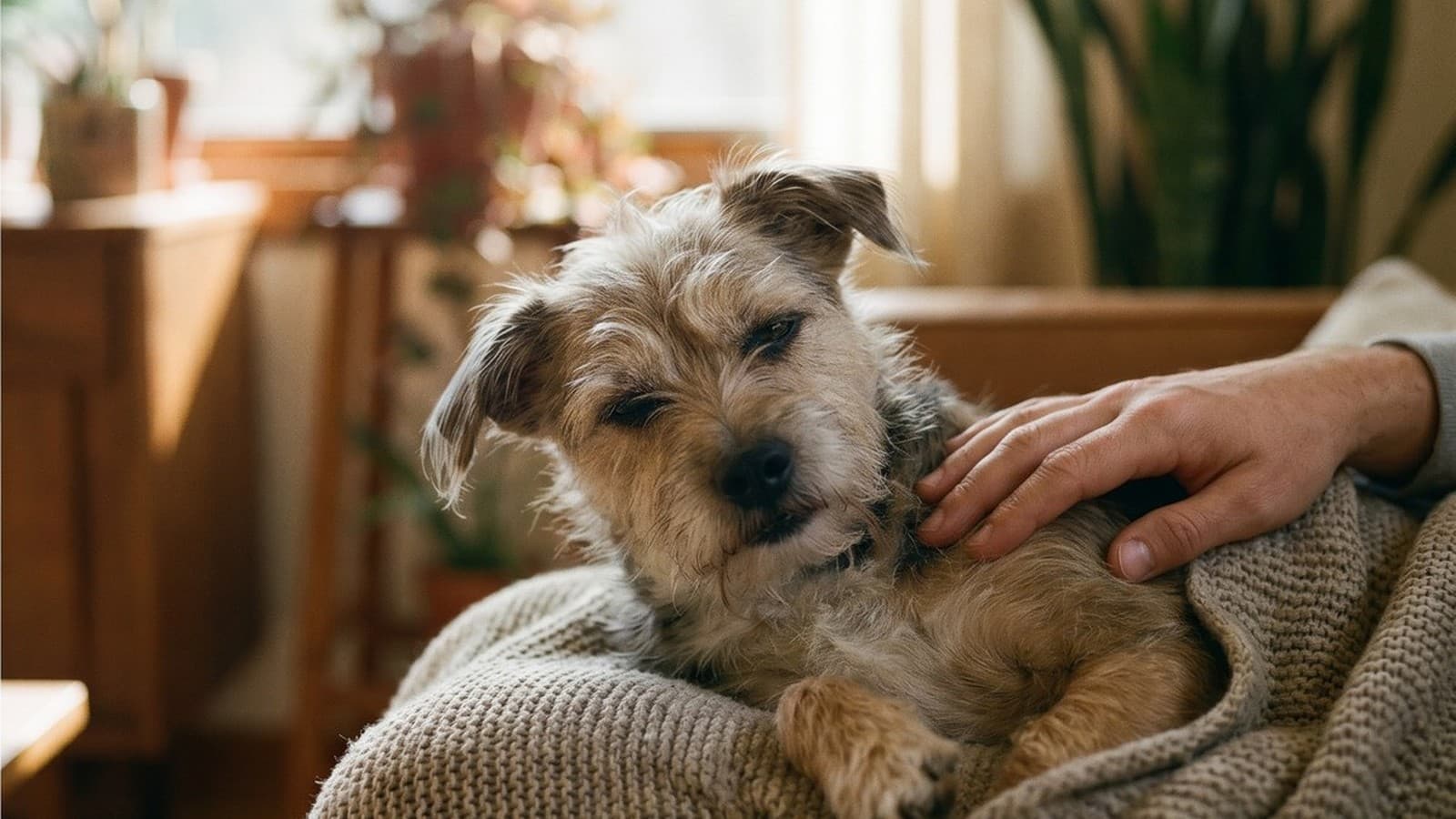
It usually happens without warning. One moment your senior dog is fine; the next, the head is tilted to one side, the eyes are flicking back and forth, and your dog is stumbling, circling, or unable to stand at all. Many owners are certain they’re watching a stroke — and brace for the worst.
Here’s the reassuring part: in dogs, this dramatic picture is most often caused by vestibular disease (a problem with the balance system), not a stroke — and most dogs improve substantially within days. Strokes do happen, but they’re less common than people fear, and even there, recovery is often possible. This article explains what’s actually happening, how vets tell the two apart, why some dogs don’t fully bounce back, and what rehabilitation — including hyperbaric oxygen therapy — can add, with real recoveries from our clinic in Singapore.
First, see a vet promptly. A sudden loss of balance always warrants a vet visit to confirm the cause and rule out anything serious. The signs of vestibular disease and other conditions can overlap, so don’t self-diagnose at home — get your dog assessed, then use this article to understand the road ahead.
The terrifying 24 hours: what’s happening
The vestibular system is your dog’s internal balance sensor — the inner ear and the parts of the brain that tell the body which way is up. When it misfires, the world effectively spins for your dog, which produces the alarming cluster of signs owners describe:
- Head tilt — the head held persistently to one side.
- Nystagmus — the eyes flicking rapidly back and forth.
- Loss of balance — stumbling, leaning, rolling, or falling to one side.
- Circling — walking in tight circles, usually toward the tilt.
- Nausea — drooling, reluctance to eat, sometimes vomiting, because the “room” is spinning.
It looks catastrophic. But these signs describe how the balance system is behaving — they don’t, by themselves, tell you the underlying cause or the prognosis. That’s what the next step sorts out.
Vestibular disease vs stroke: how vets tell the difference
These are genuinely different problems, even though they can look similar in the first hours. Vets distinguish them through a neurological exam, the pattern of signs, and sometimes imaging. Here’s the broad picture:
| Idiopathic vestibular disease | Stroke (vascular event) | |
|---|---|---|
| What it is | A sudden disturbance of the balance system, often with no identifiable cause (“old dog vestibular”). | An interruption of blood supply to part of the brain. |
| Onset | Very sudden — often overnight. | Very sudden. |
| Typical signs | Head tilt, nystagmus, circling, falling — but mentation (alertness) usually stays normal. | Can include balance loss plus other neurological signs; alertness or behaviour may be affected. |
| Course | Often improves noticeably within 72 hours; many dogs much better within 1–2 weeks. | More variable; depends on which part of the brain is affected and how much. |
| Outlook | Generally good; a residual head tilt may persist but quality of life is usually excellent. | Often guarded-to-good; many dogs recover meaningful function with time and support. |
The single most reassuring fact: most idiopathic vestibular cases start improving within about 72 hours, and a large share of dogs are dramatically better within a couple of weeks. Your vet’s exam is what separates the common, good-outlook cases from the ones that need closer investigation.
Why some dogs don’t fully bounce back — and what rehab adds
Many dogs recover from a vestibular episode on their own. But not all do completely. Some are left with a lingering head tilt, a persistent wobble, reduced confidence on slippery floors, or weakness that lingers after a stroke. Older dogs, and those with other conditions, can be slower to recover.
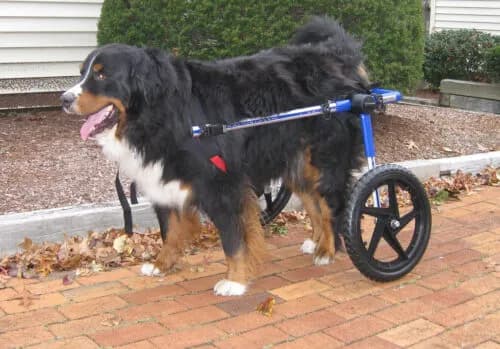
This is where rehabilitation earns its place. Structured rehab helps the brain re-learn balance (a process called vestibular compensation), rebuilds the muscle and confidence lost during the worst days, and keeps a wobbly senior dog safe and mobile while it heals. Typical components:
- Balance and coordination work to retrain the brain’s sense of stability.
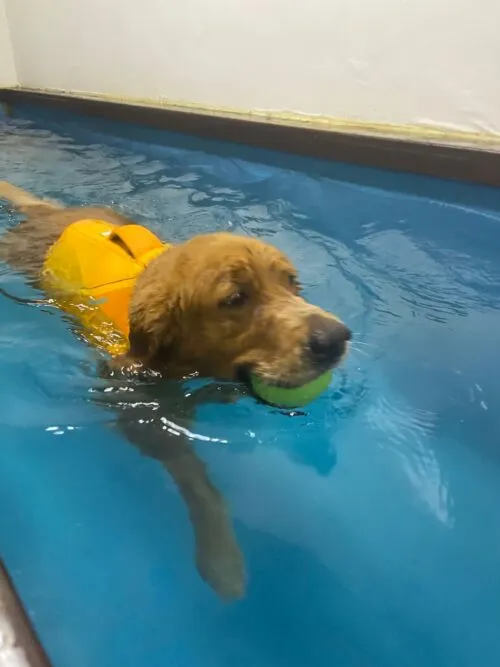
- Supported, controlled exercise (including hydrotherapy) to rebuild strength without risking falls.
- Hands-on therapy and home adjustments — grippy rugs, supportive harnesses — to keep your dog steady at home.
HBOT for neurological recovery
Hyperbaric oxygen therapy (HBOT) is most relevant when there’s actual injury to brain tissue — as in a stroke, or oxygen deprivation to the brain. Your dog rests in a pressurised chamber breathing a high concentration of oxygen, which drives far more oxygen into the bloodstream and out to compromised tissue. The aim is to deliver oxygen to injured, poorly-perfused brain tissue and help limit swelling around it — supporting the body’s own recovery during the critical window.
Neurological injury is the single most common documented use of veterinary HBOT: in the largest published dataset to date — 2,792 treatment sessions — neurologic injuries accounted for 50.4% of use, with tissue healing next at 31.4%. That study, covering small animals treated between November 2012 and February 2020, recorded only minor adverse events in a handful of dogs, consistent with HBOT’s strong safety profile under supervision. It works best as one part of a complete recovery plan, alongside rehabilitation — not as a standalone treatment.
Real recoveries
These are real patients from our clinic who came in after a sudden loss of balance or a suspected stroke.
BLACKIE — mixed breed, 15 years old — stroke and vestibular at 15, thriving 18 months later
BLACKIE arrived after a sudden episode — hind-leg weakness, head tilt, nystagmus, unable to stand — diagnosed as a suspected stroke alongside geriatric vestibular disease. The eye-flicking settled within days of onset, and with a long-term program of HBOT and reassessments she regained the ability to walk. Eighteen months on she remained mobile with ongoing maintenance sessions, eating well and stable into the following year — a 15-year-old dog living well after an episode that frightens every owner who sees it.
HORATIO — West Highland Terrier, 16 years old — suspected stroke
HORATIO, a 16-year-old Westie, presented with signs of a suspected stroke (a vascular event) including cranial-nerve signs. He was managed with HBOT as part of his neurological recovery — an example of the senior small-breed dogs who make up so many of these cases, and who can still respond to supportive treatment at an advanced age.
SPARKY — mixed breed, 12 years old — vestibular syndrome
SPARKY was diagnosed with idiopathic vestibular syndrome — the classic “old dog” presentation with no identifiable underlying cause. His case is a useful reminder that this dramatic-looking condition is often the more benign of the possibilities, with a generally good outlook once the dog is supported through the worst of it.
Honest expectations. Recovery depends heavily on the cause and severity — idiopathic vestibular disease generally carries a good outlook, while strokes and other brain injuries are more variable, and some dogs are left with a lasting head tilt or wobble. We don’t promise a full recovery. What we offer is an honest assessment and a plan to help your dog regain as much balance, strength, and confidence as possible.
Frequently asked questions
Montalbano C, Kiorpes C, Elam L, Miscioscia E, Shmalberg J. Common Uses and Adverse Effects of Hyperbaric Oxygen Therapy in a Cohort of Small Animal Patients: A Retrospective Analysis of 2,792 Treatment Sessions. Front. Vet. Sci. 2021;8:764002. doi:10.3389/fvets.2021.764002
Helping your dog recover its balance? Start with an assessment
Once your vet has confirmed the cause, rehabilitation can help your dog re-learn balance, rebuild strength, and regain confidence — and for stroke or brain-injury cases, HBOT may support recovery. The next step is an assessment to see what will help your dog most.