How to Tell if Your Cat Is in Pain: The Feline Grimace Scale Explained
Cats hide pain, so you have to learn their version of it
The signs cat is in pain are easy to call mood, age or pride. A cat in discomfort often eats enough to stop you worrying, uses the litter box just often enough, and chooses a room where nobody bumps the sore spot. They do not limp on a schedule. They withdraw the jobs that hurt: jumping, grooming the spine, tolerating a lift, sleeping stretched out. If those jobs have shrunk, believe the change.
This page is about recognition, including a face scale you can learn. It does not diagnose the cause, and it does not give a drug dose. Sudden paralysis, open-mouth breathing, a cat who cannot pass urine, or any chance they were given paracetamol or Panadol is an emergency. There is no safe amount of that medicine for a cat. Go to an emergency vet and take the box. Do not wait to score the face first.
What the feline grimace scale actually scores
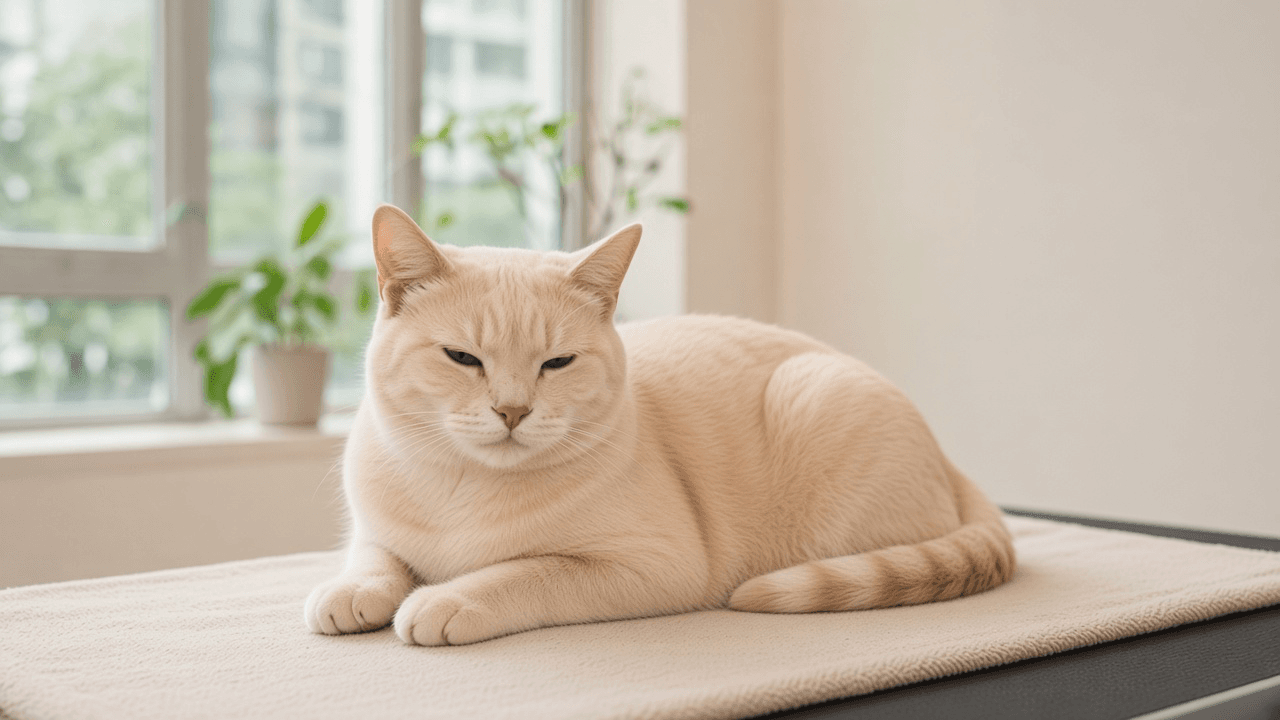
The feline grimace scale is a published way of reading five parts of a cat's face. Each part is scored 0 if it looks relaxed, 1 if the change is moderate or uncertain, and 2 if it is obvious. The parts are ear position, orbital tightening, muzzle tension, whisker position and head position. You are not judging whether the cat looks sad in a human sense. You are comparing the face with a relaxed cat, ideally your own cat on a good day.
Ears rotate outwards as pain increases, so the openings point more to the side than forward. The eyes squint, and the space around the eye looks tighter. The muzzle, which is round and soft in a comfortable cat, looks flatter and more tense. Whiskers lose their gentle curve and stand out straighter, sometimes clumped. The head drops, sitting lower than the shoulder line rather than held up. Add the five scores. The total is out of ten.
How to use the score without turning it into a diagnosis
A total around four or higher, out of ten, is the point at which the researchers suggested pain relief should be considered. The scale was built for people trained to use it, often from a short, still moment or a photograph, not from a cat who is mid-pounce or being stared at from ten centimetres away. A bright overhead light, a strange room or a direct stare will change the face. Score them when they are undisturbed, from a slight distance, for a few seconds.
A high score means you should phone a vet and describe what you saw. It does not name arthritis, dental disease, a urinary blockage or a belly problem. A low score does not prove comfort. Some painful cats look almost blank, especially if the pain is long-standing and the face has become their normal. Use the scale as one paragraph of your history, next to jumping, grooming, appetite and litter habits. Photograph the face if you can do it without a flash in their eyes. Bring the picture.
Want a vet to look at how your pet is moving?
A rehabilitation assessment looks at pain, gait and what should happen next. You leave with a plan, whether that is physiotherapy, hydrotherapy or a referral back to your own vet.
Body clues that matter as much as the face
Watch the vertical life. A cat who no longer jumps onto the bed, who hesitates at a height they used to clear, or who pulls the back legs up after them has a mobility clue. Watch grooming. Mats along the back, a greasy coat, or nails that are suddenly too long often mean the spine or the hips will not allow the usual twist. Watch the sit. A cat who sits with a back leg stuck out, or who will not curl, may be unloading a stifle or a hip.
Watch temperament with respect. Growling when lifted, hiding from children, or leaving a lap they used to seek can be pain. So can a cat who has become clingy and cannot settle. Litter accidents, especially just beside the box, are a classic pain and mobility sign when the sides are high or the box is far away. Straining inside the box with little or no urine is different, and it is an emergency. Do not score that. Go in.
Appetite, breathing and other signs that are not just joints
A sore mouth looks like a cat who approaches food hungry and then turns away, drops biscuits, drools, or paws at the face. Dental pain will not show on a hip X-ray. Nausea looks like a hunched sit, lip licking and a choice of the quietest room. These cats can score high on the grimace scale for reasons that are medical rather than orthopaedic. Your own vet needs to examine the whole cat, not only the joints you suspect.
Breathing changes outrank every mobility clue. Open-mouth breathing, a faster rate at rest, or a cat who will not lie down because they cannot get air is an emergency. Collapse, a seizure, a swollen belly, or a male cat repeatedly visiting the box without producing urine is an emergency. Possible poisoning is an emergency. Rehabilitation comes after the cat is safe. If you are unsure which door you need, phone an emergency clinic and describe the breathing and the urine first, then the face.
What not to give a cat while you watch
Do not give paracetamol, Panadol, ibuprofen, aspirin or any human anti-inflammatory. Cats are not small dogs, and they are certainly not small humans. Paracetamol can kill a cat. This page will not print a dose, because there is no owner-chosen dose that is safe. If a tablet has already been given, emergency care is time-sensitive. Bring the packet and tell them the time. Do not induce vomiting unless that clinic tells you to.
Do not start a dog joint chew, a human turmeric capsule or an essential oil because the cat seems stiff. Do not apply a hot pack to a cat who may have a bite abscess or a fever. Do not force a joint through its range. If your cat is already on a medicine prescribed by a vet and you think the pain is breaking through, call that clinic before you add anything. Stopping or doubling a drug at home creates a second problem on top of the first.
How a vet visit should use what you noticed
Lead with the changes and the dates, then the face score if you used it, then the video. A good examination includes the mouth, the abdomen, the spine, the joints and a neurological look at the legs. Blood and urine tests are common when the cat seems unwell rather than only stiff. Sedation is sometimes the kindest way to feel a painful joint properly and to take X-rays that are not a blur of struggle. Ask what the vet thinks is hurting, and what would count as worsening tonight.
If osteoarthritis is the finding, the plan is usually weight, a home that demands fewer jumps, and pain control chosen by the vet. A monthly antibody injection is one option some cats are prescribed for arthritic pain. Not every cat is a candidate, availability is confirmed by the prescribing vet, and this article will not invent a price. Physiotherapy and acupuncture sit beside that medical plan for many cats. They do not replace the examination that decides whether the pain is even in the joints.
Where rehabilitation fits once you know they hurt
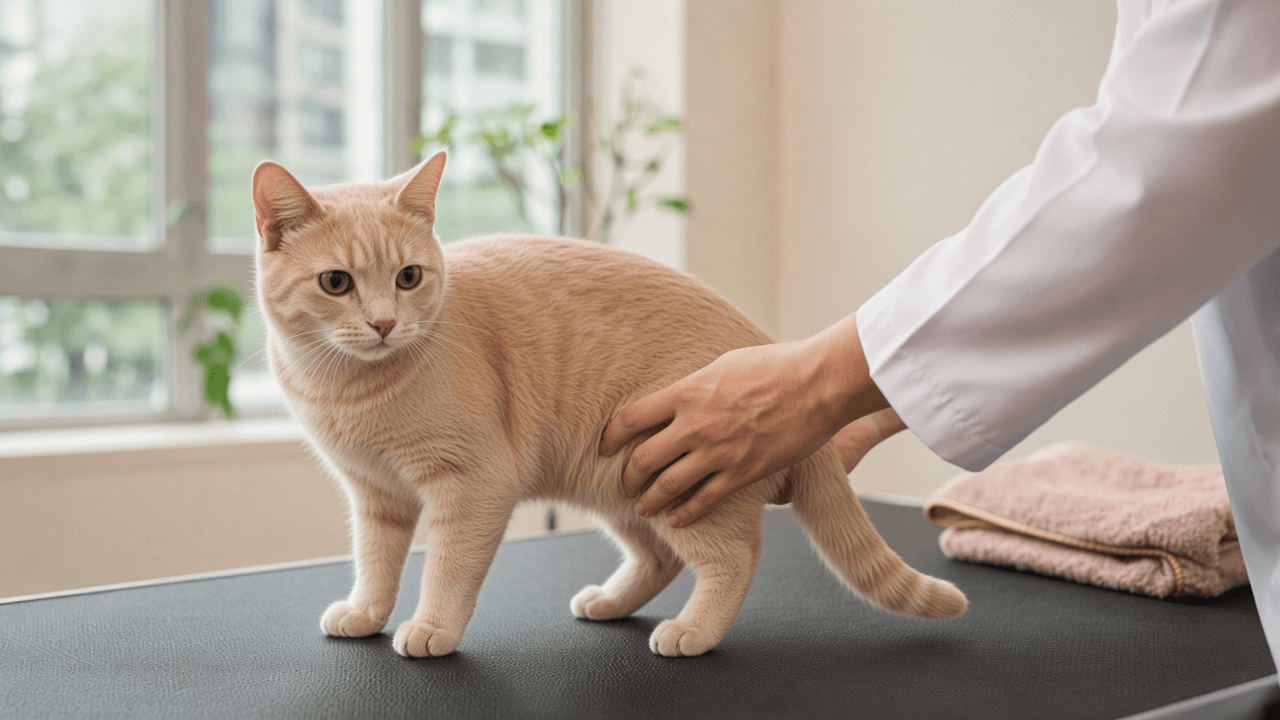
Recognition is the step you are doing now. Treatment is the next page. At RehabVet, cat rehabilitation looks at how the cat actually moves in a quiet room: the sit, the rise, the willingness to step up, the muscle over the thighs. Sessions are short. We do not ask a cat to perform a dog exercise in miniature. Manual therapy, laser and a home route are ordinary parts of the plan. Acupuncture is offered when the cat can be handled and the pain pattern suits it.
Read cat rehabilitation for the overall approach and cat acupuncture if you want to know what needling involves before you agree to it. Cat physiotherapy is the movement side of the same clinic. Fees are listed on the pricing page. If your cat is stable, eating and breathing normally, you can book an assessment at 513 Serangoon Road and bring your photographs. If they are in crisis, the emergency vet comes first. A tight face is enough reason to pick up the phone. You do not need a perfect score to be believed.