Signs Your Dog Is in Pain: 15 Subtle Clues Owners Miss

Pain in dogs is usually a change, not a cry
The signs dog is in pain are often a list of small cancellations. They still eat. They still greet you. They have stopped jumping into the car, or they take the stairs one paw at a time, or they lick one spot until the fur stains. Dogs are built to keep going. Waiting for a howl means you wait too long. The useful comparison is your dog last month, not a video of some other dog online.
This page is about recognition. It is not a diagnosis and it is not a drug chart. If you recognise several of the clues below, book a vet. If the change is sudden paralysis, a neck that will not move, a swollen belly, trouble breathing, or collapse, skip the checklist and go to an emergency clinic. Human painkillers do not belong in either path. If one has already been given, that itself is an emergency.
Clues in how they move
One: they are slower to get up, especially after a nap, and the first steps are stiff. Two: they are slower to lie down, circling and sighing, as if the floor has become a decision. Three: they refuse a jump they used to treat as nothing, onto the sofa, into the boot, or onto the bed. Four: stairs have changed. They pause, crab sideways, hop, or ask to be carried. Five: the walk itself has shrunk. They stop, look at you, or turn for home earlier than the route requires.
Six: you can see a limp, a short stride, or a head bob if you actually watch from the side instead of from above on your phone. Seven: nails are scuffed, or a paw occasionally turns under, which is a nerve sign rather than ordinary soreness. Film these. Memory tidies a limp into nothing by the time you reach the clinic, and dogs often mask pain when they are interested in a new room. A thirty-second clip from home is better evidence than a paragraph of adjectives.
Clues in the face, the voice and the grooming
Eight: the face looks tight. Ears sit further back, the eyes are slit or worried, the forehead furrows, or they avoid eye contact they used to offer. This is not guilt. Nine: they pant in a cool room, at night, or at rest, without exercise to explain it. Panting can also be heat, fear, heart disease or a hormone problem, so it is a clue to investigate, not a label you write yourself. Ten: they vocalise at movements that used to be silent. A grunt when lying down, a yelp when lifted, a whimper when the collar is touched.
Eleven: licking, chewing or over-grooming one area until the skin changes. Dogs lick pain. They also lick allergies and wounds, so look at what is under the tongue. Twelve: they have stopped grooming, or a long body now has mats along the spine because twisting to reach is no longer worth it. That pattern is famous in cats and easy to miss in dogs with longer coats. Run a hand along the coat weekly. Pain often announces itself as a knot of fur.
Want a vet to look at how your pet is moving?
A rehabilitation assessment looks at pain, gait and what should happen next. You leave with a plan, whether that is physiotherapy, hydrotherapy or a referral back to your own vet.
Clues in mood, sleep and appetite
Thirteen: sleep is broken. They get up, resettle, pant, and follow you at 2 am because they cannot get comfortable. Fourteen: temperament shifts. A patient dog growls when you touch the hips, or a social dog leaves the room when the children sit down. That is communication. Punishing it will make the next warning smaller and the bite more likely. Fifteen: appetite and toileting posture change. They eat standing in an odd stance, drop food, refuse to squat fully, or have accidents because holding the posture hurts.
None of these fifteen signs proves a single disease. Three of them together, new this month, are enough to justify an examination. Write the list down with dates. A rehabilitation vet and your own vet both do better with a timeline than with the sentence that they are just getting old. Ageing is not a diagnosis. Old dogs get disc disease, arthritis, dental pain, back pain and organ disease, and several of those can be made more comfortable.
Signs that should send you tonight
Some pain is an emergency because of what sits underneath it. A dog who cannot use the back legs, who knuckles, who has neck pain and weakness, or who cries continuously should be seen now. A distended, hard abdomen, unproductive retching, pale gums, collapse, or laboured breathing is an emergency even if you came here looking for joint advice. Possible poisoning, including a human painkiller, is an emergency. Bring the packet. Do not induce vomiting unless the emergency vet tells you to.
If you are unsure, phone the emergency clinic and describe the signs in the order they started. Do not wait for a rehabilitation appointment to decide whether the dog can walk. RehabVet will still be here for the recovery. We would rather meet a dog who has been made safe than a dog who spent the night in a flat because the checklist felt almost manageable. Trust the sudden change more than you trust your hope that it is a strain.
Why video and a pain diary beat a hunch
Dogs perform. They walk better on adrenaline in a clinic car park than they do on your kitchen tile at night. A diary of good and bad moments, kept for a week, shows whether this is a flare or a slide. Note the floor, the time of day, the length of walk, and what happened afterwards. Note any slip. Singapore tile is a repeating character in these diaries. A non-slip runner is both a test and a kindness. If the signs shrink the day you cover the floor, you have learned something real.
You can also upload walking video to our mobility assessment if the dog is stable and you want a structured look at gait before the visit. It is a guide, not a vet through the screen, and it will not see a tooth, a fever or a bladder. Use it for movement questions. Use an emergency number for the red-flag list above. Bring the diary either way. It stops the consult being spent on reconstructing last Tuesday.
What not to give while you decide
Do not give paracetamol, Panadol, ibuprofen, naproxen or aspirin from your own cupboard. Dog doses are not small human doses, and this article will not print one. Cats who receive paracetamol can die. If a dose has already been given to any pet in the house, go to an emergency vet with the box. Do not add a joint supplement tonight and call that a trial of treatment. Supplements do not relieve acute pain, and a response or a lack of response tells you nothing diagnostic.
Do not strap a joint because a website sold you a brace in one size. A brace can rub a wound and can hide a swelling the vet needed to see. Do not force a stretch. If your dog is already on prescribed medicine and the pain is breaking through, contact the prescribing clinic before you change anything. Stopping a drug suddenly, or doubling it, creates its own emergencies. The vet sets the dose. Your job is the accurate report.
What a pain-focused visit looks like
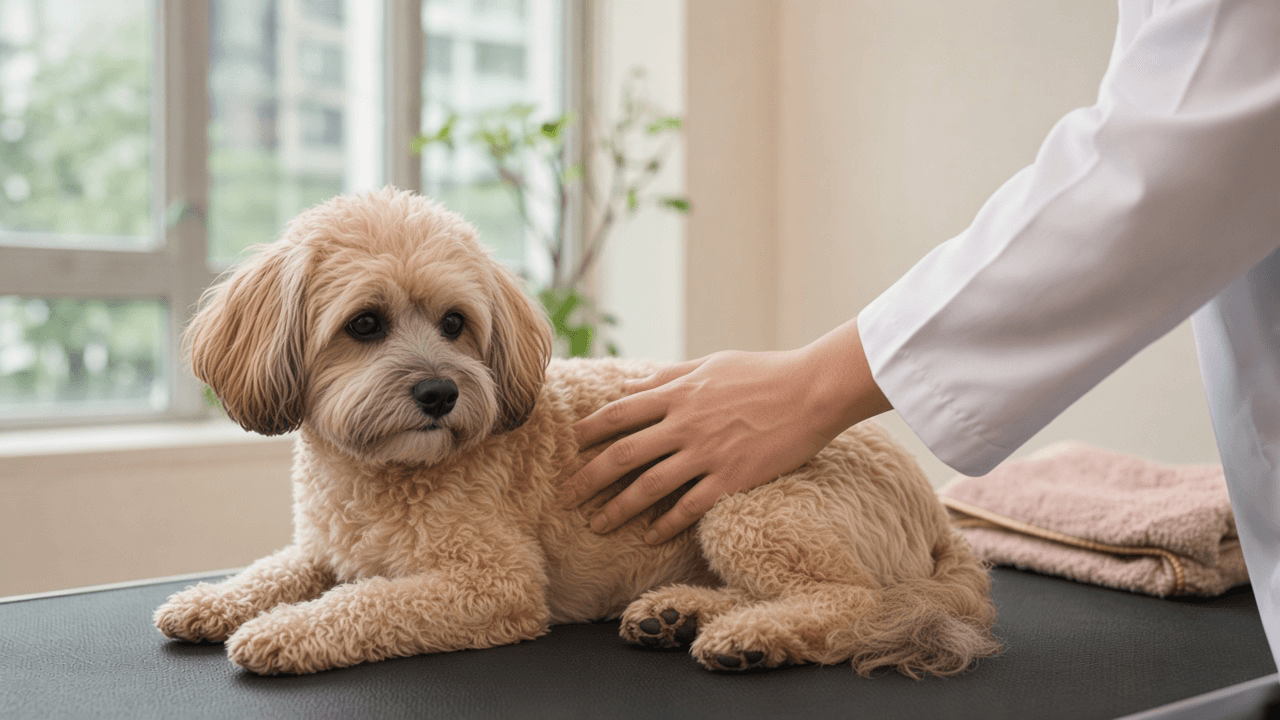
A proper pain visit examines the dog in front of you, not the breed stereotype. It includes a gait watch, hands on the spine, the joints and the belly, a dental look, and a decision about X-rays or blood tests. Tell them about night panting, licking and mood, not only about the limp you find easiest to describe. Pain in the mouth, the back, the neck and the joints can sit together in a senior dog. Treating one and missing the others is why some dogs improve halfway.
When the diagnosis supports it, rehabilitation is one of the treatments that changes daily signs rather than only masking them for an afternoon. Targeted exercise, manual therapy, acupuncture, laser, shockwave and water work are tools, chosen to the dog. The place to start that conversation is the pet pain relief service. It is treatment intent, which is a step beyond noticing the clues on this page. Read rehabilitation for senior pets if your dog is older and you want to see how a plan is paced.
A fair next step this week
Pick the three clues that are new and write the date they started. Film one walk. Remove the ball launcher from the equation until a vet has said the joints can take it. Put down traction where they turn. Book the examination. If you already have a diagnosis and you are watching the clues return, that is the moment to ask whether the pain plan is still enough. Breakthrough pain is not something a dog should be expected to carry because the last visit was recent.
RehabVet is at 513 Serangoon Road. You can book an assessment when the problem is mobility and pain rather than an emergency collapse, and you can see session fees on the pricing page before you come. Phone +65 6291 6881 if you are unsure which door you need. We will tell you if your own vet or an emergency hospital is the better first call. Noticing pain is the part owners already do well once they have the words. The next part is acting on the list.