
Congenital Vertebral Malformation
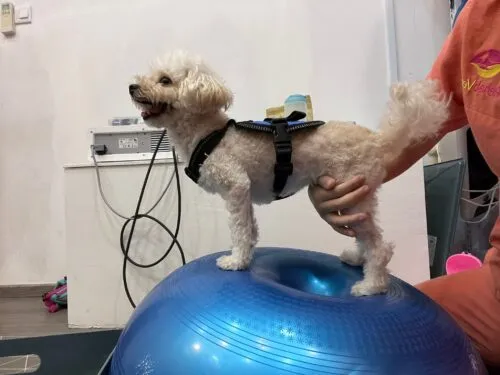
This page is for educational purposes only and is not a substitute for veterinary diagnosis or emergency care. Always consult your primary veterinarian or a rehabilitation veterinarian before starting treatment. If your pet cannot walk, has sudden paralysis, severe pain, or breathing difficulty, seek urgent veterinary attention.
What is Congenital Vertebral Malformation?
Also known as: hemivertebrae; butterfly vertebra; block vertebrae; congenital vertebral anomaly; screw-tail associated vertebral malformation.
During fetal development, vertebrae can form abnormally: wedge-shaped hemivertebrae, butterfly vertebrae, fused block vertebrae, or transitional vertebrae. These are especially discussed in screw-tailed brachycephalic breeds (for example French Bulldogs, English Bulldogs, Pugs) but can occur in any dog.
Many dogs with radiographic malformations remain comfortable; others develop kyphosis, pain, or spinal cord compression with ataxia or paresis. Malformations can coexist with intervertebral disc disease. Diagnosis and neurological grading belong with a veterinarian; advanced imaging defines cord compression.
Surgery may be indicated for progressive neurological deficits. For stable pets, management includes weight control, harness use, activity modification, and rehabilitation to maintain strength, proprioception, and comfort — without claiming to correct the bony malformation.
What are the signs of Congenital Vertebral Malformation?
Signs vary by severity and by whether your pet is a dog or cat. Owners of dogs often notice:
- Visible spinal curvature (kyphosis) over the mid-back in some dogs
- Pain on spinal palpation; reluctance to jump or climb
- Hind-limb ataxia, knuckling, or weakness if the cord is affected
- Exercise intolerance or crying when picked up under the chest
- Incidental finding on radiographs in clinically normal dogs
What causes Congenital Vertebral Malformation?
- Congenital failure of normal vertebral segmentation/ossification
- Breed-associated risk in screw-tailed and some brachycephalic dogs
- Genetic developmental factors
- Clinical problems arise when deformity causes instability or cord compression — not every malformation is symptomatic
How can veterinary rehabilitation help with Congenital Vertebral Malformation?
For neurologically stable dogs, rehab emphasises core support, controlled exercise, proprioceptive training, and owner education on avoiding high-impact jumping.
After decompressive or stabilising surgery, rehab follows neurosurgical protocols for bladder care (if needed), assisted standing, and graded neurological recovery work.
Hydrotherapy may help gait training in weak dogs when cleared and when water safety/respiratory status allow — brachycephalic pets need careful screening.
Rehabilitation plans at RehabVet are individualised after a veterinary assessment. We coordinate with your primary vet when imaging, medication, or surgery is part of the overall plan.
Which therapies may be used for Congenital Vertebral Malformation?
Depending on your pet’s examination findings, comfort, and goals, a plan may include one or more of the following:
What are the rehabilitation goals for Congenital Vertebral Malformation?
Goals are set for the individual patient. Typical aims may include (not guarantees — outcomes vary):
- Maintain comfort and spinal-friendly muscle support
- Improve balance, proprioception, and hind-limb strength when deficits exist
- Support post-operative neurological recovery when surgery is performed
- Teach owners safe handling, harness use, and activity limits
- Monitor for progression that warrants veterinary recheck
We do not publish invented success percentages. Progress is tracked clinically (gait, strength, range of motion, pain behaviours, and home function) and plans are adjusted over time.
When should you seek veterinary care for Congenital Vertebral Malformation?
- Any hind-limb weakness, ataxia, or knuckling — prompt veterinary assessment
- Sudden pain, crying, or reluctance to walk in a screw-tailed breed
- Loss of bladder or bowel control
- Progressive kyphosis with neurological change
Not necessarily. Many malformations are incidental. Surgery is considered for clinically significant cord compression or progressive deficits — your vet or neurologist decides.
No. Congenital bony shape does not remodel into normal vertebrae with physio. Rehab supports soft-tissue function, comfort, and neurological recovery around the existing anatomy.
No, but dogs with vertebral malformations can also develop disc disease. Sudden paralysis still needs emergency evaluation for disc extrusion or other compression.
Congenital vertebral anomalies occur in cats but are less often a clinical focus than in screw-tailed dog breeds. Neurological signs in cats always need veterinary work-up.
Related reading & patient stories
Book a rehabilitation assessment
If your pet has been diagnosed with Vertebral malformation, or you are noticing mobility changes, our team can assess and design a multimodal rehab plan.
Educational content only — not a diagnosis. For emergencies, contact your nearest veterinary hospital.
Related Conditions
- ConditionAngular Limb DeformityAngular limb deformity describes abnormal angulation or rotation of a limb from asymmetric growth-plate function or trauma, altering joint alignment and gait in dogs.Learn more
- ConditionHip DysplasiaBunny-hopping, struggling to stand, sore after exercise? Many dysplastic dogs are managed well without surgery. RehabVet builds the muscle that supports the joint and keeps your dog moving comfortably.Learn more
- ConditionLuxating PatellaPatellar luxation occurs when the kneecap slips out of the femoral groove — commonly medially in small dogs — causing skipping steps, pain, and secondary cruciate and arthritis risk.Learn more