
Fragmented Medial Coronoid Process (FMCP)
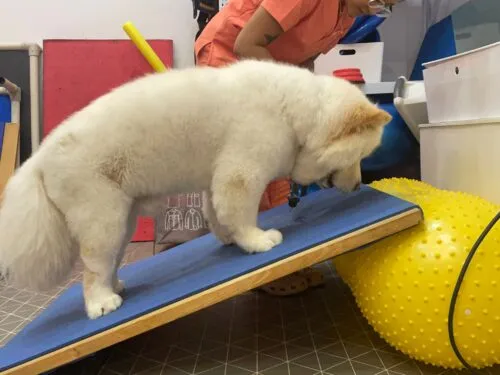
This page is for educational purposes only and is not a substitute for veterinary diagnosis or emergency care. Always consult your primary veterinarian or a rehabilitation veterinarian before starting treatment. If your pet cannot walk, has sudden paralysis, severe pain, or breathing difficulty, seek urgent veterinary attention.
What is Fragmented Medial Coronoid Process (FMCP)?
Also known as: FMCP; medial coronoid disease; coronoid fragmentation; elbow dysplasia (coronoid form).
The medial coronoid process is part of the ulnar articular surface of the elbow. In medial coronoid disease, microdamage, fissuring, or fragmentation occurs — often with joint incongruity — producing synovitis, cartilage wear, and lameness. FMCP is one of the most frequent elbow dysplasia lesions in young large-breed dogs and can appear bilaterally.
CT and arthroscopy are valuable because plain radiographs may miss early coronoid pathology. Concurrent OCD of the medial humeral condyle or incongruity may be present.
Treatment ranges from arthroscopic fragment removal and joint assessment to medical management of established osteoarthritis. Rehabilitation supports comfort, muscle, and function before and after procedures, acknowledging that developmental elbow disease is managed long-term rather than “cured.”
What are the signs of Fragmented Medial Coronoid Process (FMCP)?
Signs vary by severity and by whether your pet is a dog or cat. Owners of dogs often notice:
- Forelimb lameness, often worse after exercise or on rising
- Elbow effusion; pain on manipulation, especially external rotation/flexion
- Outward rotation or abduction of the elbow at stance
- Reluctance to jump or play; shortened stride
- Chronic muscle atrophy of the affected forelimb
What causes Fragmented Medial Coronoid Process (FMCP)?
- Developmental elbow incongruity and overload of the medial compartment
- Genetic predisposition in many large breeds
- Osteochondrosis-spectrum disease affecting the coronoid
- Rapid growth and biomechanical stress during skeletal immaturity
How can veterinary rehabilitation help with Fragmented Medial Coronoid Process (FMCP)?
Rehab addresses pain behaviours, maintains elbow motion, and strengthens the shoulder girdle and core to improve load sharing.
Post-arthroscopy programmes progress controlled activity, proprioception, and eventual hydrotherapy when cleared.
Weight management and lifelong joint-friendly exercise plans are core parts of care because OA commonly follows FMCP.
Rehabilitation plans at RehabVet are individualised after a veterinary assessment. We coordinate with your primary vet when imaging, medication, or surgery is part of the overall plan.
Which therapies may be used for Fragmented Medial Coronoid Process (FMCP)?
Depending on your pet’s examination findings, comfort, and goals, a plan may include one or more of the following:
What are the rehabilitation goals for Fragmented Medial Coronoid Process (FMCP)?
Goals are set for the individual patient. Typical aims may include (not guarantees — outcomes vary):
- Reduce elbow pain and stiffness in daily life
- Preserve functional range of motion
- Rebuild forelimb and scapular muscle
- Improve gait symmetry and activity tolerance
- Support long-term osteoarthritis management strategies
We do not publish invented success percentages. Progress is tracked clinically (gait, strength, range of motion, pain behaviours, and home function) and plans are adjusted over time.
When should you seek veterinary care for Fragmented Medial Coronoid Process (FMCP)?
- Persistent forelimb limp in a young large-breed dog
- Elbow swelling or pain on handling
- Bilateral forelimb issues or declining exercise tolerance
- Before starting high-impact sport in a dog with known elbow dysplasia
FMCP is a major form of elbow dysplasia. Elbow dysplasia is an umbrella that can also include OCD, UAP, and incongruity.
Removing unstable fragments can improve comfort in selected dogs, but the joint may already have cartilage damage. Ongoing management and rehab are often still needed.
Classic developmental FMCP is a canine developmental disease. Cats with elbow pain need a different diagnostic approach.
Related reading & patient stories
Book a rehabilitation assessment
If your pet has been diagnosed with FMCP, or you are noticing mobility changes, our team can assess and design a multimodal rehab plan.
Educational content only — not a diagnosis. For emergencies, contact your nearest veterinary hospital.
Related Conditions
- ConditionElbow Osteochondritis Dissecans (OCD)Elbow OCD involves a cartilage flap on the medial humeral condyle and is one component of the canine elbow dysplasia complex, mainly in young large-breed dogs.Learn more
- ConditionMedial Shoulder InstabilityMedial shoulder instability (MSI) describes laxity or injury of the medial glenohumeral support structures, causing forelimb pain, performance decline, and intermittent lameness in dogs.Learn more
- ConditionMeniscal Injury in DogsMeniscal tears in dogs — usually the medial meniscus — commonly occur with cranial cruciate ligament disease, adding clicking, pain, and mechanical interference inside the stifle.Learn more