
Swimmer Puppy Syndrome
This page is for educational purposes only and is not a substitute for veterinary diagnosis or emergency care. Always consult your primary veterinarian or a rehabilitation veterinarian before starting treatment. If your pet cannot walk, has sudden paralysis, severe pain, or breathing difficulty, seek urgent veterinary attention.
What is Swimmer Puppy Syndrome?
Also known as: swimmer pups; flat puppy syndrome; turtle puppy; pectus-associated swimming gait in neonates.
Swimmer puppy syndrome is seen in very young puppies (typically in the first weeks of life) that move by paddling their limbs laterally instead of standing and walking. The chest may appear flattened (dorsoventrally), and hip and shoulder development can be affected by prolonged abnormal positioning.
Contributing factors may include slippery surfaces, overweight litters, muscle weakness, and conformational issues; exact causes vary. Early veterinary assessment rules out neurological disease, infectious illness, and severe congenital malformations.
Treatment is largely supportive and physical: hobbling or taping techniques to encourage limb adduction, physiotherapy, chest support as advised, improved traction surfaces, and careful nutrition. Many puppies improve substantially with early, consistent intervention — timelines and completeness of recovery are individual.
What are the signs of Swimmer Puppy Syndrome?
Signs vary by severity and by whether your pet is a dog or cat. Owners of dogs often notice:
- Puppy unable to stand or walk at the age when littermates begin to
- Limbs splayed sideways; paddling or “swimming” motion
- Flattened, wide chest appearance
- Difficulty nursing if positioning is poor
- Delayed motor milestones compared with littermates
What causes Swimmer Puppy Syndrome?
- Multifactorial neonatal musculoskeletal and environmental factors
- Slippery whelping surfaces reducing traction for standing
- Possible muscle weakness or delayed neuromuscular control
- Conformation and litter-size / body-condition influences
How can veterinary rehabilitation help with Swimmer Puppy Syndrome?
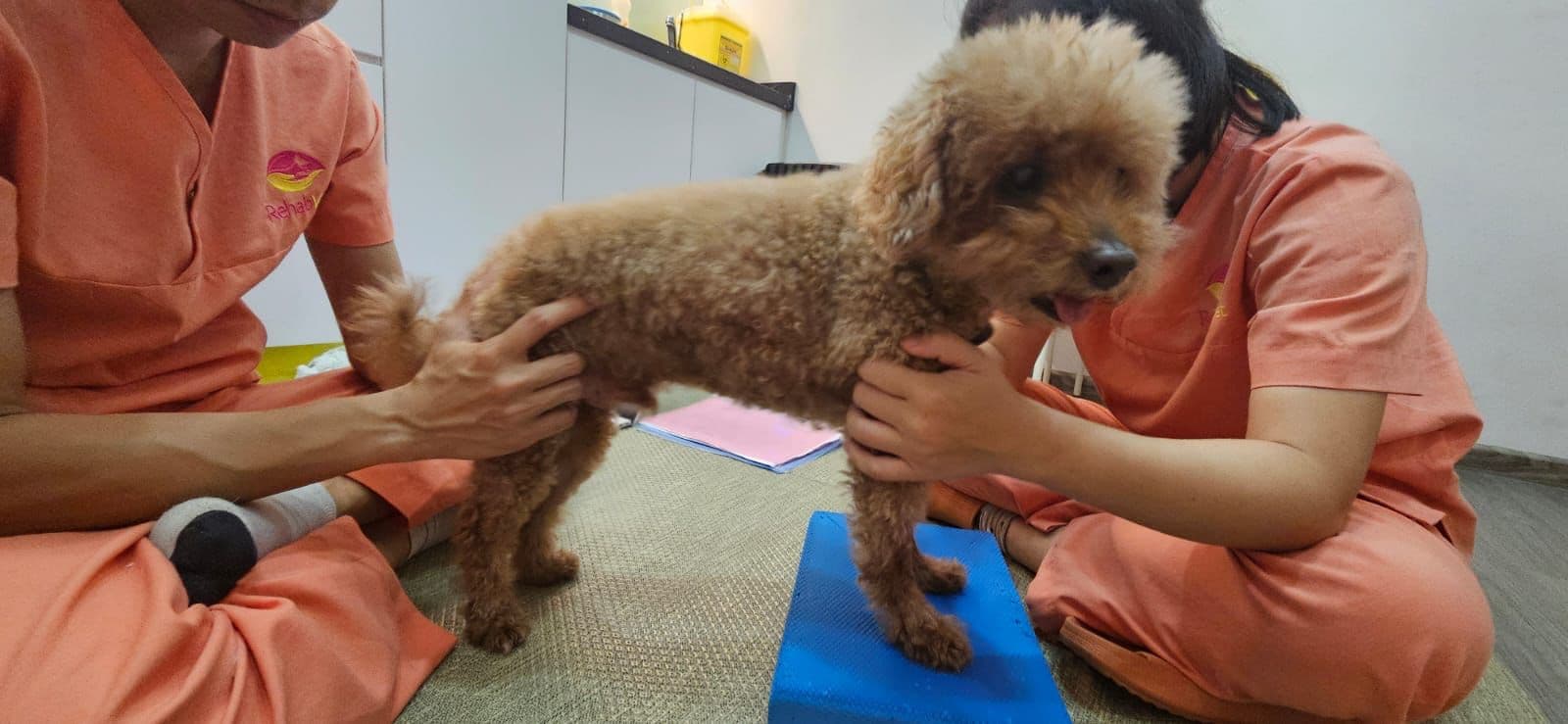
Neonatal and early paediatric rehab focuses on positioning, assisted standing, gentle range of motion, and progressive weight-bearing on high-traction surfaces.
Taping/hobble methods (when taught by a veterinarian or rehab professional) encourage more normal limb orientation. Chest mobility and respiratory comfort are monitored.
Owners receive daily home programmes — consistency in the first weeks is critical. Hydrotherapy is not a neonatal first-line tool; land-based developmental handling comes first.
Rehabilitation plans at RehabVet are individualised after a veterinary assessment. We coordinate with your primary vet when imaging, medication, or surgery is part of the overall plan.
Which therapies may be used for Swimmer Puppy Syndrome?
Depending on your pet’s examination findings, comfort, and goals, a plan may include one or more of the following:
What are the rehabilitation goals for Swimmer Puppy Syndrome?
Goals are set for the individual patient. Typical aims may include (not guarantees — outcomes vary):
- Promote limb adduction and early standing
- Support more normal chest and hip development through positioning
- Improve strength and coordination for walking
- Educate breeders/owners on daily handling routines
- Identify puppies needing further veterinary investigation
We do not publish invented success percentages. Progress is tracked clinically (gait, strength, range of motion, pain behaviours, and home function) and plans are adjusted over time.
When should you seek veterinary care for Swimmer Puppy Syndrome?
- Any puppy not attempting to stand when littermates do
- Flattened chest, respiratory effort, or poor nursing
- Neurological red flags: absent pain sensation, severe dullness, seizures
- Failure to progress despite home positioning advice — recheck promptly
Many improve with early intervention, but severity and comorbidities vary. Avoid guaranteed timelines; track weekly motor progress with your vet or rehab team.
They can overlap — some swimmer pups have chest wall deformity — but they are not identical labels. Veterinary exam clarifies the structural picture.
Incorrect taping can harm skin and circulation. Learn techniques from a veterinarian or qualified rehab professional and monitor paws closely.
Related reading & patient stories
Book a rehabilitation assessment
If your pet has been diagnosed with Swimmer puppy, or you are noticing mobility changes, our team can assess and design a multimodal rehab plan.
Educational content only — not a diagnosis. For emergencies, contact your nearest veterinary hospital.
Related Conditions
- ConditionAngular Limb DeformityAngular limb deformity describes abnormal angulation or rotation of a limb from asymmetric growth-plate function or trauma, altering joint alignment and gait in dogs.Learn more
- ConditionCongenital Vertebral MalformationCongenital vertebral malformations — such as hemivertebrae, butterfly vertebrae, and block vertebrae — alter spinal alignment and may contribute to pain, kyphosis, or neurological deficits in dogs.Learn more
- ConditionHip DysplasiaBunny-hopping, struggling to stand, sore after exercise? Many dysplastic dogs are managed well without surgery. RehabVet builds the muscle that supports the joint and keeps your dog moving comfortably.Learn more