Dog Back Pain: Signs, Causes and What Actually Helps
The signs owners notice before they notice the back
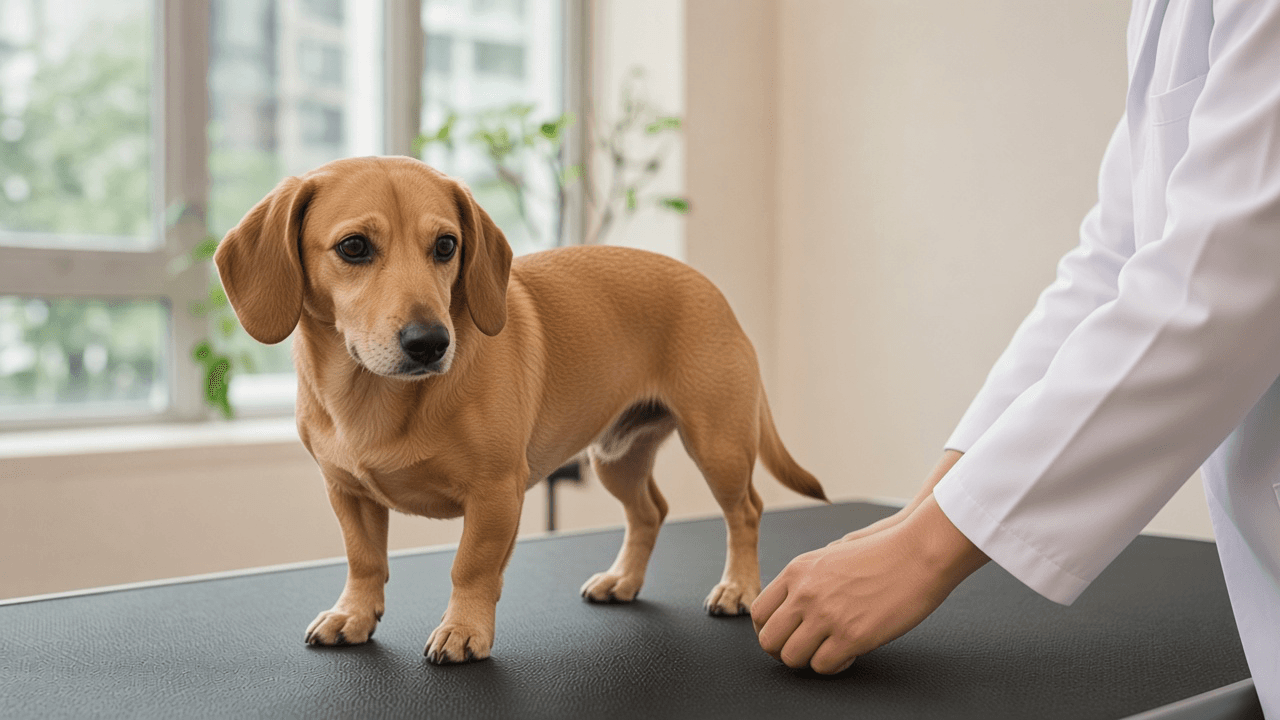
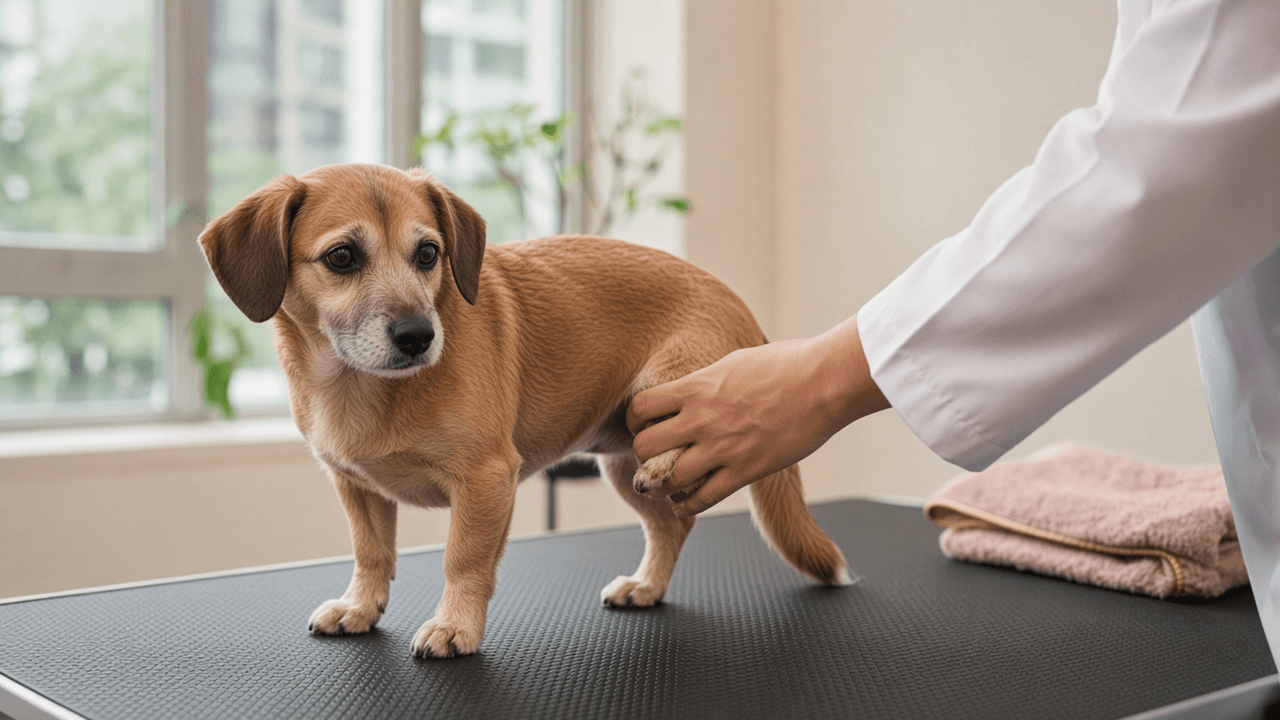
Dog back pain rarely looks like a person clutching their lower back. It looks like a dog who yelps when you pick them up under the chest, who will not jump onto the sofa they used yesterday, or who stands with the spine curled upward and the belly tucked. Some shiver. Some walk as if the floor is too cold. Some look at their flanks or lick the air. Appetite may fall because posturing over a bowl is uncomfortable, not because the stomach is the first problem.
Small dogs and long-backed dogs are the ones we are asked about most, but any dog can strain a back or suffer a disc. A Corgi, a Dachshund and a large older dog do not share one disease just because the posture looks similar. Film your dog from the side while they walk and while they move from sitting to standing. Tell the vet whether the yelp happens when you lift, when they turn, or when they lower the head. Those are different maps.
What is an emergency tonight
Back pain plus weak legs is not a wait-until-Monday problem. If your dog is dragging one or both back legs, knuckling a paw, unable to stand, or crying in a way that will not settle, go to an emergency vet. Loss of bladder control, or a dog who cannot pass urine, belongs in the same trip. Carry them with the chest and the pelvis supported so the spine stays level. Do not sling them over a shoulder like a bag of rice, and do not give paracetamol, ibuprofen or any human tablet.
A dog who is bright, walking normally, and yelped once when they jumped off the bed can be kept quiet and seen promptly in daytime hours, as long as you recheck them. If the pain escalates, if they start to wobble, or if they refuse to move, the plan changes and you go in. Rehabilitation is for after a dangerous cause has been identified or reasonably excluded. It is not the place to rule out a slipped disc at the first phone call.
Discs, the cause that has to be considered early
A damaged intervertebral disc can bulge or burst against the spinal cord and the nerves. In the back, that often means a hunched posture, a tense abdomen, pain when the spine is felt, and sometimes a limp that looks as if the knee is to blame. Chondrodystrophic dogs are over-represented, but a disc can happen in a mixed-breed dog on the seventh floor of a walk-up. The severity runs from discomfort with normal strength, through wobbliness, to paralysis. Where your dog sits on that line decides how fast you move.
You will not feel the disc itself. X-rays may show a narrowed space and still miss the piece of disc that matters, which is why some dogs need more advanced imaging. Our intervertebral disc disease page explains that pathway, and the separate article on what IVDD is is there if you want the plain-language version. If your vet has already advised strict rest, follow the hours they set. Sofa privileges and a short run downstairs are how a painful disc becomes a surgical one.
Want a vet to look at how your pet is moving?
A rehabilitation assessment looks at pain, gait and what should happen next. You leave with a plan, whether that is physiotherapy, hydrotherapy or a referral back to your own vet.
Spondylosis and other spinal changes
Spondylosis is extra bone bridging under the spine, often found on an X-ray taken for another reason. It can be present in a comfortable dog. It can also sit alongside stiffness, reduced flexibility and pain, particularly in an older dog who has lost the ability to curl or to look over a shoulder. The X-ray label is not automatically the cause of this week's yelp. A disc, a muscle strain or an abdominal problem can coexist with those bony bridges.
The useful question to ask the vet is whether the spondylosis explains today's pain, or whether it is a background finding. Our notes on spondylosis deformans go into that distinction. Treatment, when the bone change really is the limiter, is about comfort, mobility and keeping the segments that still move as useful as possible. It is not about dissolving the bridges with a supplement. Nobody honest will sell you that.
Muscle strain, trauma and pain that only seems spinal
Dogs pull muscles along the back after a slip, a frantic play session, or a twist on tile. The pain can be sharp and then settle over days if the activity really stops. Heat and swelling are mild. The dog remains strong, coordinated and willing to walk to the door. Even then, a vet should see a back that is making a dog cry, because a strain and an early disc feel similar in the first hour. Rest is the overlap in the plan. Skipping the examination is the mistake.
Abdominal pain imitates a sore back. Kidney disease, a pancreatic flare, a gastrointestinal crisis or a leaking tumour can make a dog hunch and resent being lifted. Those dogs often feel unwell, vomit, have diarrhoea, or show belly pain rather than a gait problem. If the spine story does not fit, your vet will examine the abdomen and may run blood tests. Do not spend the evening massaging a back that might be a medical abdomen. Fever and a very painful spine also raise infection of the disc space, which is uncommon and needs urgent medical care, not a stretch.
How to handle a sore dog at home tonight
Confine them to one level. A crate or a small penned area is kinder than a whole flat full of sofas to launch from. Carry a small dog outside to toilet if stairs are involved, using the chest-and-pelvis hold. Keep the leash on for the toileting trip so they do not dart at a scent. Skip baths, grooming and visitors who will excite them. Children should not pick them up to comfort them. Comfort is a quiet voice and a familiar bed on the floor.
Food and water stay within reach so they do not have to hike across the flat. If they will not eat, or they vomit, phone a vet rather than offering a list of human foods. Do not apply a hot pack to a suspected disc. Do not give a leftover anti-inflammatory from a previous illness, because the dose and the drug may be wrong for tonight and may clash with what the emergency vet needs to give. If a human painkiller has already gone in, say so immediately. For a cat in the same home, paracetamol is life-threatening and there is no safe owner-chosen amount.
What actually reduces back pain
The first treatment is the correct diagnosis and a medicine plan written for that dog. Pain relief, anti-inflammatories when they are safe for the kidneys and gut, and sometimes other medicines for nerve pain are veterinary decisions. This page will not suggest a tablet strength. Strict rest is a treatment, not a delay, when the vet prescribes it. Weight loss in an overweight dog reduces the work the spine does every time they stand up. Floors that grip reduce the sudden twists that restart the pain.
Once the vet says the spine is stable enough, rehabilitation can help the pain that comes from muscle spasm, guarded movement and weeks of doing nothing. That may include gentle manual therapy, acupuncture, a class 4 laser, and later a carefully dosed underwater treadmill. It is not a set of sit-ups. The pain relief service is the right place to ask what belongs in the plan and what does not. Some dogs also suit shockwave or hyperbaric oxygen for a specific tissue problem. Those are chosen after examination, not from a menu you tick online.
Exercise after the painful week
Return to walks is staged. A dog who has been on rest does not resume a Punggol park loop because they looked happy on Tuesday. Start with short leash walks on flat ground. No stairs as exercise, no ball, no dog run, no jumping into the car. If they can be lifted, lift them. A ramp is useful only when the vet has said jumping and steep angles are acceptable again. Watch for the hunched posture returning the next morning. That relapse is information, and it means you phone rather than pushing through.
Home exercises, when they are prescribed, are specific and boring on purpose. A random routine from the internet can flex a disc that was finally settling. If you want a starting point that respects that, read home rehabilitation exercises and then ask us to mark which ones your dog should not do yet. The forbidden list is as important as the allowed list. Bring it to the appointment so we are not guessing what you already tried.
Getting the back examined properly
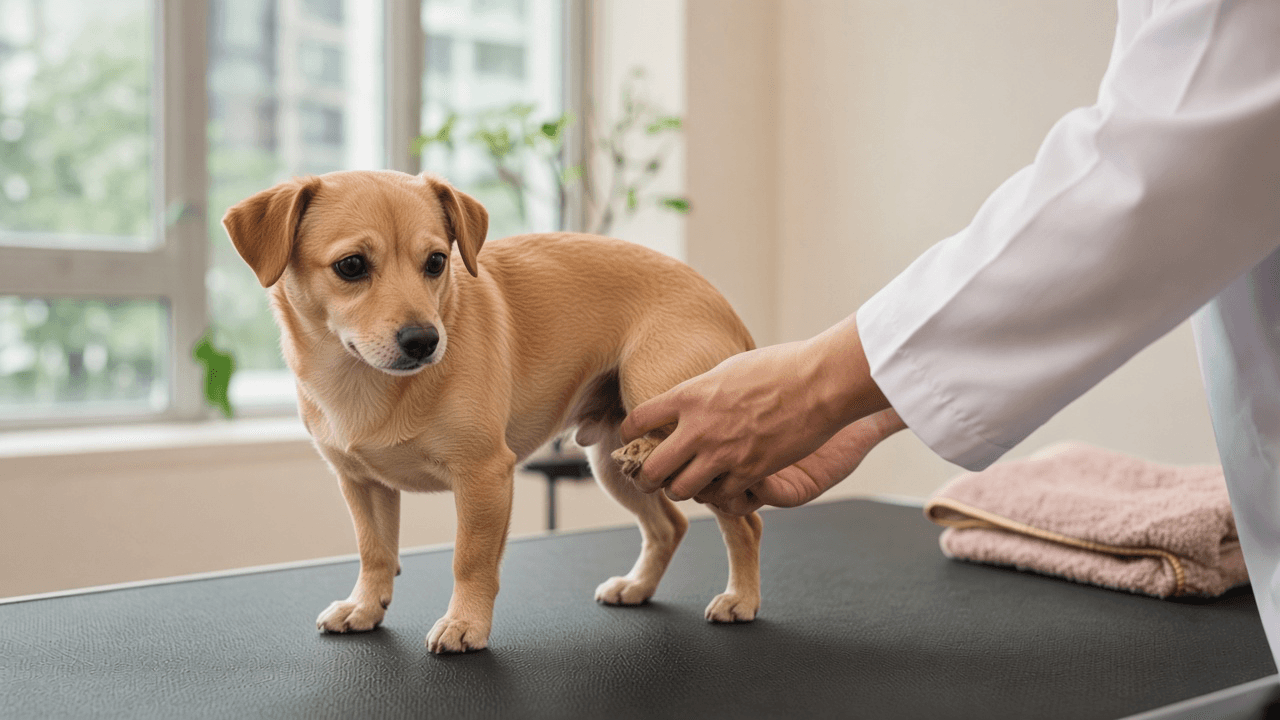
A useful visit includes a hands-on spinal examination, a neurological check of the legs, and a decision about X-rays or referral. Tell the vet about tick exposure, trauma, and any previous disc episode. Bring a list of medicines. If you are sent home on rest, ask what worsening looks like and which phone number to call at night. Write it down before you leave. Pain makes it hard to remember verbal instructions in the car park.
RehabVet sees dogs once that medical decision is underway or completed. We are at 513 Serangoon Road, and you can call +65 6291 6881 to ask whether an assessment is appropriate yet. If it is, book an assessment and bring the imaging report. If your dog cannot walk tonight, skip us and go to emergency. A sore back that is still walking can often be helped. A spinal cord that is losing function cannot wait for a convenient day.