Dog Neck Pain: Signs, Causes and When It Is an Emergency
How a sore neck shows up at home
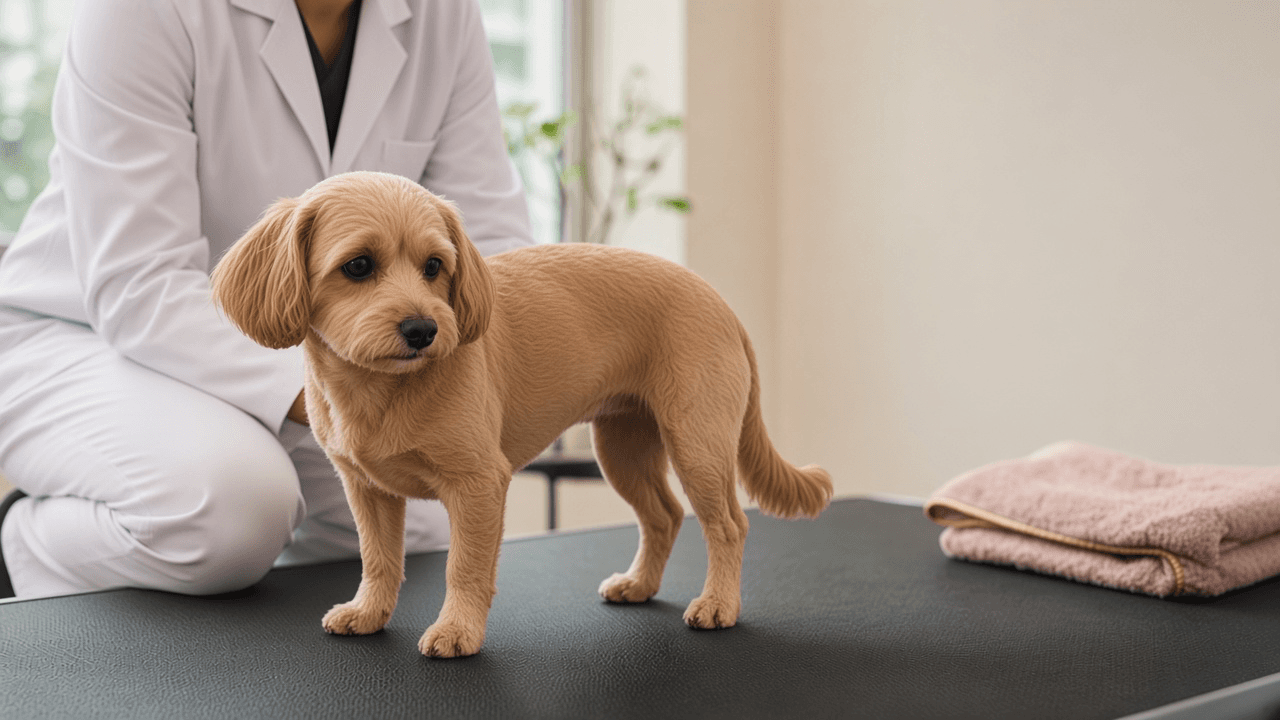
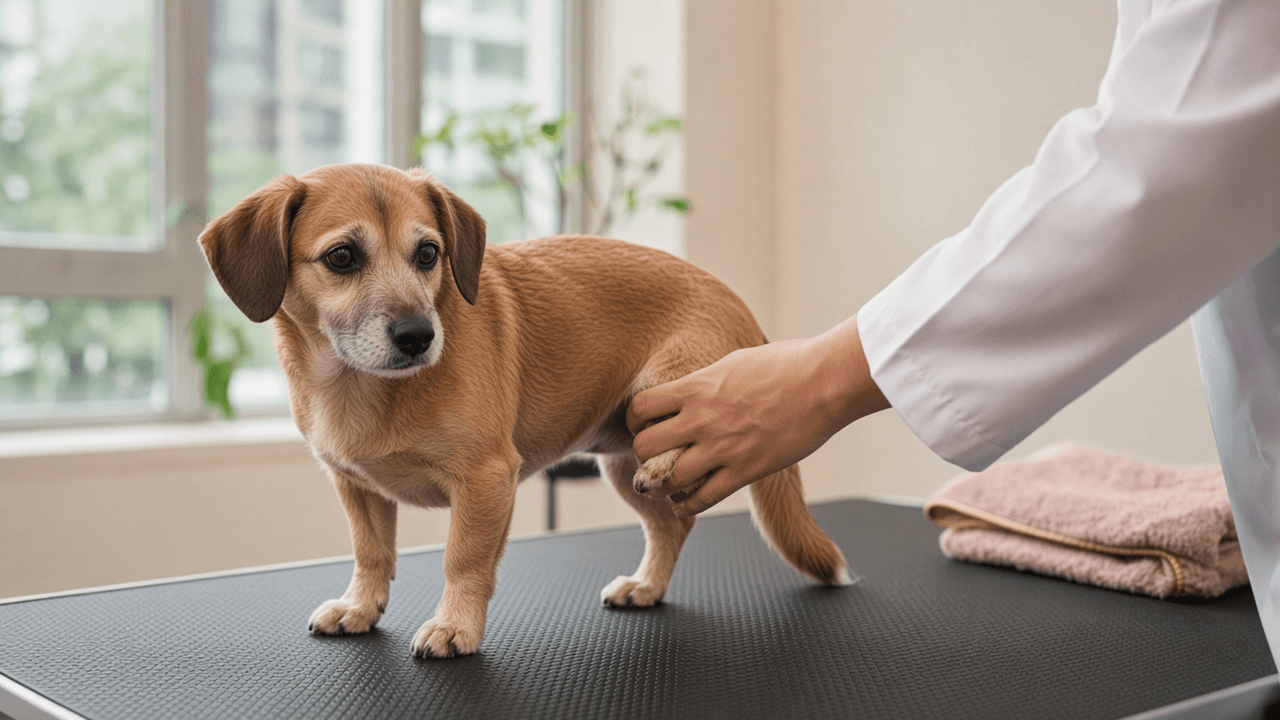
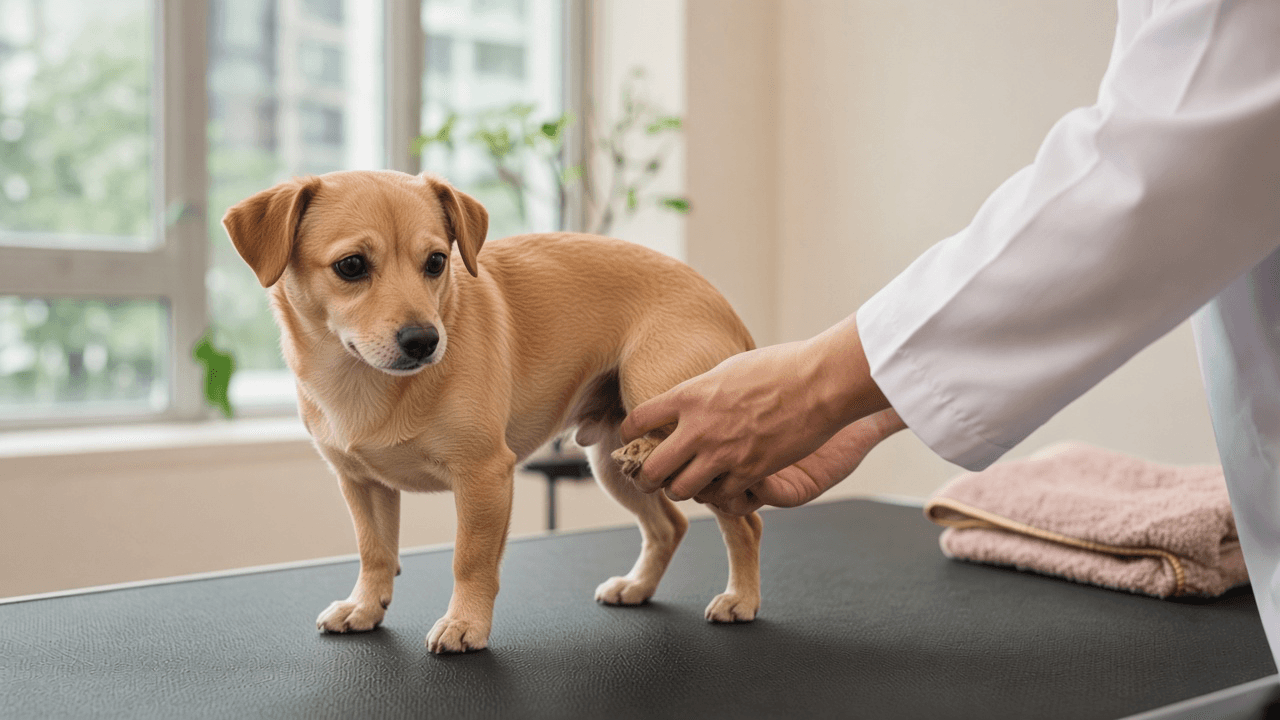
Dog neck pain is easy to misread as a bad mood or a fussy appetite. The dog holds the head forward and low, or refuses to lower it to the bowl and will only eat if you lift the dish. They cry when you touch the collar, when they shake, or when they turn to look at you. Some avoid stairs. Some look guilty because they yelped when a child hugged them. A front paw may limp even though the paw itself is normal, because a nerve leaving the neck is irritated.
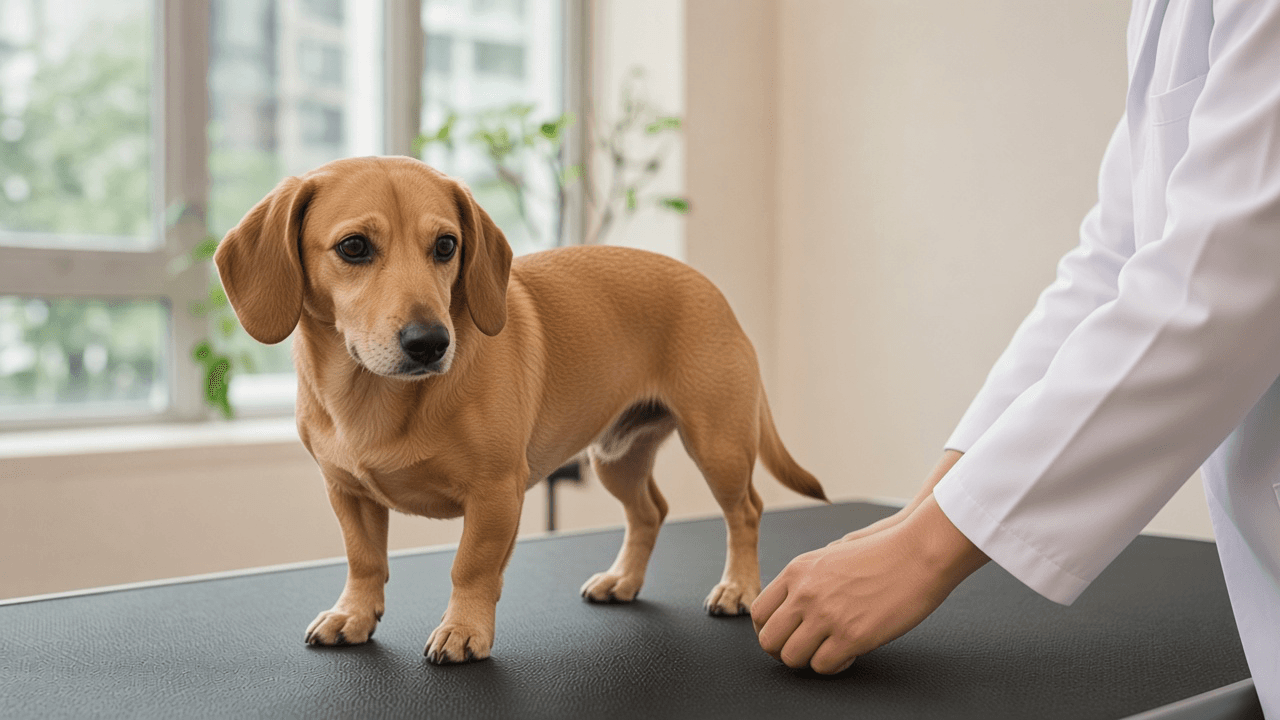
Watch them from a distance before you handle them. A stiff neck often shows when they track you with their eyes instead of turning the head. They may be reluctant to lie down, or they get up like a plank. Film a few seconds if you can do it without calling them towards a treat on the floor. Calling the head down is not a test you need to complete. You already have the information if they will not do it.
When neck pain cannot wait until morning
Neck pain together with weakness is an emergency. Wobbly legs, a paw that knuckles, stumbling, or a dog who cannot stand should be in an emergency clinic now. So should a dog who is screaming when moved, or whose pain is getting worse by the hour. Severe neck pain can progress to paralysis. Waiting to see if they sleep it off is how dogs lose the chance of a simpler recovery. Go even if it is late. Say the words neck and weak legs at reception so triage understands you.
If your dog is in severe pain but still strong, phone an emergency vet and ask whether to come in rather than deciding alone. Shallow breathing, collapse, pale gums or a known trauma such as a fall or a road accident removes the choice. Carry them. Do not use the collar as a handle. A human painkiller is not a bridge to the morning, and if one has already been given, tell the vet what and when. For cats, paracetamol can kill, and there is no home dose that makes it safe.
Discs in the neck
A disc in the cervical spine can press on the cord and on the nerve roots that supply the front legs. Dogs may be exquisitely painful, may hold the neck rigid, and may show a limp that sends everyone looking at the shoulder first. Small breeds and some larger breeds both appear in this group. The cord in the neck has less room for error than owners expect. A dog who is only painful tonight can be weak tomorrow.
Diagnosis is a veterinary neurological examination, with imaging when the findings justify it. Plain X-rays do not clear a disc. Our page on intervertebral disc disease covers the condition in the terms your vet will use, and what IVDD means is the shorter briefing. Follow referral advice quickly if it is offered. Strict rest, if you are sent home, means a crate, not a quieter version of normal life. No tug toys, no shake-offs if you can avoid exciting them, and no collar.
Want a vet to look at how your pet is moving?
A rehabilitation assessment looks at pain, gait and what should happen next. You leave with a plan, whether that is physiotherapy, hydrotherapy or a referral back to your own vet.
Wobbler syndrome and the two-speed walk
Wobbler syndrome, or cervical spondylomyelopathy, is a neck problem seen more in large and giant breeds, though the name gets used loosely. Affected dogs may have a short, stilted front step and a wide, uncoordinated back end, as if the two halves of the body are walking to different plans. Neck pain may be obvious or almost absent. The disease is structural. It will not be fixed by a different collar alone, though a collar can certainly make a sore neck worse.
If that gait description matches your dog, read the clinic notes on wobbler syndrome and ask your vet about a proper work-up rather than another month of joint supplements. Rehabilitation can support strength and safety once the diagnosis and the surgical question have been addressed. It is not a substitute for imaging when the legs are losing their position sense. Slippery tile makes these dogs look worse than they are on grass. Mention the floor when you describe the walk.
Small dogs and a neck you must not bend
Toy breeds can be born with, or develop, instability between the first two vertebrae in the neck. The dog may cry, hold the head strangely, stumble, or suddenly become weak. The dangerous home test is flexing the neck to see where it hurts. Do not do that. Do not let a groomer, a relative or a well-meaning friend do it either. Keep the neck in the position the dog has chosen, support the body, and travel to a vet who can examine them without a struggle.
A history of falling off a sofa, a rough play session or a sudden yelp in a Chihuahua, a Pomeranian or a Yorkshire Terrier should be told in the first sentence of the consult. Among dogs treated at RehabVet, 48 were Chihuahuas and 122 were Pomeranians. Those numbers are clinic volume, not a count of neck injuries, but they are a reminder that tiny dogs are a large part of Singapore practice and their necks are easy to injure with ordinary handling. Lift the chest and the hindquarters together. Never scoop by the head.
Strains, meningitis and pain from somewhere else
A muscle strain at the neck happens, especially after a jerk on a collar, a dog fight, or a frantic shake. The dog is painful and still neurologically normal. Even then, you cannot make that distinction reliably at home, so a vet should examine them before you call it a pulled muscle and book a massage. A collar change to a well fitted harness is sensible only after the vet agrees the neck is stable. Putting a harness on a dog who screams when touched is a job for a clinic, not a hallway.
Fever, a dog who seems systemically ill, or neck pain so severe they barely move can be meningitis or another inflammatory or infectious disease. Those need medical work-up, sometimes spinal fluid analysis, not a rehabilitation session. Polyarthritis can make the neck and several joints ache together. If several legs are sore and the dog is quiet and hot, say that on the phone. Eyes, ears and a tooth root can also make a dog hold the head oddly. A rehabilitation vet will send you back to your primary vet if the pain does not smell like a mechanical neck.
Carrying and travelling without twisting the neck
For a small dog, slide one arm under the chest and the other under the pelvis, and hold them against your body so the spine, including the neck, stays in one line. Do not let the head flop, and do not pin the neck in a tight flex. For a larger dog, two people are safer than one hero. A board or a firm mattress in the car is better than a soft seat that bends the body. Air-conditioning on, short trip, no other dog loose in the vehicle.
At the clinic, ask them not to pull your dog out by the lead. Offer the history while your dog is still supported. If you are coming to RehabVet at 513 Serangoon Road after the emergency team has cleared you, call +65 6291 6881 first so we know a painful neck is arriving. We would rather prepare a quiet room than meet you at a busy pavement. If the emergency team has not cleared the neck, do not come to a rehabilitation clinic as the first stop.
Medicine, rest and what not to try
Only the examining vet should decide on pain relief. Doses from a previous prescription, a neighbour, or a human pharmacy are how dogs end up with stomach ulcers, kidney injury or a masked neurological sign. If your dog is already on a prescribed anti-inflammatory and the neck pain broke through, phone that clinic rather than adding a second drug on top. Stacking painkillers is a common and dangerous improvisation.
Rest means a crate, a raised food bowl so they do not have to reach the floor, and no play that involves shaking or tugging. Walks, if allowed at all, are leash-only toileting on flat ground. Do not use a neck lead. Do not book a vigorous swim to loosen the muscles. Water, excitement and head-shaking are a poor combination for an unstable or acutely painful neck. Supplements will not reduce a disc. Buy nothing marketed as a cervical fix until a clinician has seen the imaging.
Where rehabilitation fits after the neck is diagnosed
Once a neurologist or your vet has said the neck is stable, rehabilitation can work on pain, muscle spasm and the weakness left behind. That might include acupuncture, gentle manual therapy, laser, and a very carefully progressed exercise plan. An underwater treadmill is considered only when head and neck control are safe. Some dogs need a long period of no flexion at all. We follow the surgeon's limits rather than a generic timetable from a blog, including this one.
Pain-led care at the clinic is described on the pet pain relief page. Fees sit on the pricing page so you can ask about them without a surprise. If your dog is comfortable enough for an appointment and a vet has already assessed the emergency signs, you can book an assessment. Bring the neurology notes. A sore neck that still has normal strength deserves a calm, early examination. A sore neck with weak legs deserves the emergency door tonight.