Hyperbaric Oxygen Therapy for Cats
When people hear “rehabilitation” or “oxygen therapy” for pets, they almost always picture a dog. Cats are quietly left out of the conversation — partly because they’re harder to read, and partly because very few clinics offer these therapies for cats at all. That’s a gap, because cats develop many of the same brain, spine, and mobility problems dogs do, and they can respond to the same treatments.
Hyperbaric oxygen therapy (HBOT) is one of those treatments. At our clinic in Singapore we’ve treated cats with HBOT for neurological injuries, spinal problems, and post-surgical recovery — something almost no other local provider does. This guide explains when HBOT can help a cat, what a session is like, and shares real feline cases from our records.
New to HBOT? This page focuses on cats specifically. For the full picture of how hyperbaric oxygen therapy works, what it treats, and what it costs, see our complete guide to HBOT for pets in Singapore.
What is HBOT, and how does it help a cat?
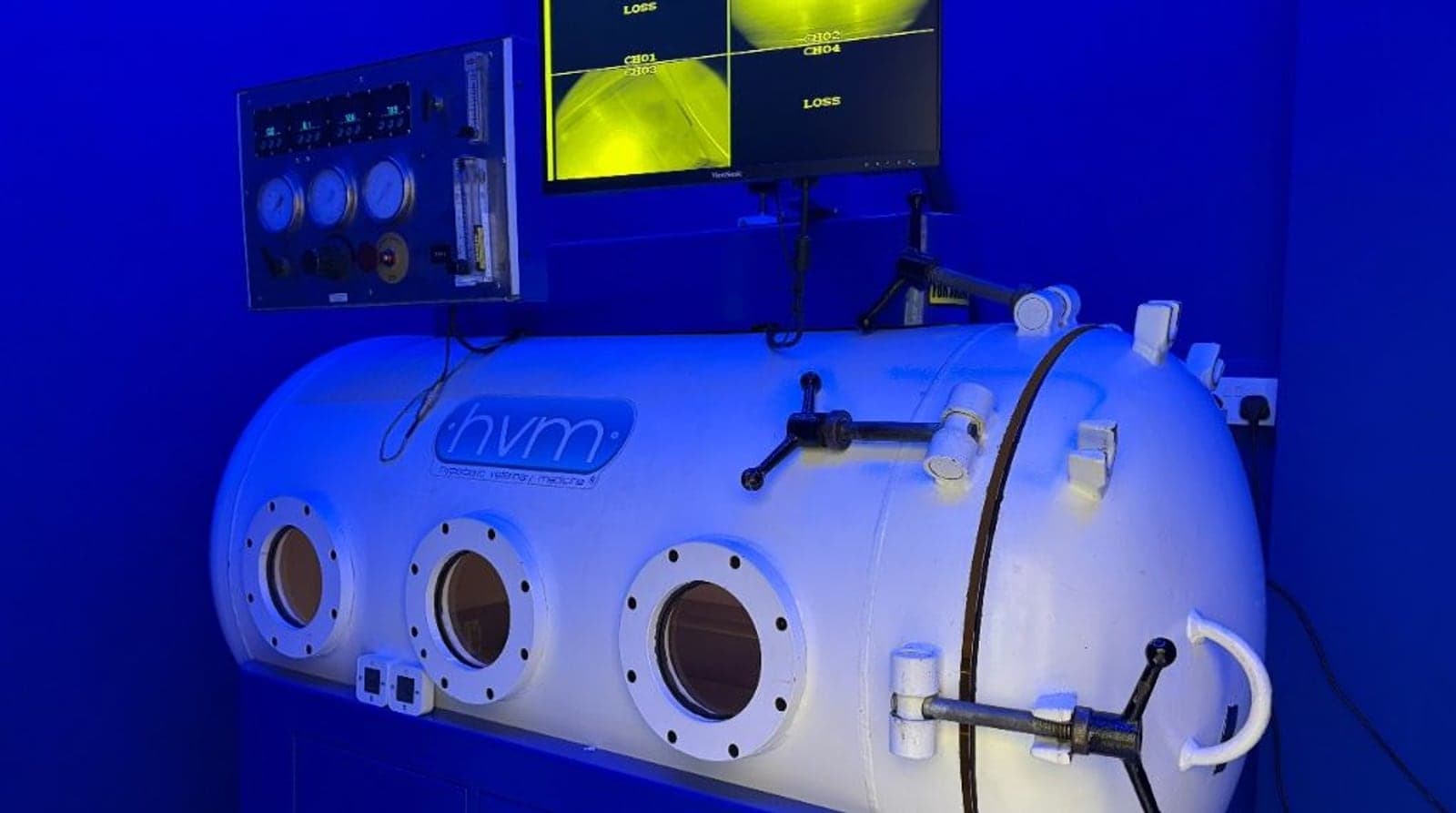
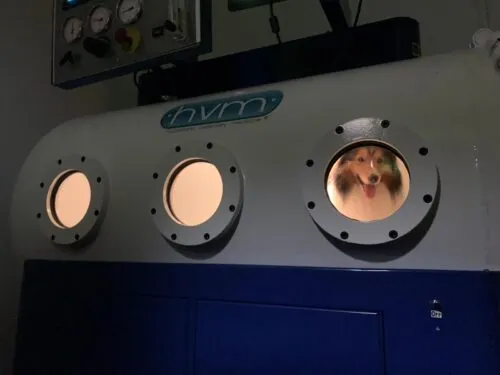
In an HBOT session, your cat rests inside a clear, pressurised chamber breathing a high concentration of oxygen. The raised pressure pushes far more oxygen into the bloodstream than normal breathing can, so it reaches tissue that injury, swelling, or poor circulation has left short of oxygen.
For a cat with an injured brain or spinal cord, that matters because oxygen is what damaged nerve tissue needs to recover, at exactly the time its blood supply is most compromised. The session is non-invasive, needs no sedation, and usually lasts around 30 to 60 minutes — the cat simply rests, monitored throughout.
When HBOT can help a cat
The conditions where HBOT is most useful in cats mirror those in dogs — weighted toward the neurological and the spinal:
| Problem | What it can look like in a cat |
|---|---|
| Brain injury / neurological | Cerebral hypoxia (oxygen deprivation to the brain), head trauma, circling, head tilt, seizures, or delayed reflexes. |
| Spinal / mobility | Disc disease, spinal injury, a cat that’s suddenly wobbly, dragging the back legs, or unable to jump. |
| Post-surgery recovery | Supporting healing after spinal or orthopaedic surgery. |
| Wounds & tissue healing | Non-healing wounds or difficult post-surgical sites. |
| Quality-of-life support | As gentle, supportive care in some serious or palliative conditions. |
Cats hide illness well, so the signs can be subtle: less jumping, hesitation on stairs, a changed gait, or simply “slowing down.” If something seems off neurologically or with your cat’s movement, it’s always worth a vet assessment first to find the cause.
Real feline cases from our clinic
These are real cats we’ve treated. We’ve included a range — including a long-term palliative case — to give an honest picture of what HBOT can and can’t do.
COOKIE — 14 years old — living well with a brain tumour
COOKIE, diagnosed with an MRI-confirmed brain tumour, has had more HBOT sessions than any patient in our clinic — dog or cat. One month into treatment she was “walking better,” and over time her head tilt eased. Here HBOT has been about comfort and quality of life, not a cure — and she has lived well far beyond what her diagnosis would typically predict. An honest example of supportive, palliative use.
Tiger — stray kitten, 1 year old — cerebral hypoxia
Tiger, a young stray, came in with cerebral hypoxia — oxygen deprivation to the brain. This is the condition where HBOT’s mechanism is most direct: restoring oxygen to oxygen-starved brain tissue. After a course of sessions, the clinical notes were updated to record improvement — a hopeful outcome for a kitten with a frightening diagnosis.
Louis — British Shorthair, 1 year old — lumbosacral injury
Louis, a young British Shorthair, had a lumbosacral spinal injury leaving him with an unsteady, ataxic gait. He was treated with HBOT as part of a rehabilitation plan for his spine and mobility — an example of HBOT used for a younger cat’s spinal recovery, not only senior or palliative cases.
SIMBA & MAYA — spinal and post-surgical cats
Others round out the picture: SIMBA, a Siberian Forest cat with spinal disc disease and hip dysplasia, and MAYA, a senior Exotic Short Hair recovering with a history of spinal surgery. Together they show that feline spinal and post-surgical cases are a real, recurring part of who HBOT serves — not a one-off.
Honest expectations. HBOT is a supportive therapy, not a cure. In cats it helps most as part of a wider plan, results vary by condition and individual, and some cases use it for comfort rather than recovery. We’ll always give you a realistic picture for your cat before you commit.
What a session is like for a cat
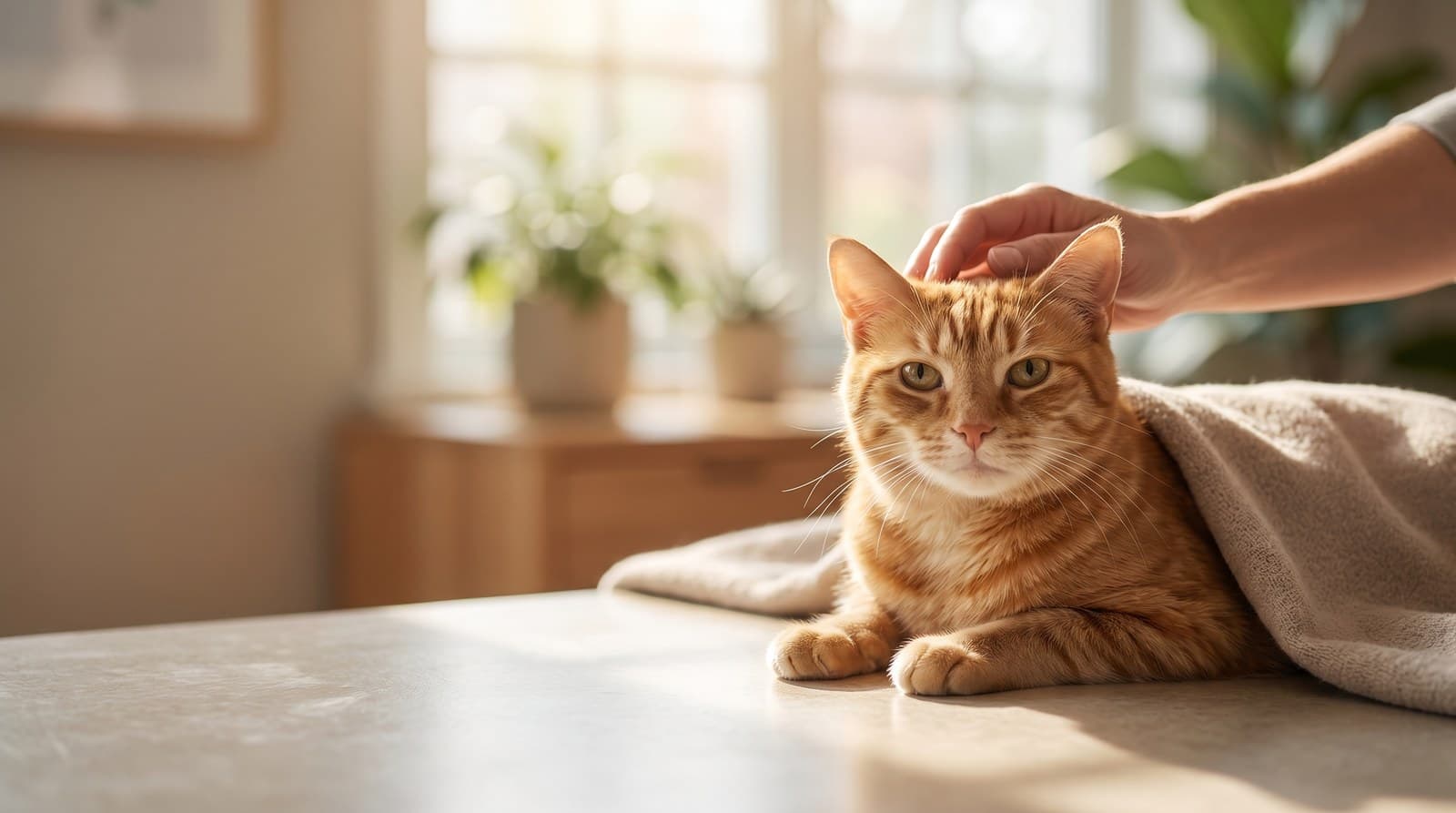
Cats are sensitive to stress, so a calm experience matters. In the chamber your cat rests on a soft blanket in a quiet, controlled space while the pressure and oxygen are gently adjusted. There are no needles and no sedation, and the team monitors the whole session. Most cats settle quickly once they realise nothing alarming is happening — many simply curl up and rest.
Frequently asked questions
Think HBOT might help your cat? Start with an assessment
If your cat has a neurological, spinal, or mobility problem, the first step is a proper assessment to find the cause and see whether HBOT fits — before you commit to a program.
Montalbano C, Kiorpes C, Elam L, Miscioscia E, Shmalberg J. Common Uses and Adverse Effects of Hyperbaric Oxygen Therapy in a Cohort of Small Animal Patients: A Retrospective Analysis of 2,792 Treatment Sessions. Front. Vet. Sci. 2021;8:764002. doi:10.3389/fvets.2021.764002