
Myasthenia Gravis
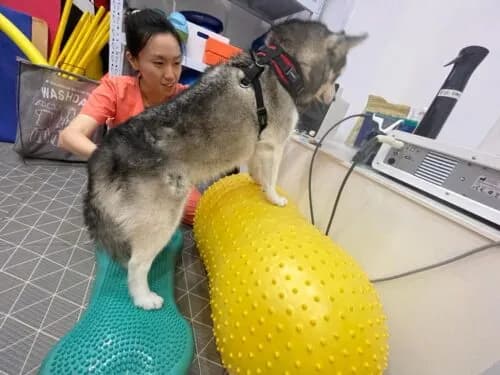
This page is for educational purposes only and is not a substitute for veterinary diagnosis or emergency care. Always consult your primary veterinarian or a rehabilitation veterinarian before starting treatment. If your pet cannot walk, has sudden paralysis, severe pain, or breathing difficulty, seek urgent veterinary attention.
What is Myasthenia Gravis?
Also known as: MG; acquired myasthenia gravis; congenital myasthenia gravis.
In acquired myasthenia gravis, antibodies interfere with acetylcholine receptors at the neuromuscular junction, producing fatigable skeletal muscle weakness. Focal forms may mainly affect the oesophagus, facial muscles, or larynx; generalised forms cause limb weakness that worsens with activity and improves with rest. Congenital forms exist in some breeds and present earlier.
Megaoesophagus and aspiration pneumonia are critical complications. Diagnosis may involve acetylcholine receptor antibody testing, response to short-acting anticholinesterase challenges under veterinary supervision, and imaging for thymoma in acquired cases.
Medical immunotherapy and anticholinesterase drugs are the mainstay. Rehabilitation must be cautious: overexertion worsens weakness. Gentle, well-timed physiotherapy supports residual strength, respiratory hygiene strategies as advised by the vet, and safe mobility without triggering collapse.
What are the signs of Myasthenia Gravis?
Signs vary by severity and by whether your pet is a dog or cat. Owners of dogs and cats often notice:
- Exercise-induced weakness that improves after rest
- Bunny-hopping, collapse of the pelvic limbs, or stiff short strides when fatigued
- Facial weakness, drooling, or reduced blink in focal forms
- Regurgitation, weight loss, or cough suggesting megaoesophagus/aspiration
- Voice change or difficulty holding the head up in some patients
- In cats: often generalised weakness; may present differently than classic canine patterns
What causes Myasthenia Gravis?
- Autoimmune attack on neuromuscular junction receptors (acquired MG)
- Association with thymoma or other autoimmune disease in some dogs
- Congenital receptor or junction defects in predisposed breeds
- Drug-induced or transient forms in specific clinical contexts (vet-identified)
How can veterinary rehabilitation help with Myasthenia Gravis?
Rehab dosing is conservative: short sessions, frequent rests, and avoidance of exhaustive exercise. Therapists monitor for fatigue and aspiration risk cues.
Range-of-motion and gentle strengthening maintain joint health during periods of reduced activity. Positioning advice may support feeding plans set by the veterinarian for megaoesophagus.
As medical control improves, activity is gradually expanded. Hydrotherapy is used only when aspiration risk and fatigue are acceptably managed.
Rehabilitation plans at RehabVet are individualised after a veterinary assessment. We coordinate with your primary vet when imaging, medication, or surgery is part of the overall plan.
Which therapies may be used for Myasthenia Gravis?
Depending on your pet’s examination findings, comfort, and goals, a plan may include one or more of the following:
What are the rehabilitation goals for Myasthenia Gravis?
Goals are set for the individual patient. Typical aims may include (not guarantees — outcomes vary):
- Support muscle function without inducing myasthenic fatigue
- Maintain joint mobility and reduce stiffness from inactivity
- Coordinate with medical therapy for safer daily activity
- Educate owners on recognising fatigue and aspiration warning signs
- Gradual return to appropriate exercise once disease is controlled
We do not publish invented success percentages. Progress is tracked clinically (gait, strength, range of motion, pain behaviours, and home function) and plans are adjusted over time.
When should you seek veterinary care for Myasthenia Gravis?
- Sudden weakness, collapse, or difficulty breathing — emergency
- Regurgitation with fever, cough, or lethargy (possible aspiration pneumonia)
- Inability to lift the head or swallow effectively
- Any suspected fatigable weakness — veterinary neuromuscular work-up before gym-style exercise
No. MG is a medical neuromuscular disease. Rehab is adjunctive and must be fatigue-aware. Immunosuppressive and anticholinesterase therapies are directed by your veterinarian.
Megaoesophagus leads to aspiration pneumonia, a leading cause of serious illness in canine MG. Feeding protocols (elevated feeding, consistency changes) are veterinary-prescribed; rehab does not replace them.
Only if specifically cleared. Swimming can fatigue respiratory and limb muscles quickly and may be unsafe if aspiration risk is high. Individual assessment is mandatory.
Related reading & patient stories
Book a rehabilitation assessment
If your pet has been diagnosed with Myasthenia gravis, or you are noticing mobility changes, our team can assess and design a multimodal rehab plan.
Educational content only — not a diagnosis. For emergencies, contact your nearest veterinary hospital.
Related Conditions
- ConditionBrachial Plexus InjuryBrachial plexus injury involves trauma to the nerve network supplying the forelimb, causing weakness, paralysis, knuckling, or sensory loss in dogs and cats.Learn more
- ConditionDegenerative MyelopathyDegenerative myelopathy (DM) is a progressive neurodegenerative disease of the spinal cord in dogs, typically starting with hind-limb ataxia and weakness and advancing over months.Learn more
- ConditionPeripheral NeuropathyPeripheral neuropathy describes disease of the peripheral nerves, leading to weakness, reduced reflexes, sensory changes, knuckling, or voice/swallowing changes depending on the nerves involved.Learn more