
Peripheral Neuropathy
This page is for educational purposes only and is not a substitute for veterinary diagnosis or emergency care. Always consult your primary veterinarian or a rehabilitation veterinarian before starting treatment. If your pet cannot walk, has sudden paralysis, severe pain, or breathing difficulty, seek urgent veterinary attention.
What is Peripheral Neuropathy?
Also known as: polyneuropathy; peripheral nerve disease; lower motor neuron disease (when LMN signs predominate).
Peripheral neuropathies affect nerves after they leave the spinal cord — single nerves (mononeuropathy) or many (polyneuropathy). Causes include metabolic disease (such as diabetes mellitus), immune-mediated inflammation, toxins, infections, inherited breed-related neuropathies, cancer-related (paraneoplastic) disease, and idiopathic forms.
Clinical pictures vary: plantigrade stance in diabetic cats, generalised weakness with reduced reflexes, laryngeal or facial involvement in specific syndromes, or distal knuckling in sensory-motor neuropathies. Diagnosis is veterinary — bloodwork, infectious testing, electrodiagnostics, and nerve/muscle biopsy may be needed.
Rehabilitation cannot replace treatment of the underlying cause, but it helps maintain muscle, prevent contractures, improve proprioception, and keep pets safely mobile while medical therapy proceeds.
What are the signs of Peripheral Neuropathy?
Signs vary by severity and by whether your pet is a dog or cat. Owners of dogs and cats often notice:
- Generalised or limb-specific weakness; exercise intolerance
- Reduced or absent reflexes; floppy (lower motor neuron) tone
- Muscle atrophy, especially distal limbs
- Knuckling, scuffing, or plantigrade/palmigrade stance
- Voice change, gagging, or regurgitation when cranial nerves or autonomic fibres involved
- Sensory changes: numbness or apparent tingling leading to licking/chewing
What causes Peripheral Neuropathy?
- Metabolic: diabetes mellitus and other endocrine disorders
- Immune-mediated or inflammatory neuropathies
- Toxic, nutritional, or drug-related nerve injury
- Infectious and neoplastic/paraneoplastic disease
- Inherited or breed-associated neuropathies
- Idiopathic neuropathy when a specific cause is not identified
How can veterinary rehabilitation help with Peripheral Neuropathy?
After medical work-up begins, rehab supports functional strength with low-fatigue exercise dosing, balance work, and gait retraining. Care is taken not to overexert weak muscles.
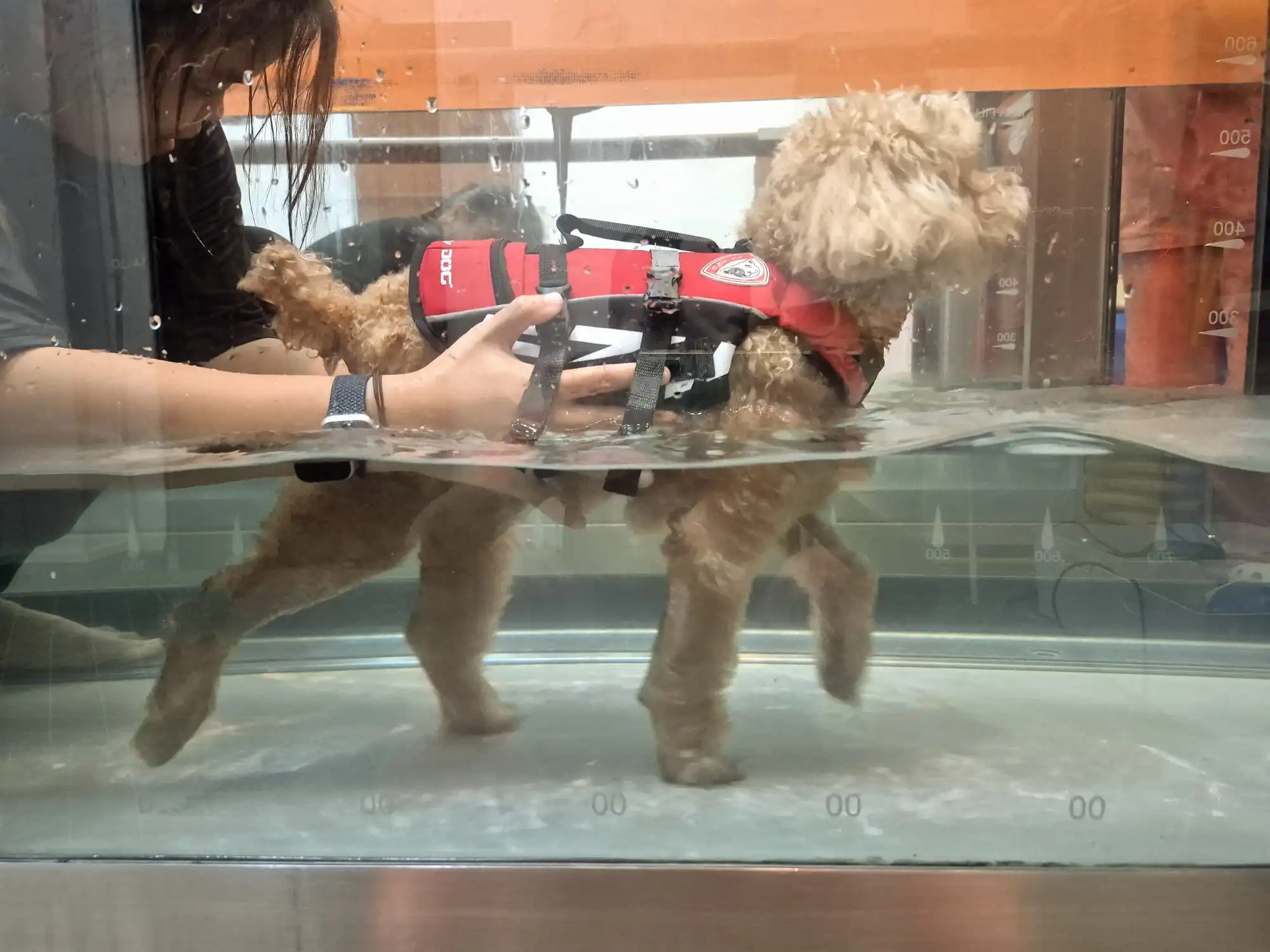
Hydrotherapy may allow movement with support when land exercise is exhausting. Boots and harnesses reduce injury from knuckling. Manual therapy and range-of-motion work limit contracture.
Owner education covers home safety, monitoring for aspiration risk when swallowing is affected, and coordinating with the primary vet’s medical plan.
Rehabilitation plans at RehabVet are individualised after a veterinary assessment. We coordinate with your primary vet when imaging, medication, or surgery is part of the overall plan.
Which therapies may be used for Peripheral Neuropathy?
Depending on your pet’s examination findings, comfort, and goals, a plan may include one or more of the following:
What are the rehabilitation goals for Peripheral Neuropathy?
Goals are set for the individual patient. Typical aims may include (not guarantees — outcomes vary):
- Preserve muscle mass and joint mobility
- Improve safe mobility and reduce fall or abrasion injury
- Support endurance without inducing collapse or overfatigue
- Address secondary orthopaedic strain from abnormal gait
- Coordinate rehab with medical management of the underlying cause
We do not publish invented success percentages. Progress is tracked clinically (gait, strength, range of motion, pain behaviours, and home function) and plans are adjusted over time.
When should you seek veterinary care for Peripheral Neuropathy?
- Progressive weakness, collapse, or inability to rise
- Breathing difficulty, severe gagging, or cyanosis — emergency
- Rapid muscle wasting or knuckling in a diabetic pet
- Any new neurological weakness — veterinary assessment before starting exercise programmes
No. Spinal cord disease is a central nervous system problem. Peripheral neuropathy affects nerves outside the cord. Exam findings (reflexes, tone, distribution) help vets localise the lesion — localisation drives testing and treatment.
Only specific nutritional deficiencies are treated with targeted supplementation under veterinary direction. Random supplements are not a cure for most neuropathies. Treat the diagnosed cause first.
Weak nerves and muscles fatigue easily; uncontrolled long walks can worsen function. Rehab doses exercise, adds proprioceptive and strengthening tasks, and protects skin and joints while medical therapy works.
Related reading & patient stories
Book a rehabilitation assessment
If your pet has been diagnosed with Peripheral neuropathy, or you are noticing mobility changes, our team can assess and design a multimodal rehab plan.
Educational content only — not a diagnosis. For emergencies, contact your nearest veterinary hospital.
Related Conditions
- ConditionDegenerative MyelopathyDegenerative myelopathy (DM) is a progressive neurodegenerative disease of the spinal cord in dogs, typically starting with hind-limb ataxia and weakness and advancing over months.Learn more
- ConditionBrachial Plexus InjuryBrachial plexus injury involves trauma to the nerve network supplying the forelimb, causing weakness, paralysis, knuckling, or sensory loss in dogs and cats.Learn more
- ConditionCerebrovascular Accident (Stroke)A cerebrovascular accident (stroke) is an abrupt interruption of brain blood flow — ischaemic or haemorrhagic — causing sudden neurological deficits in dogs and cats.Learn more