
Panosteitis
This page is for educational purposes only and is not a substitute for veterinary diagnosis or emergency care. Always consult your primary veterinarian or a rehabilitation veterinarian before starting treatment. If your pet cannot walk, has sudden paralysis, severe pain, or breathing difficulty, seek urgent veterinary attention.
What is Panosteitis?
Also known as: pano; growing pains; eosinophilic panosteitis; enostosis.
Panosteitis affects the medullary cavity of long bones (commonly humerus, radius, ulna, femur, tibia) in immature dogs — classically large and giant breeds, with German Shepherd Dogs frequently discussed. Lameness may shift from leg to leg over days to weeks as different bones become painful.
Cause is incompletely understood; genetics, rapid growth, and dietary factors have been proposed. Radiographs may show increased medullary opacity in affected bones, though early disease can be radiographically quiet. Diagnosis is veterinary, ruling out OCD, dysplasia, and infection.
The condition is typically self-limiting as the dog matures, but pain can be significant. Care focuses on analgesia, rest during flares, and supportive rehabilitation to maintain gentle mobility and muscle without aggressive loading. We do not promise timelines — individual courses vary.
What are the signs of Panosteitis?
Signs vary by severity and by whether your pet is a dog or cat. Owners of dogs often notice:
- Shifting leg lameness in a growing puppy or adolescent dog
- Pain on deep palpation of long-bone diaphyses
- Reluctance to play or exercise during flares
- Possible low-grade fever or lethargy in some dogs
- Normal or near-normal joints on exam (pain is often “in the bone”)
What causes Panosteitis?
- Idiopathic medullary inflammation of growing long bones
- Breed and genetic predisposition (large/giant breeds)
- Rapid growth period vulnerability
- Possible nutritional influences (discussed in literature; follow vet dietary advice)
How can veterinary rehabilitation help with Panosteitis?
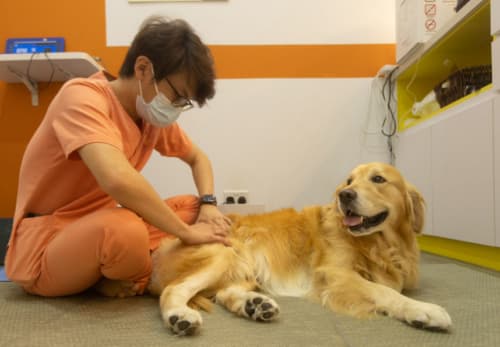
During painful flares, rehab is gentle: comfort measures, maintaining joint range, and preventing secondary stiffness without forcing exercise.
Between flares, light conditioning and core work help maintain muscle as growth continues. Owners learn how to recognise flares and adjust walks.
Rehab does not shorten the biological course of panosteitis, but it supports comfort and function while veterinary pain control is optimised.
Rehabilitation plans at RehabVet are individualised after a veterinary assessment. We coordinate with your primary vet when imaging, medication, or surgery is part of the overall plan.
Which therapies may be used for Panosteitis?
Depending on your pet’s examination findings, comfort, and goals, a plan may include one or more of the following:
What are the rehabilitation goals for Panosteitis?
Goals are set for the individual patient. Typical aims may include (not guarantees — outcomes vary):
- Support comfort during painful episodes
- Maintain joint mobility and basic muscle tone
- Guide appropriate activity restriction and pacing
- Watch for concurrent developmental orthopaedic disease
- Support return to normal play as flares resolve
We do not publish invented success percentages. Progress is tracked clinically (gait, strength, range of motion, pain behaviours, and home function) and plans are adjusted over time.
When should you seek veterinary care for Panosteitis?
- Any persistent or severe limp in a growing dog — veterinary diagnosis first
- Non-weight-bearing lameness, fever, or rapid deterioration
- Lameness that does not shift or improve — may not be panosteitis
- Pain poorly controlled with current medication
Panosteitis is generally considered self-limiting without lasting structural deformity of the kind seen in some other developmental diseases. Pain management and ruling out other conditions remain important.
High-impact training during flares is unwise. Follow your vet’s rest guidance and use rehab advice for gentle maintenance — resume intensity only when comfortable.
No. Hypertrophic osteodystrophy affects the metaphyses and often makes puppies systemically ill. Panosteitis centres on the medullary cavity of long bones. Your vet differentiates them.
Related reading & patient stories
Book a rehabilitation assessment
If your pet has been diagnosed with Panosteitis, or you are noticing mobility changes, our team can assess and design a multimodal rehab plan.
Educational content only — not a diagnosis. For emergencies, contact your nearest veterinary hospital.
Related Conditions
- ConditionCarpal Hyperextension InjuryCarpal hyperextension injury damages the palmar support of the canine wrist, leading to a dropped or collapsed carpus, pain, and altered forelimb mechanics.Learn more
- ConditionElbow Osteochondritis Dissecans (OCD)Elbow OCD involves a cartilage flap on the medial humeral condyle and is one component of the canine elbow dysplasia complex, mainly in young large-breed dogs.Learn more
- ConditionFragmented Medial Coronoid Process (FMCP)Fragmented medial coronoid process (FMCP) is a common form of canine elbow dysplasia in which a portion of the medial coronoid process of the ulna fissures or separates, causing elbow pain and osteoarthritis risk.Learn more