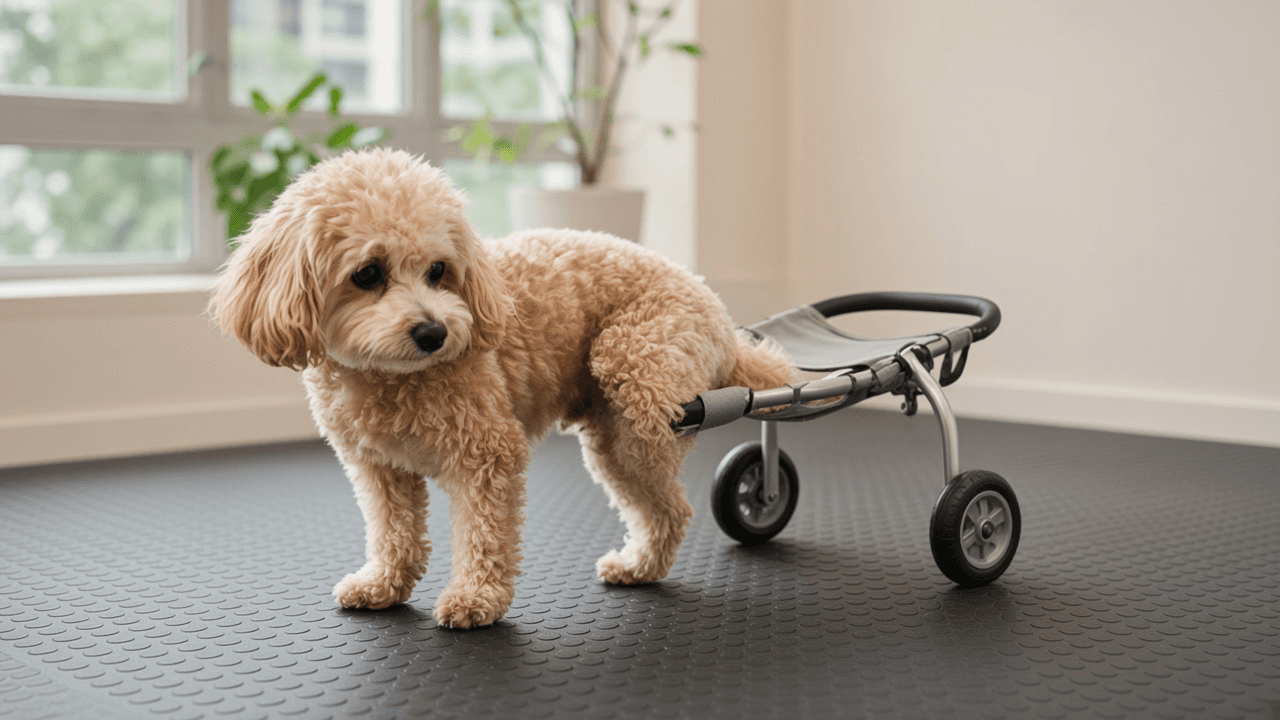
Dog Dementia: Signs, Stages and How to Help at Home

What people mean by dementia in a dog
Dog dementia is the everyday name for canine cognitive dysfunction, a change in the brain of an older dog that affects memory, sleep, learning and the sense of where they are. It is not ordinary slowing down, and it is not naughtiness. Owners describe a dog who stands in a corner, gets stuck behind the sofa, paces at night, or seems to forget the household rules they have kept for a decade. The change is usually gradual, which is why it gets blamed on hearing loss for a long time.
It is also a diagnosis of exclusion. Pain, vision loss, hearing loss, a brain tumour, vestibular disease, kidney disease, high blood pressure and the side effects of medicines can look similar. Your own vet should examine the dog before anyone settles on a brain-ageing label. If the confusion appeared over hours, if they cannot walk, if they are having seizures, or if they might have been given a human medicine, that is an emergency vet, not a watch-and-wait senior problem.
Signs that deserve a proper look
Disorientation is the sign that frightens people most. The dog goes to the hinge side of the door, stares at walls, or cannot find you in a familiar room. Social habits change. Some become clingy and anxious. Some withdraw or growl when they are touched in a way that used to be fine, which can also be pain. Sleep reverses. They sleep all day and pace, pant and vocalise at night. House training slips. Activity changes. They wander without settling, or they stop asking for the walks they used to insist on.
Use a fortnight of notes rather than one bad night. Write the time they woke, whether they seemed in pain getting up, whether the panting happened in a cool room, and whether they recognised you. A single disrupted night after a thunderstorm is not dementia. A month of night pacing, with getting stuck in corners, is a pattern. Film the pacing if you can do it without startling them. The video helps the vet see what you are living with at 3 am, which is rarely on display at 11 am in a clinic.
Stages, described as life at home
Early on, the mistakes are occasional. They are slower to learn a small change, such as a new route to the lift, and they have a few unsettled nights. You can still interrupt the pacing and get them back to bed. In the middle, the night waking is regular, house soiling is no longer rare, and they sometimes do not seem to recognise a familiar person until you speak. They may get stuck and need to be guided out. Anxiety is more obvious. Walks still happen, but the dog is less able to cope with a crowded estate corridor.
Later, sleep is badly fragmented, they may vocalise without a clear trigger, and they need help with toileting, direction and sometimes eating if they walk away from a full bowl. Some dogs still have good afternoons. The stage is not a moral grade, and dogs do not move through it on a timetable you can look up. What matters is whether pain, fear and sleeplessness are being addressed, and whether you can still keep them safe. A dog who is lost, panicked and unable to settle despite treatment needs a frank conversation with the vet about quality of life, not another supplement.
Want a vet to look at how your pet is moving?
A rehabilitation assessment looks at pain, gait and what should happen next. You leave with a plan, whether that is physiotherapy, hydrotherapy or a referral back to your own vet.
Rule out pain and a spinning sense of balance
A sore dog paces at night. Arthritis, a sore spine and dental pain are common in the same age group as cognitive dysfunction, and they are more treatable than the brain change. If your dog is stiff, reluctant to jump, or yelps when lifted, start with pain. Our page on senior mobility decline is the mobility side of that work-up. Treating pain often shrinks the night pacing even when some cognitive change remains. Calling all of it dementia and doing nothing about the joints leaves a treatable misery in place.
A sudden head tilt, rapid eye flickering, falling to one side or vomiting is more suggestive of vestibular disease than of dementia, especially if it appeared today. That can be an emergency when the dog cannot stand. The slower, persistent balance problems of older dogs are discussed on our page about geriatric vestibular compensation. Circling can belong to either problem, or to a forebrain disease that needs a neurologist. Do not decide which one you are seeing from a group chat. Sudden collapse, seizures or neck pain with weakness go to an emergency vet the same day.
What helps at home, starting tonight
Keep the flat predictable. Do not rearrange furniture. Leave a light on for night toileting so they are not navigating in the dark with poor eyesight. Use non-slip runners where they turn. Take them out to toilet on a schedule rather than waiting for them to ask, because asking is one of the skills that fades. Keep walks short, familiar and earlier in the evening so the night is less charged. A crowded dog run is often too much information for a confused dog.
Block hazards: balconies, stairs, a pool, a corner behind the sofa where they get jammed. An identity tag with your phone number matters if they slip a door. Speak before you touch them so they are not startled. Keep commands short and stop retraining elaborate tricks. A food toy that they can manage lying down is better than a puzzle that frustrates them. If they are awake all night, increase calm daytime light and a gentle daytime routine rather than a long evening play session that leaves them overtired and more confused.
Medical care, without a miracle claim
Your vet may suggest blood and urine tests, a blood pressure check, and a look at the eyes, ears, mouth and joints before calling this cognitive dysfunction. Some dogs are treated with prescription diets or medicines aimed at brain ageing. Those choices are individual, and this page will not print a dose or promise a reversal. A dog who improves a little on a better pain plan and a predictable routine has still improved. Judge sleep, anxiety and the ability to settle, and give any new plan a few weeks unless side effects appear sooner.
Tell the vet about every supplement you have already started. Do not add human sedatives, melatonin experiments or cannabis products. Cannabis products are illegal in Singapore, and this article will not explain how to get them. If pain is part of the picture, the prescribing vet manages that drug. If a human painkiller has been given, go to an emergency vet. Paracetamol can kill a cat in the same home. There is no safe owner-chosen dose.
Where rehabilitation and other clinic tools fit
Rehabilitation does not cure dementia. It does help the sore, weak, unsteady body that often travels with it, which changes how confused the nights feel. A dog who can turn on non-slip flooring and whose hips hurt less is easier to guide to the door. Physiotherapy, acupuncture and a realistic walk plan are ordinary parts of that. We do not use hyperbaric oxygen as a treatment for dementia itself. If an older dog also has a wound, a painful joint problem or a separate neurological injury, the team may discuss whether hyperbaric oxygen belongs in that other plan. It is not a cognitive therapy we sell as a fix.
Senior mobility work is described on the page linked above, and broader senior rehabilitation is on rehabilitation for senior pets. Fees are on the pricing page. You can book an assessment at 513 Serangoon Road when the question is movement, pain and how to handle the body safely. Call +65 6291 6881 if you need to ask whether the dog is too distressed to travel today. If they are seizing, collapsed or suddenly unable to stand, go to emergency care instead.
Living with it, and knowing when the nights are too much
Households cope better when the care is shared and the goal is specific. A fair goal is a dog who can settle for a stretch of the night, who is not in obvious pain, and who still recognises comfort. An unfair goal is the dog they were at seven. Keep the diary. It stops a slow slide from being invisible, and it stops one terrible night from deciding everything. Ask the vet what they would consider a successful month on the current plan.
If the dog is anxious most of the time, cannot be kept safe, or no longer has stretches of contentment, say that out loud at the next visit. Quality of life is a clinical conversation, not a failure of love. Mobility support and pain control are worth doing while good afternoons still exist. They are not a reason to prolong distress that treatment is not touching. Bring the night notes. They are the clearest picture of the disease as your dog is living it, which is the only version that matters.