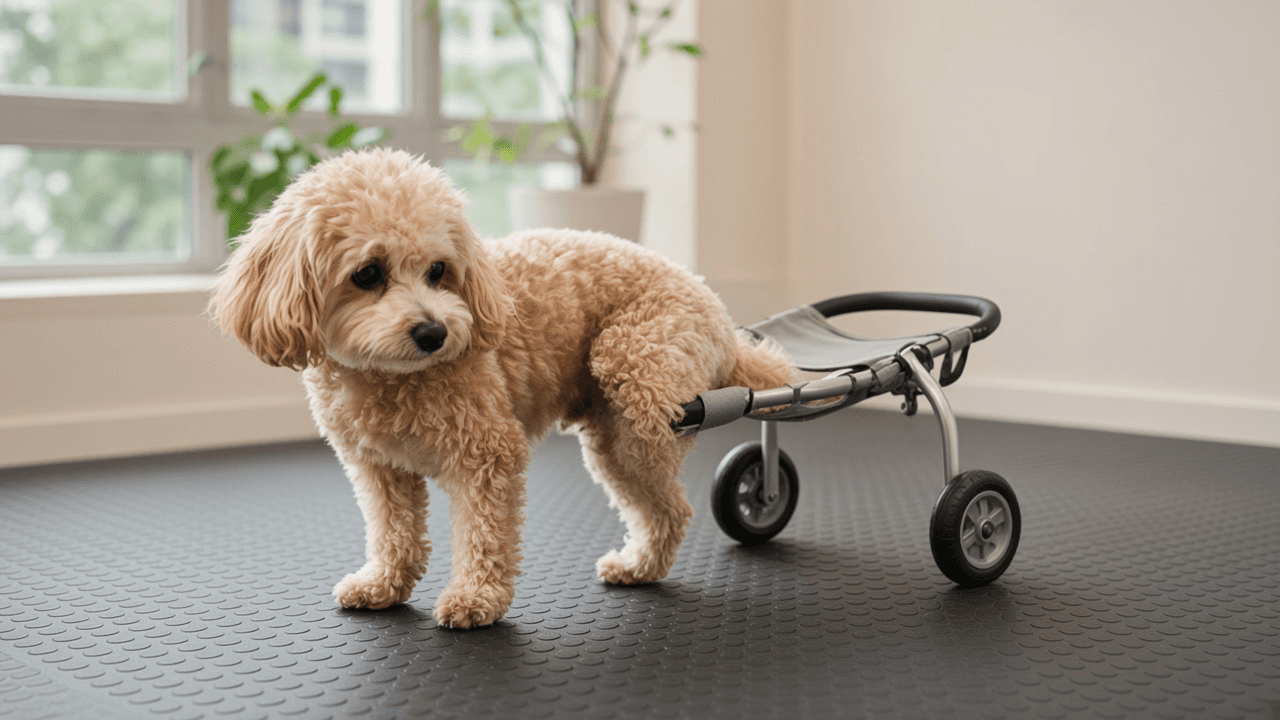
Crate Rest for Dogs: How to Keep Your Dog Calm for 6 to 8 Weeks
Rest is the treatment, not the waiting room
Crate rest for dogs is the unglamorous half of many disc and post-surgical plans. It means a dog who would normally patrol the flat stays in a crate or a small pen, except for a carried or strictly leashed toilet trip. Many of those plans run about six to eight weeks. Some are shorter, some are longer, and the vet who examined your dog is the one who sets the clock. A weekend of being good does not graduate them early.
The point is to stop jumping, twisting, shaking and the little trots that flex a healing disc or a surgical site. A quiet life on the sofa is not rest. A dog who is allowed on the bed because they look sad is not on rest. If you have been sent home with this instruction after a disc problem, read it next to recovery without surgery and then follow the stricter of the two if your vet has been specific. The article is the background. The discharge note is the rule.
Set the crate up so rest is physically possible
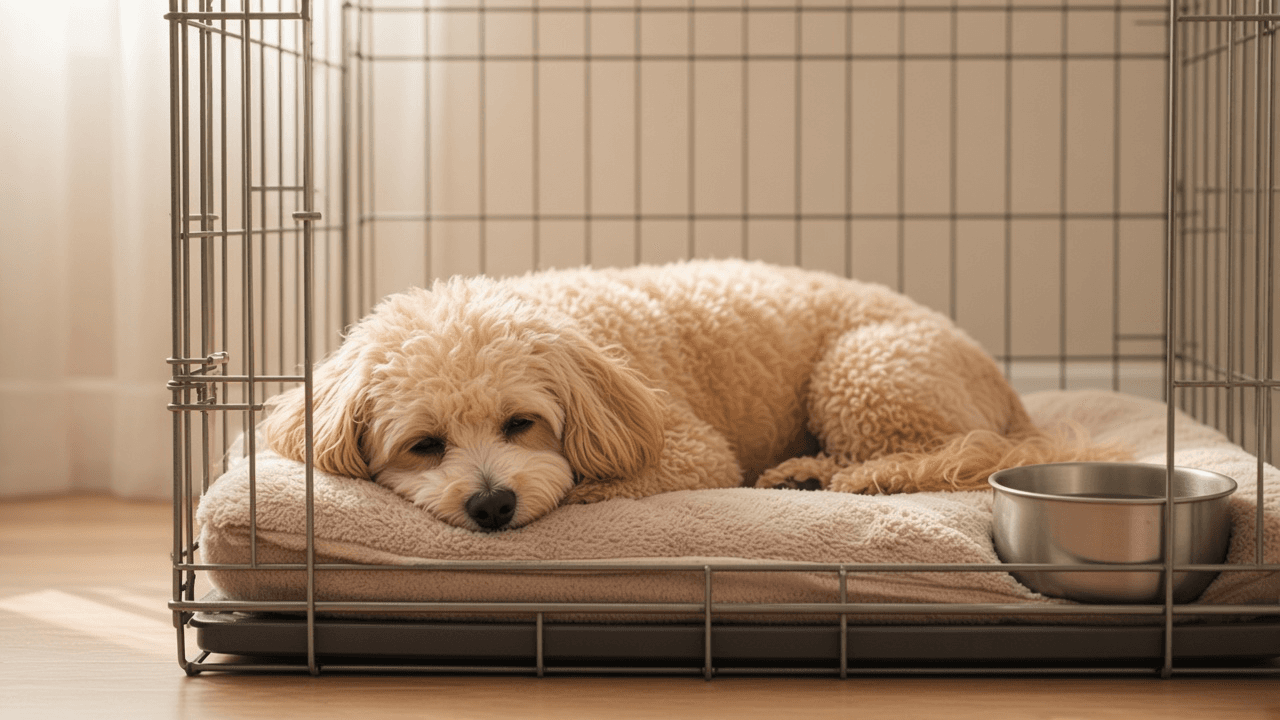
The crate should be large enough for the dog to stand, turn and lie fully stretched, and small enough that they cannot pace or take a run-up. A pen with a crate-sized sleeping area can work if the rest of the pen contains nothing to jump on. Put it where family life is visible enough that they do not panic, and quiet enough that every doorbell is not a rocket launch. Blackout the exciting side with a cover if they bark and spin when people pass. Some dogs settle better when they can see you. Try one arrangement for a day before you redesign the flat.
Bedding should be flat and easy to clean. A deep, slippery nest makes them scrabble. Water should be reachable without them bracing on the bars. Food toys that can be eaten while lying down are useful. A toy that makes them thrash is not. Remove collars that can catch, or use a breakaway if the vet agrees. Temperature matters in Singapore. A covered crate in a shut room at midday can overheat a panting dog. Ventilation is part of nursing. If they are distressed and hot, phone the vet rather than deciding the rest period is over.
Toileting, the part that breaks most plans
Carry a small dog out. Leash a dog who is allowed to walk, and keep the leash short. Go to the nearest appropriate spot, let them toilet, and come straight back. No sniffing tour, no greeting the neighbour's dog, no three extra minutes because they were good. Use a harness only if the neck and back can tolerate it. If the vet has said the spine must stay level, use the chest-and-pelvis carry described by the clinic, not a belly hoist.
Go often enough that they are not desperate. Desperate dogs bolt. A midday trip is part of the plan if the morning and evening are too far apart. If they do not produce urine, or the abdomen looks tight, call a vet the same day. Spinal patients can lose the ability to empty the bladder, and that is an emergency rather than a crate-training problem. Leakage onto the bedding needs cleaning, skin checks and a report to the clinic. It is not a reason to give them the run of the kitchen.
Want a vet to look at how your pet is moving?
A rehabilitation assessment looks at pain, gait and what should happen next. You leave with a plan, whether that is physiotherapy, hydrotherapy or a referral back to your own vet.
Keeping a mind quiet without a tired body
Boredom looks like barking, chewing the bars, and the sad eyes that convince someone to open the door. Fill the day with things that do not require movement. Stuffed food toys that they can lick while lying down, a chew the vet has said is safe, a T-shirt that smells of you, and short training sessions for eye contact or a chin rest are enough. Keep sessions to a minute or two. Excitement is the enemy. A training session that ends in a wiggle and a jump has failed, even if they got the behaviour right.
Sound helps some dogs: a fan, a radio at low volume, the ordinary noise of someone working nearby. Visitors should ignore the crate rather than making a party at the door. Children need a job that is not carrying the dog. Other pets should not be allowed to spark a wrestle through the bars. If anxiety is severe, ask the vet whether a prescribed calming medicine is appropriate. Do not use a human sedative or a leftover drug from another pet. There is no dose for that on this page, because you should not be choosing it.
The household rules that actually get kept
Write the rules where everyone can see them. No sofa. No bed. No stairs. No visitors' laps. No off-lead moment because the cousin is here. One person is in charge of the toilet trips so the method stays the same. If you live alone, set alarms. If you are out at work, a midday check by someone who understands the lift is safer than a dog left eight hours who then explodes out of the crate when you get home. Tell that person the medical signs that mean they should call you immediately.
After surgery, the same rules usually apply, with extra limits from the surgeon about the wound, the cone and the sling. Our page on post-surgical rehabilitation is the next read when the rest period is because of an operation rather than a disc managed in a crate alone. Do not start the strengthening phase because the dog seems bored. Bored and healing can be true at the same time. The wound and the bone or the disc do not care about the expression on their face.
Signs the rest is failing medically
Phone urgently if the dog becomes weaker, starts knuckling, drags a leg, cries more than before, or cannot get comfortable even with prescribed pain relief. Phone the same day if they are not passing urine, if the belly is swelling, if they vomit repeatedly, or if they refuse food for more than a day. A disc patient who is worse on day three than on day one is not a dog to encourage with a longer toilet walk. They may need reassessment, imaging or surgery. Delay is how a medical grade changes.
Do not add a human painkiller because the night was rough. Paracetamol and ibuprofen are dangerous, and paracetamol can kill a cat in the same house. If a human tablet has already been given, that is an emergency vet visit, with the box. If a prescribed medicine is not holding the pain, call the prescriber. Doubling a dose at 2 am is a good way to create a stomach or kidney crisis on top of a spinal one. The vet sets the dose. Your job is the accurate report of what you are seeing.
Weeks four to eight, when everyone gets sloppy
The dangerous period is when the dog looks normal and the humans are tired of the crate. Most relapses we hear about are not mysterious. They are a sofa, a slippery floor and a visitor. If the plan was six to eight weeks, week five is not a negotiation because they chased a sunbeam and seemed fine afterwards. Fine afterwards is not the test. The test is whether the vet has cleared the next stage.
Ask, at the recheck, what the next two weeks allow in writing. How many minutes of leash walk. Whether they may stand in the kitchen while you cook. Whether stairs are still forbidden. Whether rehabilitation sessions can start. Bring your questions written down. Memory in the car park is unreliable, and a vague all clear gets translated at home into normal life by Thursday. If the vet wants a rehabilitation assessment at that point, book it with the discharge note in your hand.
Coming out of the crate without undoing it
Freedom should be boring. A small, non-slip area. A leash even indoors for the first days. No ball, no dog run, no jump into the car. Increase time and distance slowly, and watch the next morning. Stiffness, a yelp or a return of the hunched back means you step back and phone. Rehabilitation, when it starts, is specific exercise, not a celebration walk around the estate. Underwater treadmill work, if it is used, waits until the vet says the spine or the surgical wound can take it.
Home exercises that are prescribed later should match the stage, which is why a generic list is risky during the rest itself. Fees for guided sessions are on the pricing page. RehabVet is at 513 Serangoon Road, and +65 6291 6881 is the number if you need to ask whether an appointment is premature. We would rather see a dog a week later than see them the day after the crate plan was abandoned. Six to eight weeks feels long because it is long. It is still shorter than starting again after a relapse.